

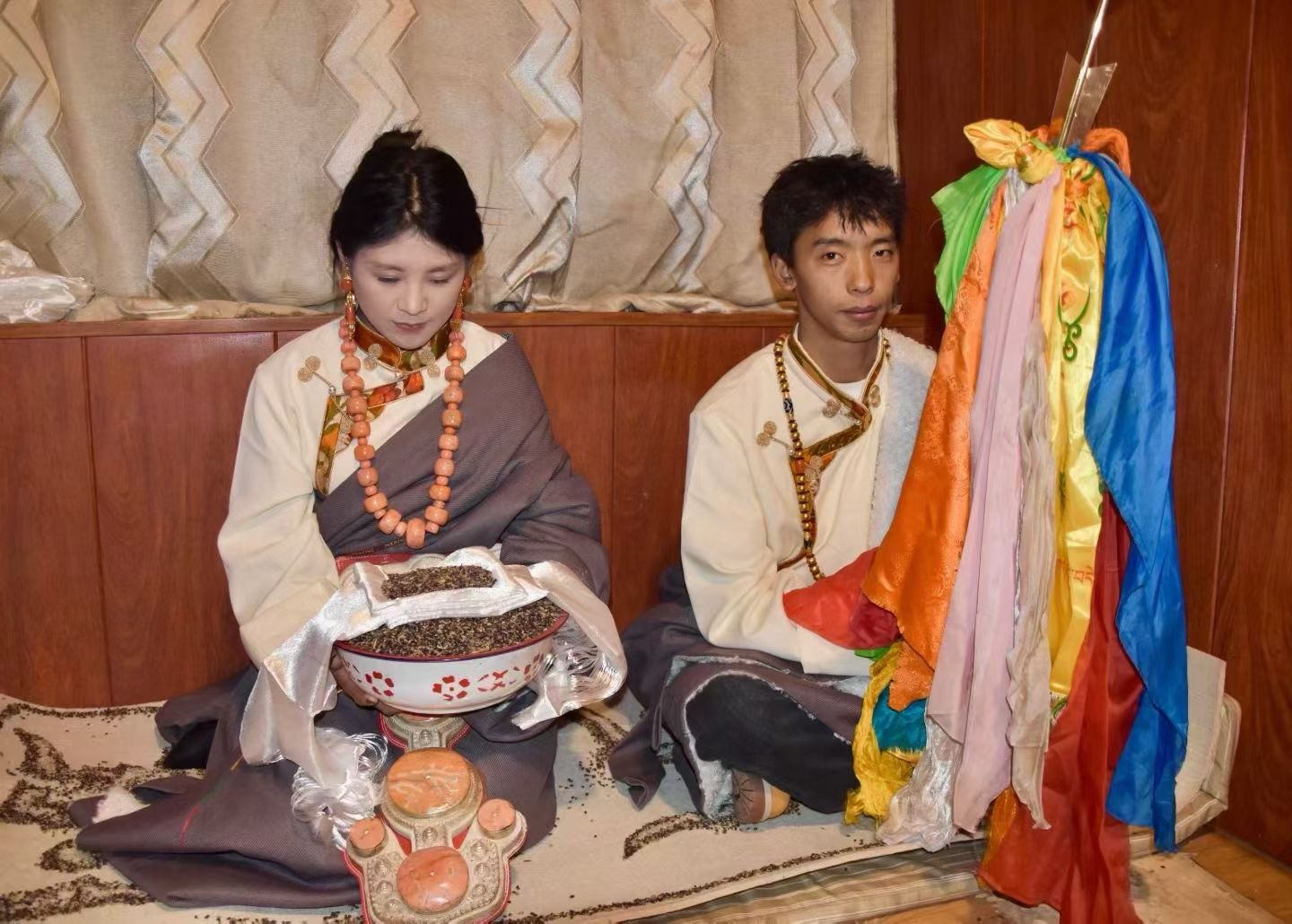
The air is thin here, sharp with the scent of high-altitude juniper and the faintest trace of melting snow. Inside the monastery walls, the resonant hum of a low chant settles in your bones, and the sweet, resinous aroma of sacred incense curls through the air. You are not just looking for art. You have arrived at this digital threshold because a deeper part of you seeks connection—a bridge between the material world and the vast expanse of inner space. You yearn for an artifact that is not merely decorative, but transformational; a tool that holds a genuine spiritual charge. This impulse is pure, and it is valid. Yet, it is accompanied by a quiet fear: the fear of being misled by a soulless reproduction, a printed image masquerading as a vessel of ancient wisdom. This compendium is offered to honor your aspiration and allay that fear. It is not a sales catalog, but a transmission of knowledge, a gift from our lineage to you, so that you may discern the authentic and understand its profound power.
Insights You Will Gain
- An understanding of the unbroken historical lineage of Thangka painting, from its origins to the present day.
- The ability to decode the complex iconographic language of deities, mudras, and mandalas.
- A deep appreciation for the alchemical process of creation, where mineral pigments and meditative focus converge.
- Practical guidance on how to respectfully integrate a Thangka into your own spiritual practice as a powerful support for meditation.
- The knowledge to distinguish authentic Dharma art from mass-produced replicas, empowering you to become a guardian of this living tradition.
The Unbroken Thread: Tracing the Sacred Lineage of Thangka Painting
The story of the Thangka is not one of static art history; it is a living, breathing narrative of spiritual transmission. Its origins are whispered to be in the ancient cave murals of the Himalayas, where early Mahayana and Vajrayana practitioners depicted enlightened beings directly onto stone walls as aids for visualization. Yet, for the nomadic cultures of the Tibetan plateau and the peripatetic lamas who carried the Dharma across vast, unforgiving landscapes, a more portable form of sacred art was essential. Thus, the Thangka—which translates to “recorded message” that can be rolled up—was born. It was Dharma that could travel, a temple that could be unfurled in a tent or a cave, instantly establishing a sacred space. This evolution from static mural to portable scroll canvas marks the genesis of the art form as we know it, a brilliant solution to the needs of a dynamic, mobile spiritual culture. The canvas itself became a field of merit, a representation of the enlightened mind that could be carried close to the heart.
From Cave Murals to Rolled Canvases: The Birth of a Portable Dharma
The critical catalyst in the Thangka’s development was the rich cultural exchange between Tibet, Nepal, and India. During the 7th to 12th centuries, it was the master artists of the Kathmandu Valley, the Newars, who were widely considered the finest painters and sculptors in the Himalayas. Their unparalleled skill in bronze casting and painting, characterized by sensuous forms, exquisite detail, and a vibrant color palette, was eagerly sought by Tibetan patrons. The legendary Newar artist Arniko, invited to the court of Kublai Khan in the 13th century, exemplifies this profound influence. These masters did not merely export an artistic style; they transmitted an entire iconographic system, a visual grammar for depicting the subtle bodies of enlightened beings. They brought their knowledge of proportion, pigment, and sacred geometry, laying the foundational aesthetic upon which Tibetan artists would build for centuries. This cross-pollination of genius created a powerful artistic synthesis that became the hallmark of early Thangka painting.
Guardians of the Tradition: The Role of Monasteries and Artisan Families
As the tradition matured within Tibet, distinct schools of painting emerged, each with its own stylistic nuances yet all adhering to the same strict iconographic canons. The Menri school, known for its vibrant colors and detailed landscapes, and the Karma Gadri school, which emphasized spacious compositions and delicate shading, became two of the most influential lineages. Central to the preservation of these styles was the master-apprentice relationship. This was not a mere technical training but a profound spiritual discipleship. A young artist would spend decades under the guidance of a master, learning not only the precise grid measurements (thig-tse) for each deity but also the corresponding mantras, meditations, and philosophical tenets. This knowledge was passed down through monasteries, which acted as centers of learning and artistic excellence, and through dedicated artisan families who held the Samaya—the sacred commitment—to preserve this art form as an act of devotion. This unbroken thread of transmission, from teacher to student, ensures that a Thangka painted today by a lineage-holder is connected by an invisible current of blessings and wisdom to the very first masters who painted these forms.
Reading the Divine Blueprint: A Guide to Thangka Iconography
To view a Thangka is to read a sacred text written not in letters, but in color, gesture, and form. Every element is deliberate, codified by centuries of spiritual insight and meditative experience. It is a divine blueprint, a map of enlightened consciousness presented in a visual language. Understanding this language transforms the Thangka from a beautiful image into a powerful tool for contemplation and self-realization. The figures depicted are not historical portraits in the Western sense; they are archetypes of perfected qualities latent within our own minds. Manjushri, wielding his flaming sword, represents the power of wisdom to cut through ignorance. White Tara, with her seven eyes, embodies compassionate vigilance and the power to grant longevity. The wrathful protectors, like Mahakala, with their fearsome appearance, are not demonic entities but expressions of fierce, compassionate energy that annihilates obstacles on the spiritual path. They are the mind’s own power to overcome negativity, personified. Learning to identify these figures and understand their function is the first step in unlocking the Thangka’s transformative potential. They serve as mirrors, reflecting back to us the enlightened nature we already possess.
The Language of Hands: Unlocking the Meaning of Sacred Mudras
The gestures of the hands, or mudras, are a crucial element of this visual grammar. They are not arbitrary poses but specific energetic seals that communicate the state of mind and activity of the deity. The Dhyana mudra, with hands resting in the lap, signifies deep meditative concentration, the foundation of all spiritual progress. The Abhaya mudra, with the right hand raised, palm outward, is the gesture of fearlessness and protection, a blessing that pacifies all anxieties. The Vitarka mudra, with the thumb and index finger touching to form a circle, represents the transmission of the Dharma, the act of teaching and intellectual debate. Each mudra is a key that unlocks a specific quality of consciousness. By meditating on a deity and their mudra, the practitioner can begin to cultivate that same quality within themselves, making the gesture an active component of the meditative process, not just a passive symbol.
Sacred Geometry and Cosmic Maps: Understanding the Mandala
Perhaps the most complex form of Thangka is the mandala. Far from being a mere geometric pattern, a mandala is a two-dimensional representation of a three-dimensional divine palace, the celestial abode of a specific deity. It is a cosmic map and a psychological diagram of the path to enlightenment. The center represents the ultimate goal—the enlightened state, embodied by the central deity. The surrounding layers of geometric patterns, gates, and protectors represent the various stages of meditation and purification one must pass through to reach that center. The outer ring of fire signifies the burning of ignorance, while the subsequent layers of vajras, lotus petals, and charnel grounds each represent specific aspects of the spiritual journey. To meditate upon a mandala is to mentally enter this sacred architecture, traversing its pathways and internalizing its structure, thereby re-creating the enlightened mind-state within oneself. It is a profound practice of visualization that unifies the practitioner (microcosm) with the universal enlightened field (macrocosm).
| Symbol / Color | Sacred Meaning |
|---|---|
| White | Purity, Pacification, The Element of Water, The Mirror-Like Wisdom. |
| Gold | Enlightenment, Purity of Body, Speech, and Mind, The Light of Wisdom. |
| Red | Magnetizing, Power, The Element of Fire, The Wisdom of Discernment. Associated with Amitabha Buddha. |
| Blue (Lapis Lazuli) | Immutability, Healing, The Element of Space/Ether, The Dharmadhatu Wisdom. Associated with Akshobhya or Medicine Buddha. |
| Yellow | Enriching, Abundance, The Element of Earth, The Wisdom of Equality. Associated with Ratnasambhava. |
| Green | Activity, Accomplishment, The Element of Wind/Air, The All-Accomplishing Wisdom. Associated with Amoghasiddhi. |
| The Lotus Flower | Purity, Renunciation, Divine Birth. The ability to remain pristine amidst the mud of worldly existence (samsara). |
| The Vajra (Dorje) | Indestructibility, The unshakeable nature of enlightened mind, skillful means (method). |
The Alchemy of Creation: Where Spirit and Matter Converge
The creation of a Thangka is an act of alchemical transformation, a process where raw matter is imbued with spiritual intention to become a vessel for the divine. This process addresses the seeker’s deepest fear of inauthenticity, for it is impossible to replicate through mechanical means. It begins not with a brush, but with a prayer. The artist, often a practitioner themselves, undertakes rituals to purify their mind and space, requesting permission from the deity to be depicted. The canvas, a fine cotton or linen, is then stretched and prepared with a mixture of chalk, animal glue, and water, known as ‘gesso.’ This surface is painstakingly polished with a smooth stone or shell until it is as smooth as a sheet of ivory. This sacred foundation is not merely a technical preparation; it is symbolic of preparing the mind for meditation—creating a clear, stable, and luminous ground upon which the qualities of enlightenment can arise. The perfection of the canvas reflects the aspiration for a pure and untroubled mind, ready to receive the imprint of the sacred.
Grinding the Earth: The Metaphysics of Mineral Pigments and Gold
The soul of a Thangka’s vibrancy lies in its pigments, which are traditionally derived from the earth itself. These are not inert chemicals from a tube; they are ground minerals, each with a unique history and symbolic resonance. Lapis lazuli from the high mountains of Afghanistan provides the deep, immutable blue of the Dharmakaya, the body of truth. Cinnabar yields a powerful, life-giving red, while malachite offers the vibrant green of enlightened activity. Orpiment and realgar produce rich yellows and oranges. These stones are ground by hand in a mortar and pestle for days, mixed with animal-hide glue as a binder, creating a paint that is both permanent and radiant. The use of genuine 24k gold is paramount. It is painstakingly ground and applied to represent the luminous, incorruptible nature of enlightenment. This materiality is inseparable from the art’s spiritual meaning. The artist is not just painting *with* minerals; they are channeling the essence of the earth, the stability of mountains, and the light of the sun into a form that speaks to the soul. This profound connection to the natural world is what gives an authentic Thangka its unique depth and spiritual weight.
The Meditative State: The Artist as a Vessel for the Divine
The act of painting is itself a profound meditation. Before drawing the first line, the artist visualizes the entire deity in their mind’s eye, holding the image with perfect clarity. They often recite the mantra associated with the deity throughout the painting process, infusing every brushstroke with sacred sound and intention. The strict iconometric grids, which dictate the exact proportions of each figure, are not seen as a creative constraint but as a sacred discipline. Adhering to these proportions ensures that the image is a correct and potent representation of the enlightened state, a true conduit for its blessings. The artist strives to become a hollow vessel, an empty channel through which the divine form can manifest without the distortions of ego or personal whim. This is why the lineage is so critical; the artist is not inventing, but transmitting a perfected vision that has been refined and passed down through generations of realized masters. The finished painting is therefore not just a product of one person’s skill, but the culmination of a thousand years of collective meditative insight.
From Art to Altar: Integrating a Thangka into Your Spiritual Practice
Acquiring an authentic Thangka is the beginning of a relationship. It is an invitation to transform a piece of art into a living presence, a focal point on your personal altar that actively supports your spiritual path. The first step is to create a sacred space. A Thangka should be hung in a clean, quiet, and respectful place, typically higher than one’s seated head. It should never be placed on the floor or in a location where people will pass over it. Ideally, it is positioned on a dedicated wall in your meditation area. Traditionally, a Thangka is consecrated by a qualified lama through a ceremony called ‘rabné’, which invites the wisdom being to inhabit the image. If this is not possible, you can perform a simple consecration by generating a sincere intention, making offerings of light (a candle), incense, and pure water, and reciting the mantra of the deity depicted. This act shifts your perception from seeing the Thangka as a beautiful object to honoring it as a representation of enlightened mind, a true portal to your own inner refuge.
The Practice of ‘Deity Visualization’ (Deity Yoga)
In the Vajrayana tradition, Thangkas are essential tools for the practice of Deity Yoga, or ‘Kye-rim’ (generation stage). This is a profound method for realizing one’s own Buddha-nature. The practitioner gazes at the Thangka, studying every detail of the deity—their posture, implements, ornaments, and expression. After absorbing the image, they close their eyes and attempt to recreate it perfectly in their mind’s eye. This is not an act of fantasy but a disciplined training in concentration and clarity. The practitioner then dissolves the visualized deity into light and merges that light with themselves, understanding that the qualities of the deity—wisdom, compassion, power—are not external but are inherent potentials within their own consciousness. The Thangka serves as the perfect, stable blueprint for this internal generation. It is the master key that provides all the necessary details to build the celestial palace and its divine resident within the landscape of the mind, thereby transforming ordinary self-perception into a sacred outlook.
Using a Thangka as a Focal Point for Shamatha-Vipassana Meditation
Even for those not engaged in formal Deity Yoga, a Thangka can be a powerful support for more foundational meditation practices like Shamatha-Vipassana (calm-abiding and insight). The complexity and harmony of the image provide a potent object for focus. Instead of following the breath, one can rest their gentle, open awareness on the image of the Thangka. You can focus on the serene face of the Buddha, the compassionate eyes of Tara, or the intricate geometry of a mandala. When the mind wanders, as it inevitably will, the beauty and detail of the Thangka gently guide your attention back to the present moment. This practice cultivates mental stability (Shamatha). As concentration deepens, one can then begin to contemplate the meaning of the symbols within the painting (Vipassana), reflecting on qualities like compassion, impermanence, or the empty nature of phenomena. In this way, the Thangka becomes a silent teacher, continuously guiding the mind away from distraction and towards a state of peaceful, focused awareness.
A Living Tradition in a Modern World: The Preservation of Thangka Art
The sacred art of Thangka painting now stands at a critical juncture. In an era of globalization and digital reproduction, it faces an unprecedented threat: the dilution of its profound meaning through mass production. The market is flooded with inexpensive prints and paintings produced rapidly by untrained artists who lack any connection to the spiritual lineage. These items may mimic the form, but they are devoid of the essential substance. They lack the meticulously ground mineral pigments, the meditative intention, and the blessings of an unbroken transmission. To mistake one of these replicas for authentic Dharma art is a significant loss, not just for the consumer, but for the tradition itself. When the sacred is treated as a mere commodity, its power is diminished, and its core purpose—to serve as a vehicle for enlightenment—is obscured. This is not a matter of artistic snobbery; it is a matter of spiritual efficacy. The authenticity of the process is what imbues the Thangka with its unique ability to inspire and transform.
The Role of Ethical Patronage in Supporting Master Artisans
The survival of this precious art form depends entirely on conscious, ethical patronage. When you choose to acquire an authentic Thangka from a lineage-holder or a reputable source that supports them, you are doing far more than buying a piece of art. You are becoming a patron in the truest sense of the word. You are casting a vote for quality over quantity, for spiritual integrity over commercialism. Your support provides a sustainable livelihood for the master artisans who have dedicated their lives to preserving this knowledge, allowing them to continue their work and, most importantly, to train the next generation. Without this support, the delicate thread of master-apprentice transmission could be broken. Each authentic Thangka purchased is a lifeline that helps ensure this ancient wisdom will not be lost to history. It is a direct investment in the cultural and spiritual heritage of the Himalayan people and, by extension, of all humanity.
Our Commitment: A Vow to Protect and Share this Sacred Heritage
At Tanfog, we view our role not as merchants, but as custodians. Our founding principle is built upon a deep respect for the Dharma and a sacred commitment—a Samaya—to the artists who are its guardians. We work directly with master painters from recognized lineages, ensuring they are compensated fairly and their work is represented with the dignity it deserves. We believe that offering this sacred art is a profound responsibility. Therefore, we are committed to education, to sharing the stories behind these paintings, and to providing the context necessary for them to be appreciated as the powerful spiritual tools they are. Our vow is to serve as a bridge, connecting sincere seekers with genuine Dharma art, and in doing so, to play our part in protecting and perpetuating this extraordinary tradition for generations to come. Your journey with this art is a partnership with us in this vital work of cultural preservation.
The Wisdom FAQ
- Can anyone, regardless of their faith, benefit from a thangka?Absolutely. While Thangkas are born from the Vajrayana Buddhist tradition, their power transcends religious boundaries. At their core, they are depictions of universal human qualities: compassion (Avalokiteshvara), wisdom (Manjushri), and inner peace (Shakyamuni Buddha). You can approach a Thangka as a tool for secular mindfulness, a beautiful piece of sacred art, or a gateway to deeper spiritual inquiry. The image serves as a powerful anchor for the mind and a source of positive inspiration, benefits that are accessible to all.
- What is the meaning of a wrathful deity? Are they evil?Wrathful deities are one of the most misunderstood aspects of Tibetan iconography. They are not demons or evil spirits. They are emanations of enlightened beings, embodying the fierce, energetic, and powerful aspect of compassion. Their wrath is directed not at sentient beings, but at the true enemies: ignorance, hatred, and greed. They represent the mind’s own power to overcome internal obstacles and protect the practitioner from negative influences. Their function is purely protective and compassionate, like a loving parent who uses a stern voice to save a child from danger.
- Does a thangka possess its own spiritual energy, or is it merely symbolic?From the traditional viewpoint, a properly created and consecrated Thangka is more than a symbol; it becomes a living presence. The combination of pure mineral pigments, precise iconography, the artist’s meditative state, and the final consecration ceremony invites the wisdom of the deity to inhabit the image. It becomes a field of blessings, a conduit through which the practitioner can connect with the enlightened mind of the Buddhas. While its power is most fully activated through the faith and practice of the individual, it is considered to hold its own inherent sacred charge.
- How long does it take to create a single, authentic thangka?The time varies greatly depending on the size and complexity of the piece, but it is never a short process. A small, simple Thangka might take a few weeks, while a large, intricate mandala with many deities and fine gold detail can take a master artist six months, a year, or even longer. Every stage, from preparing the canvas to grinding the pigments and applying the final brushstrokes, is done with painstaking care and meditative attention. This investment of time and focused energy is a key part of what makes each Thangka a masterpiece of sacred art.
- What is the significance of the silk brocade frame surrounding the painting?The silk brocade frame is an integral part of the Thangka and is rich with symbolism. It is considered the deity’s ‘clothing’ or ‘palace walls.’ Traditionally, the colors used have meaning: blue and yellow brocades are often at the top and bottom, representing sky and earth, while red brocades are used for the sides. A thin yellow or red silk ‘rainbow’ (ja’) often separates the painting from the frame, symbolizing the sacred nature of the image within. The brocade allows the Thangka to be rolled for transport and protects the painted surface. A silk veil is also attached, which is used to cover the Thangka when it is not in use as a sign of respect.
The Guardian’s Reflection
A Thangka is more than pigment on cloth. It is a whisper of eternity, a map of the mind’s highest potential carried on a fragile, physical scroll. To hold one, to live with one, is to accept a sacred responsibility. It is to become a temporary guardian of a timeless lineage, a keeper of a flame that has been passed through the hands of masters and across the snows of centuries. This is not about ownership. It is about stewardship. In caring for this art, in learning its language, you ensure that this portal remains open, not just for yourself, but for all who will come after. You become a link in the golden chain, a protector of wisdom in a world that needs it now more than ever.
References:
Vogue Astrology https://www.vogue.com
The Spruce (Feng Shui) https://www.thespruce.com
MindBodyGreen https://www.mindbodygreen.com
GIA (Gemological Institute of America) https://www.gia.edu/