
Thangka Cost: A Collector’s Guide to Divine Value & True Artistry
The first encounter with a genuine Thangka is an experience that transcends sight. It begins with the subtle, earthy scent of mineral pigments and hide glue, a fragrance that has remained unchanged for centuries. You feel the weight of the hand-woven canvas, the coolness of the silk brocade, and sense an energy that is more than the sum of its parts. It is this palpable presence, this vibration of devotion, that raises the question: what is the true value of such an object? When you ask, “how much does a thangka cost,” you are not merely inquiring about a price tag. You are seeking to understand the meeting point of sacred craft, spiritual lineage, and artistic mastery.
This guide is for the discerning seeker, the individual who understands that certain objects are not commodities but conduits. The market is flooded with imitations—digitally printed canvases that capture the image but not the essence, sold for a pittance because they lack a soul. A true Thangka, born from months of meditative focus and rendered in pigments ground from Himalayan stone, is an entirely different creation. It is a devotional tool, a piece of cultural heritage, and a profound investment in an art form that is becoming increasingly rare. Understanding the difference is the first step in moving from a casual buyer to a true custodian of sacred art.
What You Will Learn
This guide illuminates the vast difference between mass-produced prints and master-crafted Thangkas. You will learn to identify the five key hallmarks of authentic Vajrayana art, from sacred geometry to the purity of mineral pigments. We will explore the meditative process behind each Tanfog creation, understand how to integrate this sacred energy into your personal space, and reframe the cost not as a purchase, but as an investment in a tangible spiritual lineage.
The Price Spectrum: Why a $50 Print is Not a $5,000 Thangka
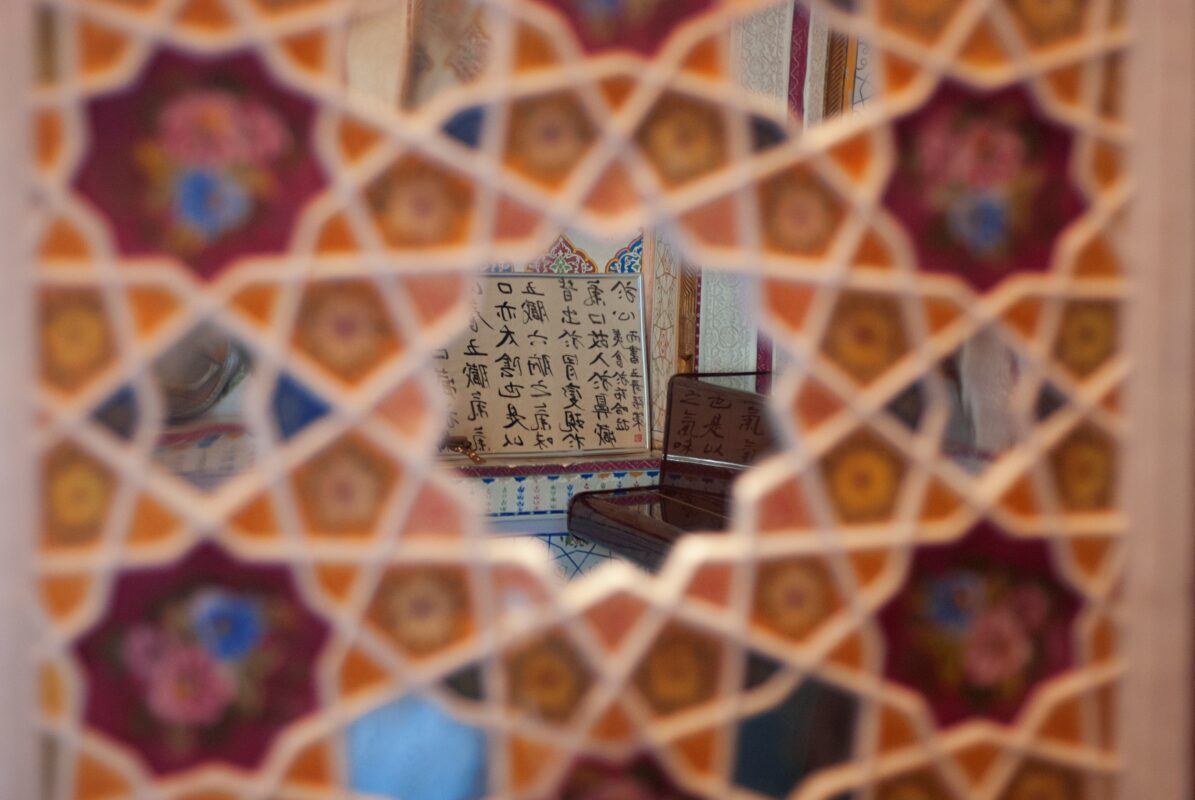
The question of Thangka cost is a question of authenticity. The modern marketplace presents a confusing spectrum, with prices ranging from less than a dinner for two to the cost of a significant piece of fine art. The disparity is not arbitrary; it represents a fundamental chasm in origin, material, and intent. To navigate this landscape is to learn the language of sacred art, to distinguish the echo from the voice. The value is not just in the image depicted, but in the accumulated energy of intention, devotion, and masterful human touch infused into the canvas over hundreds of hours.
Digital Impersonality: Recognizing the Flatness of Mass Production
A printed Thangka, often produced for under fifty dollars, is a digital photograph transferred onto canvas. Its surface is uniform, its colors derived from synthetic CMYK inks, and its texture unnaturally smooth. When viewed up close, the image dissolves into a matrix of dots, a mechanical replication devoid of life. These prints serve a decorative purpose, offering a semblance of the sacred geometry, but they lack the essential quality of a true Thangka: spiritual presence. There is no artist’s hand, no meditative state, no precious earth pigment—only the cold, efficient output of a machine. This is the baseline of the market, an accessible but ultimately hollow representation of a profound tradition.
The Soul in the Stroke: The Vibrancy of Hand-Ground Mineral Gouache
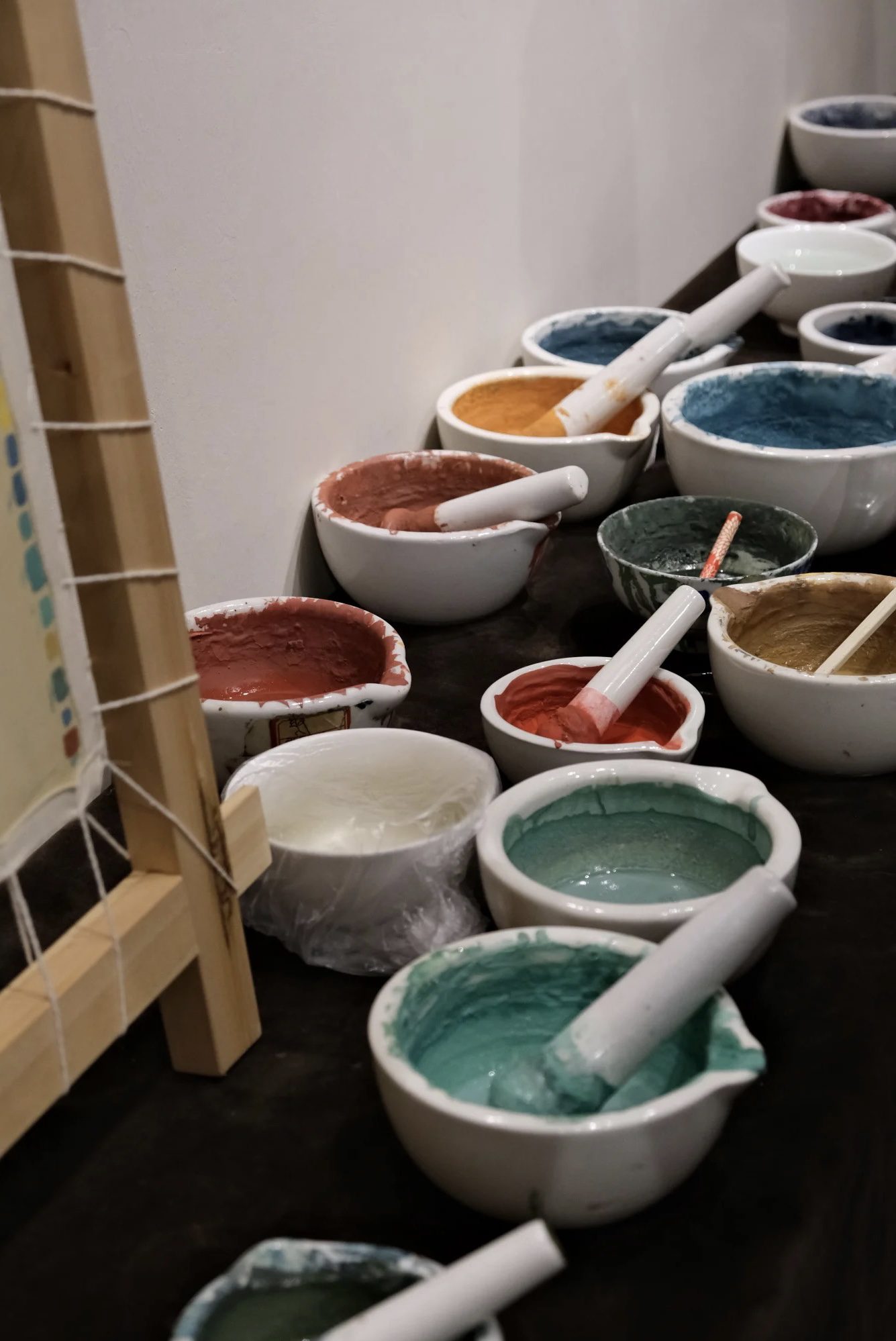
A master-painted Thangka, which can command prices of five thousand dollars or more, is an entirely different universe of creation. Its soul resides in the materials and the human spirit that transforms them. The artist uses gouache made from hand-ground minerals: deep, resonant blues from Lapis Lazuli, vibrant reds from Cinnabar, and earthy greens from Malachite. These pigments are not inert; they refract light in a way that synthetic inks cannot, creating a subtle, living luminosity. The surface of the canvas has a tactile depth, a terrain of raised gold lines and layered colors. Each brushstroke is a prayer, a focused application of skill passed down through a direct lineage of masters. This “authenticity gap” is not just visual; it is energetic. A print is a picture of a deity; a hand-painted Thangka is an invitation to its presence.
| Feature | Tanfog Masterworks | Commercial Imitations |
|---|---|---|
| Pigments | Hand-ground Himalayan minerals (Lapis, Cinnabar, Malachite). Rich, luminous, and archival. | Synthetic acrylics or digital printer inks. Flat, prone to fading, lack depth. |
| Lineage | Created by artists with verifiable training in a traditional Thangka school. A direct transmission of sacred knowledge. | Often painted by artists with no formal training in sacred geometry or produced by machine. |
| Gold | Genuine, hand-applied 24k gold, burnished to a high sheen. Possesses a distinct, warm luster. | Gold-colored paint or metallic ink. Dull, lacks texture, and has no intrinsic value. |
| Soul | Each piece is a result of hundreds of hours of meditative practice. It is a consecrated object with spiritual energy. | A mass-produced decorative item. An image without the indwelling spirit or intention. |
A Collector’s Eye: 5 Hallmarks of Masterful Vajrayana Aesthetics
Developing a discerning eye is the collector’s greatest asset. Beyond the initial emotional response to a piece, a deeper appreciation and a confident assessment of value come from understanding the strict, sacred rules that govern Thangka creation. These are not merely artistic suggestions; they are canonical laws that ensure the painting functions as a true portal to the divine. Learning to recognize these hallmarks is learning to see the difference between a simple painting and a masterpiece of devotional art, justifying the investment in a truly authentic work.
Iconometric Proportions: The Sacred Geometry of the Divine Form
Every element of a Thangka is dictated by precise iconometric grids, or ‘thigse’. These grids, established in ancient sutras, define the exact proportions of each deity—the length of the limbs, the curve of the torso, the distance between the eyes. A master artist internalizes these sacred geometries, drawing them with a flawless hand that appears effortless but is born from decades of discipline. When viewing a Thangka, look for this underlying harmony and balance. A poorly executed piece will have subtle asymmetries: limbs that are slightly too long, a torso that is unbalanced, or a posture that lacks stability. A masterful work radiates a sense of perfect, divine order.
The ‘Divine Gaze’: Serenity and Precision in Facial Features
The face, and particularly the eyes, are the focal point of a Thangka’s spiritual power. The ‘opening of the eyes’ ceremony is the final, most crucial step in its creation. A master artist renders the face with extraordinary precision and subtlety. The expression should be one of profound serenity, compassion, or focused intensity, depending on the deity, but never vacant or poorly defined. Look closely at the fineness of the lines around the eyes and mouth. Are they crisp and intentional? Does the gaze feel alive and engaging? In commercial-grade paintings, faces are often rushed, appearing cartoonish, asymmetrical, or emotionally flat. The divine gaze of an authentic Thangka, however, holds a palpable stillness that can quiet the viewer’s mind.
Pigment Purity: Identifying Lapis Lazuli, Cinnabar, and Malachite
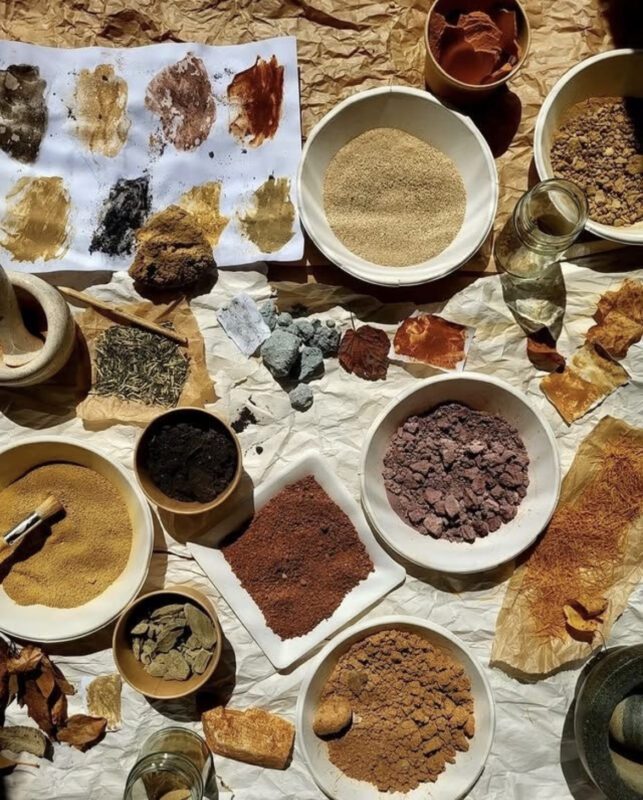
The colors of a genuine Thangka are not merely decorative; they are substances of power. Authentic artists use a palette derived from crushed stones and minerals, a process that is both laborious and sacred. Lapis Lazuli yields a blue of unparalleled depth, Cinnabar a vibrant, commanding red, and Malachite a tranquil, earthy green. These mineral pigments have a unique, granular texture and a way of absorbing and reflecting light that synthetic paints can never replicate. Ask about the pigments used. A true artist or reputable gallery will proudly detail the source of their colors. The purity of these earth-born pigments directly contributes to the Thangka’s longevity, beauty, and energetic potency, forming a core component of its cost.
The Gold Standard: Assessing the Line Work of Genuine 24k Gold
Gold is not paint in a true Thangka; it is precious metal. Artists use genuine 24k gold, ground into a powder and mixed with a binder, applied meticulously with a fine-tipped brush. The lines, halos, and adornments are then burnished with a gemstone, creating a brilliant, raised surface that gleams with a warm, unmistakable luster. To assess the gold, view the Thangka at an angle to the light. Real gold will have a three-dimensional quality and a distinct, reflective sheen that shifts as you move. Gold-colored paint, by contrast, appears flat, dull, and uniform from all angles. This use of pure gold is a significant factor in the cost of a high-quality Thangka and a clear indicator of the artist’s commitment to tradition.
Lineage-Based Artistry: Verifying the Artist’s Traditional Training
The most important, yet intangible, quality of a Thangka is the lineage of its creator. Thangka painting is not a self-taught craft; it is a ‘vidya,’ a sacred science transmitted directly from master to student over many years. This rigorous training involves not only technical skill but also spiritual practice, including meditation, mantra recitation, and a deep study of Buddhist philosophy. An artist from a recognized lineage—such as the Karma Gadri or Menri schools—imbues their work with an authenticity and spiritual integrity that cannot be faked. When considering a significant investment, always inquire about the artist’s teacher, their school, and their years of training. This provenance is the ultimate guarantee of the Thangka’s sacred and artistic value.
Behind Our Canvas: The Tanfog Commitment to Sacred Craft
At Tanfog, we believe that transparency is a form of reverence. To truly understand the value of our Thangkas, one must look beyond the finished canvas and into the heart of our process. Each creation is not a product but a pilgrimage—a journey of materials, intention, and devotion that begins high in the Himalayas and culminates in a work of living, spiritual art. This commitment to the sacred craft is what defines us, and it is a story we are honored to share. It is a narrative of ethical sourcing, ritual consecration, and the patient, meditative focus of our master artisans.
From Himalayan Earth: The Ethical Sourcing of Our Mineral Pigments
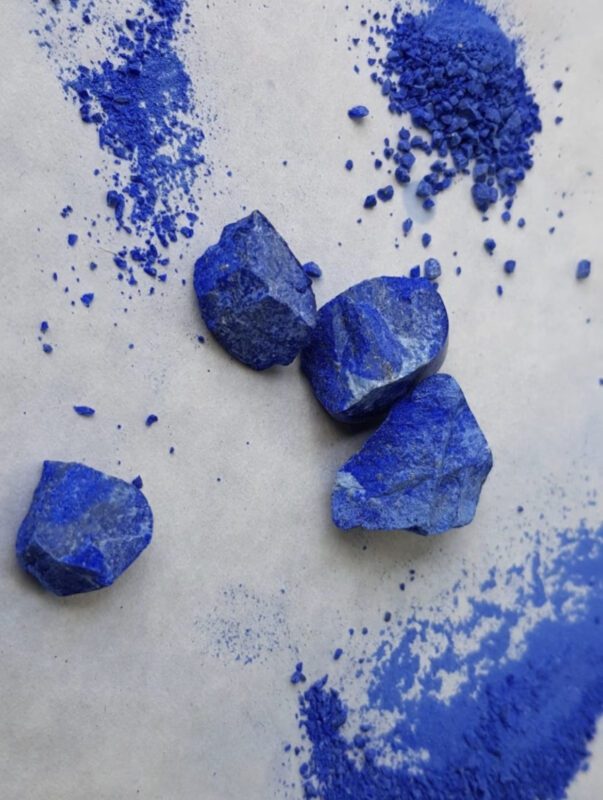
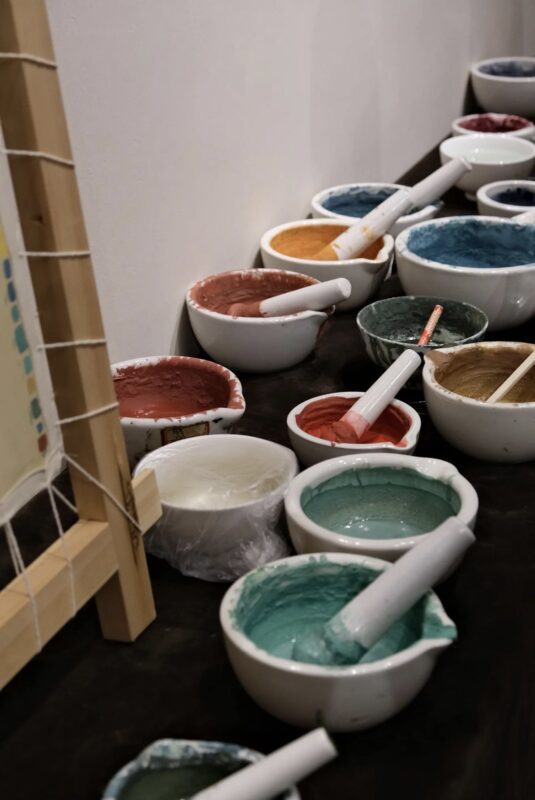
The lifeblood of our art is the earth itself. We have cultivated relationships with small, family-run sources in the Himalayan regions who ethically harvest the raw stones for our pigments. We do not use synthetic substitutes. The Lapis Lazuli for our blues comes from ancient mines, the Cinnabar for our reds is carefully selected for its purity, and the Orpiment for our yellows is sourced with respect for the land. These stones are then brought to our studios, where they are meticulously hand-ground and mixed with a traditional hide glue binder. This process is time-consuming and costly, but it is non-negotiable. It ensures that every color on our canvas carries the pure, undiluted energy of its terrestrial origin.
The Consecration Ritual: Invoking Spirit Before the First Brushstroke
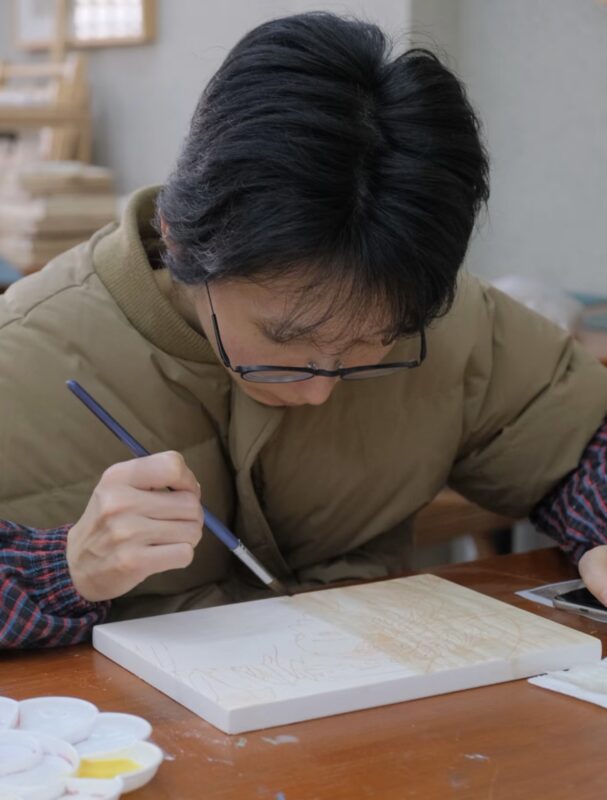
A Tanfog Thangka begins long before the first line is drawn. The prepared canvas, stretched and gessoed, is taken to a monastery to be blessed by a qualified Lama. A consecration ritual is performed, involving chants, mantras, and incense, to purify the canvas and invite the spirit of the deity to reside within the eventual artwork. This crucial step transforms the material from a simple cloth into a sacred field—a ‘kshetra’—ready to receive the divine form. Our artists maintain a state of meditative awareness throughout the painting process, reciting the mantra of the deity they are depicting. This ensures that the entire creation is an act of devotion, infusing the Thangka with a spiritual resonance from its very inception.
Months in the Making: A Glimpse into Our Master Artisan’s Studio
Patience is the foundation of our craft. A single, moderately complex Thangka from our studio can take anywhere from three to six months to complete; a highly detailed masterpiece can take over a year. Our artists do not rush. The initial iconometric grid is drawn with painstaking precision. The colors are applied in multiple, thin layers to achieve the desired depth and luminosity. The 24k gold is laid with a surgeon’s focus, and the final ‘opening of the eyes’ is performed only when the artist is in a state of complete spiritual and mental clarity. This unhurried, dedicated process is a world away from the fast-paced production of commercial art. It is a testament to our belief that true sacred art cannot be forced; it must be allowed to unfold with the rhythm of devotion itself.
Beyond the Wall: Integrating Sacred Energy into a Modern Space
A true Thangka is more than a piece of art to be passively observed; it is an active spiritual presence. Bringing a Thangka into your home is an invitation to elevate the energy of your environment and deepen your personal practice. For the Western collector, this integration is a beautiful opportunity to bridge ancient wisdom with a contemporary lifestyle. The key is to approach its placement and use with intention, transforming it from a mere wall hanging into a powerful focal point for mindfulness, serenity, and spiritual connection.
Curating Your Sanctuary: Placing a Thangka for Spiritual Resonance
The placement of a Thangka is a sign of respect for the sacred energy it holds. Traditionally, they are placed in a high, clean, and honored location in the home, often in a dedicated meditation room or on a personal altar. It should never be hung in a bathroom, a kitchen, or a place of casual disarray. Consider a wall that receives gentle, indirect light, as direct sunlight can damage the mineral pigments over time. The goal is to create a space where you can sit with the artwork without distraction, allowing its presence to permeate the room. When you honor the Thangka with a dedicated space, it honors you back with its profound sense of peace and order.
A Focus for Mindfulness: Using Your Piece as a Devotional Tool
Your Thangka is a powerful support for meditation and mindfulness practices. The intricate details and symbolic imagery are designed to engage the mind and lead it toward deeper states of concentration. You can use it as a focus for ‘shamatha’ (calm-abiding) meditation by gently resting your gaze upon the central deity. For ‘vipassana’ (insight) practice, you can contemplate the symbolism within the artwork—the implements held by the deity, the surrounding figures, the landscape—and reflect on their deeper meanings. This active engagement transforms the Thangka from a beautiful object into a functional, daily tool for cultivating inner stillness and wisdom, making it an invaluable partner on your spiritual path.
From Art to Amulet: The Principles in Our Heritage Jewelry
The same principles of sacred geometry, authentic materials, and devotional intention that define our Thangkas also inform our collection of heritage jewelry. Each piece, whether a pendant depicting a sacred syllable or a bracelet incorporating protective symbols, is crafted to be a wearable amulet. It serves as a personal, portable reminder of your connection to the path and a source of subtle, supportive energy throughout your day. Just as a Thangka sanctifies a space, our jewelry is designed to sanctify the personal sphere of the wearer. It is an extension of the same sacred art, made intimate and accessible for daily life, carrying the essence of the grand tradition in a personal form.
An Investment in Heritage, Not a Purchase
To acquire a master-crafted Thangka is to shift your perspective from cost to investment. This is not a transactional purchase of a decorative good; it is a profound investment in a disappearing cultural heritage, a tangible piece of a spiritual lineage, and an asset that appreciates in both cultural and financial value. In a world of mass production and fleeting trends, the enduring, handmade quality of a true Thangka stands as a testament to what is real, what is sacred, and what is worth preserving. It is an act of patronage that supports not just an artist, but an entire ecosystem of sacred craft.
The Economics of Rarity: The Dwindling Number of True Thangka Masters
The unfortunate reality is that the number of artists who possess the skill, discipline, and spiritual grounding to create Thangkas at the highest level is declining. The rigorous, multi-year training is a path few are willing to undertake in the modern world. This growing rarity of true masters means that the works they produce are becoming increasingly sought after by discerning collectors and practitioners worldwide. An authentic, well-documented Thangka is not only a spiritual treasure but also a sound financial investment. Its value is anchored in the scarcity of the mastery required for its creation, ensuring its appreciation over time.
A Tangible Lineage: Passing Down Art, Not Just an Object
When you invest in a Tanfog Thangka, you are becoming a custodian of a story. You are holding a piece of art that can be passed down through your family for generations, accumulating personal and spiritual significance with each passing year. Unlike a digital print that fades or a trendy decoration that falls out of fashion, a mineral-pigment Thangka is an heirloom of archival quality. It is a tangible link to a timeless tradition, a gift of beauty and spiritual depth that you can give to your children and grandchildren. You are not just passing down an object; you are passing down a legacy of art, culture, and contemplation.
The Tanfog Guarantee: Our Certificate of Authenticity and Provenance
We understand that the primary concern for any serious collector is authenticity. To address this directly and with complete transparency, every Thangka from Tanfog is accompanied by a detailed Certificate of Authenticity. This document is our covenant with you. It provides the name and lineage of the master artist, details the specific mineral pigments and 24k gold used, and includes high-resolution photographs of the work. This certificate provides the full provenance of your piece, guaranteeing its origin and quality. It is our promise that you are acquiring a genuine work of sacred art, a true investment worthy of your trust and your collection.
Frequently Asked Questions for the Discerning Collector
1. How can I be certain the gold used is genuine 24k and not imitation paint?
Genuine 24k gold has three distinct characteristics a collector can learn to identify. First, observe its luster. Real, burnished gold has a deep, warm, three-dimensional glow that reflects light differently as you change your viewing angle. Gold paint has a flat, one-dimensional metallic sheen. Second, look for texture. Applied gold leaf or powdered gold creates a slightly raised surface, which you can often see in the texture of the line work. Third, trust the provenance. A reputable source like Tanfog will explicitly state the use of 24k gold on its Certificate of Authenticity, as it is a significant component of the artwork’s value and a point of pride for the artist.2. What is the significance of the consecration ritual, and does it affect the Thangka’s value?
The consecration ritual, or ‘rabnay’, is spiritually paramount. It is the process through which a Lama or high-ranking monk invites the spirit of the deity to inhabit the painting, transforming it from a beautiful image into a living spiritual entity. While this primarily adds immense spiritual value, it also significantly impacts its value to serious collectors and practitioners. A consecrated Thangka is considered ‘complete’ and spiritually potent. For a collector, a Thangka with documented consecration by a recognized Lama or monastery has a much stronger provenance and is considered far more desirable than an unconsecrated piece, directly enhancing its cultural and financial worth.3. For meditation purposes, where is the ideal placement for a Thangka in a modern home?
The ideal placement is in a location you designate as your space for quiet and contemplation. This could be a dedicated room, a quiet corner of a living room, or your home office. The Thangka should be hung at eye-level or slightly above when you are seated in your meditation posture. This facilitates a direct and respectful gaze. Ensure the area is clean, tidy, and free of clutter. The guiding principle is respect: place it where you would welcome an honored guest. By creating a beautiful and intentional space around the Thangka, you amplify its ability to support your practice and sanctify your home.4. Besides aesthetics, how does an artist’s lineage impact the spiritual potency of the artwork?
An artist’s lineage is the invisible thread that connects the artwork directly to the enlightened source of the tradition. This lineage is an unbroken chain of transmission—’parampara’—where the knowledge of sacred geometry, ritual practice, and, most importantly, the spiritual ‘flavor’ or ‘bhava’ of the deity is passed down. An artist from a strong lineage doesn’t just paint a form; they channel a specific, inherited understanding and energy. This spiritual potency is believed to be infused into the canvas through the artist’s meditative state and adherence to the sacred methods. For a practitioner, this means the Thangka is a more effective and authentic tool for connecting with the divine.5. How should I care for a mineral pigment Thangka to ensure its longevity for generations?
A genuine Thangka is an archival object designed to last for centuries with proper care. The most important rule is to keep it dry and out of direct sunlight. The UV rays from the sun will eventually fade even the most stable mineral pigments. Humidity can damage the canvas and the hide glue binder. Never hang it in a bathroom or a damp basement. To clean, do not use water or any cleaning agents. Simply use a very soft, dry brush (like a makeup brush) to gently dust the surface once or twice a year. If you need to store it, roll it gently from the bottom up with the painted surface facing inward, and wrap it in a soft, breathable cloth like silk or cotton.
Become a Guardian of Sacred Art
Choosing a Thangka is more than an aesthetic decision; it is an acceptance of a role. It is a commitment to become a guardian of a sacred tradition, a custodian of a piece of cultural history that carries within its threads the prayers and aspirations of generations. The value of such a piece is not calculated in hours or materials alone, but in the lineage it represents and the spiritual sanctuary it provides. It is an anchor of stillness in a turbulent world, a window into profound tranquility that you can open with a simple, focused gaze.
We invite you to explore the Tanfog collection not as a catalog of products, but as a gallery of living spirits. Each piece is a culmination of the principles we have shared—ethically sourced pigments, consecrated canvases, and the masterful touch of a lineage-trained artist. Find the face of the divine that resonates with your own spirit, and invest in a legacy of beauty, devotion, and profound peace. Bring home not just a work of art, but a companion for your journey.