
Sacred Hart: Unveiling the Luminous Symbolism of the Deer
The cold mountain air carries the scent of pine and damp earth. In the profound stillness between the toll of a distant temple bell and the whisper of wind through prayer flags, a shape materializes in the dawn mist. A deer, poised and alert, turns its head, its dark eyes seeming to hold the wisdom of the ancient landscape. It is a fleeting encounter, yet it lingers in the soul. You are here because such a moment has found you—in a forest, a dream, or the intricate brushstrokes of sacred art. You sense it was not a mere coincidence, but a message. This is not a fanciful hope; it is an intuitive recognition of a summons from a spiritual lineage that stretches back to the dawn of human consciousness. Understanding the deer is not about decoding a simple symbol; it is about accepting a sacred commitment, a Samaya, to listen with the same profound attention the deer first offered to the Buddha’s teaching in the Sarnath grove.

Insights You Will Gain
This compendium is a vessel of transmitted wisdom. Within it, you will receive a deeper understanding of the deer’s role as a primal spiritual guide across global traditions, a comprehensive decoding of its symbolic language, an appreciation for its portrayal in Himalayan Dharma art, and practical methods for integrating its energy of gentle awareness into your life.
The Origin & Lineage: The Deer as a Timeless Spiritual Guide
The deer’s presence as a spiritual emissary is not a recent invention but a primordial truth etched into the very bedrock of our collective story. Its lineage as a guide is one of the most enduring in human history, a golden thread connecting us to our most ancient reverence for the natural world. Long before the first temple stones were laid, our ancestors were already in communion with its spirit. This is a wisdom passed not through dusty tomes alone, but through the vibrant, living traditions of art, myth, and contemplative practice.
Echoes from the Dawn: Paleolithic Cave Art and Primal Reverence
In the subterranean cathedrals of Lascaux and Altamira, the deer leaps across stone walls, its form rendered with a sacred precision by artists of the Upper Paleolithic age. These were not mere depictions of prey. The care, the detail, and the placement within these cavernous sanctuaries suggest a profound spiritual significance. The deer was a symbol of life itself—a source of sustenance, yes, but also a being of immense grace and mysterious power. It represented the untamable pulse of the wild, the cyclic nature of existence, and the deep, intuitive connection our ancestors held with a world not yet separated into the mundane and the divine. The act of painting the deer was a ritual, a way to invoke its spirit, to honor its life-force, and perhaps, to ask for passage through the liminal spaces between the seen and unseen worlds.
The Horned God of the Greenwood: Cernunnos and the Celtic Hart
Within the deep green forests of ancient Europe, the deer took on a potent masculine form in the figure of the hart, often associated with deities like Cernunnos, the ‘Horned God.’ Depicted on the Gundestrup Cauldron, Cernunnos sits in a meditative posture, antlers crowning his head like a forest king. Here, the antlers are not weapons, but symbols of sovereignty, fertility, and the cyclical regeneration of the wild. The stag was the guardian of the forest, a guide who could lead worthy souls through the dense thickets of the physical world and into the mystical Otherworld. This lineage of the deer as a psychopomp—a guide for souls—is deeply embedded in Celtic lore, where the appearance of a white hart often signaled the beginning of a profound spiritual quest, a challenge from the divine to transcend the ordinary and step onto a path of transformation.
The First Turning of the Wheel: The Listening Deer of Sarnath in Buddhism
Perhaps the most significant chapter in the deer’s spiritual lineage unfolded in a quiet grove in Sarnath, India. After attaining enlightenment, the Buddha Shakyamuni gave his first sermon, ‘Turning the Wheel of Dharma.’ The first beings to listen with rapt attention were not humans, but two gentle deer who emerged from the forest. This sacred event is immortalized in Buddhist iconography worldwide. The deer became the ultimate symbol of peaceful, non-judgmental, and compassionate listening. They represent the ideal disciple, embodying the stillness and receptivity required to absorb the profound truths of the Dharma. Every time you see a pair of deer flanking the Dharma Wheel atop a monastery gate, you are witnessing a direct continuation of this lineage—a reminder that the path to wisdom begins with a quiet, open, and gentle heart.
Messengers of the Divine: Deer in Shinto, Norse, and Indigenous Traditions
This reverence is not confined to a single path. In Japan’s Shinto tradition, the deer of Nara are considered sacred messengers of the Kasuga Grand Shrine’s deities, roaming freely as protected and cherished beings. In Norse mythology, four harts graze upon the world tree Yggdrasil, representing the elements or winds. Across numerous Indigenous traditions of North America, the deer is a symbol of gentleness, a totem of sensitivity and intuition, and a teacher of the delicate balance within the web of life. This cross-cultural consensus is a powerful testament to the deer’s archetypal resonance; it speaks a universal language of peace, awareness, and connection to a sacred, living world.
Sacred Symbolism: Reading the Language of the Gentle Messenger
To the undiscerning eye, a deer is merely an animal. But to one who seeks meaning, its every feature becomes a syllable in a profound, sacred language. The encounter that brought you here was an invitation to learn this language, to read the signs not with the analytical mind but with the intuitive heart. The deer’s physical form is a direct manifestation of its spiritual essence, a Dharma art piece sculpted by nature itself. By understanding its iconography, we move beyond simple admiration and into a state of communion, transforming a sighting into a teaching. This is the practice of seeing the world as a living mandala, where every element carries a potential for insight and awakening. The lineage of this symbolic interpretation is a crucial part of spiritual training, allowing the seeker to perceive the sacred in the seemingly ordinary.
The Antlers: A Crown of Renewal, Rebirth, and Cyclic Wisdom
The antlers are the deer’s most striking feature, a crown that is not static but alive with the rhythm of the seasons. Each year, they are shed, and each year, they regrow, larger and more complex. This powerful cycle is a direct teaching on impermanence, renewal, and resurrection. Unlike horns, which are permanent, antlers symbolize that what is lost can be regained, that periods of vulnerability (when the deer is without its antlers) are necessary for new, greater strength to emerge. They are a physical manifestation of the universe’s cyclical wisdom, reminding us that endings are always precursors to new beginnings. In many traditions, antlers are seen as spiritual antennae, connecting the deer to higher realms of consciousness. They branch out like a tree, reaching from the earthly body towards the heavens, embodying the principle of ‘as above, so below.’ When you contemplate the antlers, you are meditating on your own capacity for growth, resilience, and spiritual regeneration.
Gentleness as Unyielding Strength: The Archetype of Intuition and Compassion
In a world that often mistakes aggression for strength, the deer offers a radical alternative. Its power lies not in predation, but in awareness; not in dominance, but in grace. The deer embodies the potent force of gentleness (Maitri). This is not weakness. It is the unyielding strength to move through the world without causing harm, to be compassionate, and to act from a place of love. The deer’s quiet demeanor and soft eyes are expressions of this profound inner fortitude. It teaches that true power is the ability to be present, to listen deeply, and to respond to the world with kindness rather than reactivity. When the deer appears in your life, it may be a call to examine your own relationship with power and to cultivate the resilient, unshakeable strength found in compassion and intuitive wisdom.
Heightened Senses: A Metaphor for Mindfulness and Spiritual Vigilance
A deer’s survival depends on its exquisitely heightened senses. Its large, mobile ears catch the subtlest sounds. Its keen nose deciphers the stories carried on the wind. Its wide, liquid eyes perceive the slightest movement in the periphery. This is not paranoia; it is a state of total, embodied presence—a perfect metaphor for mindfulness. The deer exists in a continuous state of present-moment awareness, or spiritual vigilance (Appamada). It is not lost in anxieties about the future or regrets about the past. It is fully here, now. The deer’s message is an invitation to cultivate this same quality of sensory and spiritual alertness in our own lives. It asks: Are you truly listening? Are you paying attention to the subtle currents of your inner and outer worlds? To connect with the deer’s energy is to sharpen your own senses, not just for physical survival, but for spiritual perception.
The Liminal Wanderer: The Deer as a Guide Through Life’s Transitions
Deer often appear at the edges—the edge of the forest, the edge of day (dawn and dusk), the edge of the seasons. They are creatures of liminal spaces, the thresholds between one state and another. Because of this, they are powerful guides for times of transition in our own lives. Whether you are facing a change in career, a shift in a relationship, or a deep spiritual transformation, the deer can appear as a reassuring guide. It moves with grace and confidence between the known world of the meadow and the mysterious world of the deep forest. Its presence signifies that you have the innate ability to navigate the shadowy, uncertain passages of your life with poise and intuitive certainty. It is a messenger from the in-between, assuring you that you are not lost, but are being guided through a sacred rite of passage.
| Symbol/Element | Sacred Meaning | Cultural Lineage |
|---|---|---|
| Pair of Deer (Male & Female) | Attentive Listening, Harmony, Discipleship, Bodhicitta | Buddhist (Sarnath) |
| Shed Antlers | Cyclical Renewal, Impermanence, Rebirth, Letting Go | Celtic, Shamanic, Universal |
| The White Hart | Spiritual Quest, Messenger from the Otherworld, Purity | Arthurian Legend, Celtic |
| Golden Deer | Self-Sacrifice, Compassion, The Bodhisattva Path | Buddhist (Jataka Tales) |
| The Deer’s Gaze | Mindfulness, Gentle Awareness, Deep Presence | Himalayan Dharma Art, Contemplative Traditions |
The Alchemy of Creation: Portraying the Deer’s Essence in Sacred Art
Sacred art, or Dharma art, is not merely decorative. It is a form of spiritual technology, a vessel created through deep meditation and adherence to iconographic principles that have been preserved through an unbroken lineage. The goal is not simply to create a likeness of a deer, but to transmit its spiritual essence—its qualities of peace, alertness, and compassion—directly into the consciousness of the viewer. This is an alchemical process where material substances, such as mineral pigments and precious metals, are transformed into a conduit for enlightenment. The artists who create these works are not just craftspeople; they are yogis, practitioners who understand that every brushstroke is a prayer, every measurement a mantra. In the Himalayan traditions, portraying the deer is a profound act of devotion, a reaffirmation of the Samaya to listen to the Dharma with one’s entire being.
Iconography of Peace: The Sarnath Deer in Thangka Painting and Sculpture
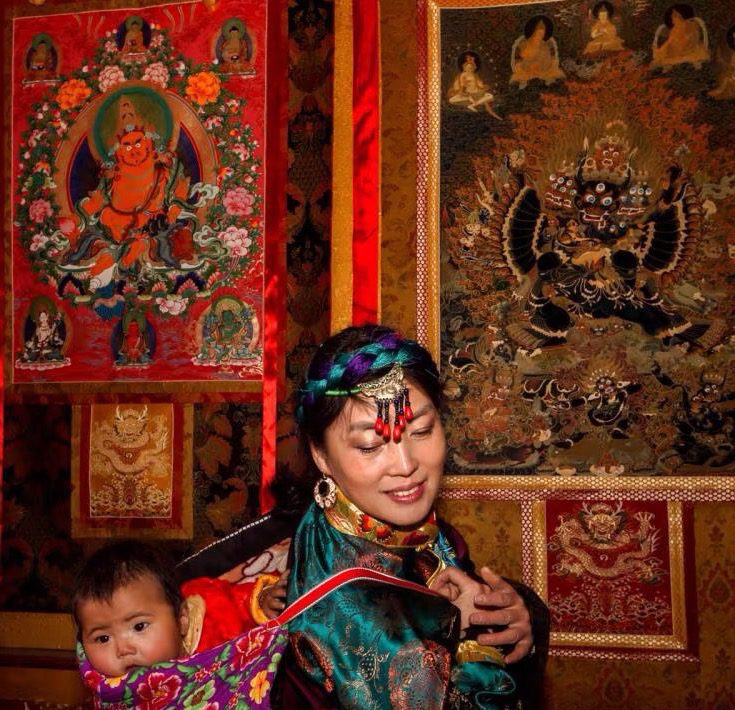
In traditional Thangka painting and sculpture, the depiction of the Sarnath deer is governed by strict iconographic rules. They are almost always shown in pairs, kneeling gracefully on either side of the eight-spoked Dharma Wheel (Dharmachakra). Their heads are tilted upwards, their gaze fixed upon the wheel with an expression of serene rapture. This is not just a historical commemoration; it is a living teaching. The posture of the deer—kneeling, attentive, peaceful—instructs the practitioner on the proper attitude for receiving wisdom. The mineral pigments used are themselves symbolic; the golden yellow of their bodies might be created from orpiment, representing the richness of the teachings, while the space around them might use ground lapis lazuli, symbolizing the limitless, sky-like nature of ultimate truth. The precise geometry and grace of their forms create a visual harmony that calms the mind and prepares it for contemplation.

The Golden Deer: Bodhisattva Lessons from the Jataka Tales
Beyond the Sarnath story, the deer appears in the Jataka Tales, stories of the Buddha’s previous lives. One of the most beloved is the tale of the Golden Deer, who was the Buddha in a past incarnation as a Bodhisattva. In this story, the noble deer saves a drowning man, who then betrays him to a king for a reward. When captured, the Golden Deer does not show anger but instead preaches a sermon on gratitude and compassion that transforms the king’s heart. In art depicting this tale, the deer is often rendered in pure gold leaf, its body luminous against a lush landscape. This is not just an illustration but a profound teaching on the Bodhisattva ideal: the practice of selfless compassion even in the face of betrayal. The gold itself symbolizes the pure, untarnishable nature of the enlightened mind (Bodhicitta). To meditate upon such an image is to activate that same potential for boundless compassion within oneself.
Capturing Serenity: The Artistic Rendering of Gaze, Posture, and Spirit
The true mastery of a Himalayan artist is revealed in their ability to capture the intangible. It is one thing to paint the form of a deer; it is another to paint its serenity. This is achieved through subtle details passed down through generations of master-student lineage. The gentle curve of the neck, the soft, half-closed eyes, the relaxed but alert posture of the ears—these are the elements that convey the spirit. The artist does not just observe a deer in nature; they meditate on the *quality* of deer-ness, on the state of being that it represents. The space around the deer in a painting is as important as the deer itself, representing the silence and stillness from which true listening arises. The entire composition becomes a field of peaceful energy, a visual aid for cultivating a calm and attentive mind.
A Comparative Lens: The Stag in European Heraldry vs. the Hart in Himalayan Art
To fully appreciate the unique focus of Himalayan art, it is useful to contrast it with another tradition. In European heraldry, the stag is also a powerful symbol. However, it is most often depicted as a symbol of power, nobility, and warrior strength. It is shown ‘passant’ (walking) or ‘courant’ (running), often with its antlers presented as formidable weapons. It represents earthly authority and noble lineage. While a valid and potent symbolism, its emphasis is on worldly status and prowess. The Himalayan hart, by contrast, is almost always depicted at rest, kneeling, or listening. Its antlers are a crown of wisdom, not a weapon. Its power is not worldly, but spiritual. It represents renunciation, peace, and the sovereignty that comes from mastering the mind, not from conquering others. This comparison highlights the profound intention behind Dharma art: to turn the viewer’s mind away from worldly concerns and toward the path of inner liberation.
Spiritual Application: How to Connect with the Deer’s Sacred Energy
Knowledge of a symbol remains inert until it is applied. The lineage of the deer’s wisdom is not meant to be a static, intellectual collection of facts; it is a living stream of energy that you can consciously engage with. The deer’s appearance in your life is a practical invitation to embody its qualities. This is not about imitation, but integration. The goal is to cultivate the deer’s gentle awareness, intuitive sensitivity, and graceful strength within your own being. The following practices are gateways, methods to deepen your Samaya with this sacred messenger and translate its symbolic language into lived experience. They are designed to move the wisdom from your head to your heart, transforming your personal encounter into a sustainable spiritual practice that can support you on your journey.
The Deer’s Breath: A Meditation for Cultivating Stillness and Gentle Awareness
Find a quiet space where you can sit comfortably, either on a cushion or a chair, with your spine erect but not rigid. Close your eyes and bring your awareness to your breath. Now, imagine a deer standing peacefully in a misty forest at dawn. Visualize its calm, rhythmic breathing. Its sides rise and fall with an effortless grace. Begin to attune your own breath to this image. Let your inhales and exhales become silent, gentle, and deep. With each inhale, breathe in the quality of stillness. With each exhale, release any tension or mental chatter. Now, bring your awareness to your sense of hearing. Like the deer, expand your listening to include the subtlest sounds around you—the hum of the house, the whisper of the wind, the beat of your own heart. Do not label or judge these sounds; simply receive them with the open, non-reactive awareness of the deer. Practice this for 10-15 minutes daily to cultivate a profound sense of inner peace and heightened mindfulness.
Interpreting the Encounter: Journaling Prompts to Decode Your Personal Message
Your encounter with the deer was unique to you. To understand its specific message, contemplative writing is a powerful tool. Take a journal and respond to the following prompts with honesty and intuition, without censoring yourself:
- Describe your encounter in as much sensory detail as possible. Where were you? What was the time of day? What did you feel in your body? What was the deer doing?
- At this specific moment in my life, what does the quality of ‘gentleness’ mean to me? Where do I need to be softer with myself or others?
- The deer is a guide through transitions. What threshold or ‘edge’ am I currently standing on in my own life? What is the ‘deep forest’ of the unknown that I am hesitant to enter?
- The deer symbolizes heightened sensitivity. In what areas of my life have I been numbing my senses or ignoring my intuition? What subtle messages have I been missing?
- If the deer could speak, what one word of guidance would it offer me right now?

Creating a Sanctuary: Using Deer Imagery to Foster Peace in Your Space
Your external environment profoundly influences your inner state. You can create a sanctuary of peace by consciously incorporating the deer’s energy into your personal space. This is not about mere decoration; it is about creating a visual anchor for your intentions. Place a piece of Dharma art—a small statue, a Thangka print, or even a beautiful photograph of a deer—in a place where you will see it daily, such as your meditation area, your workspace, or by your bedside. Let this image be a focal point. Before starting your day, take a moment to look at it, connect with its energy of serene alertness, and set an intention to carry that quality with you. The presence of this sacred iconography acts as a constant, gentle reminder of the path, helping to transform your home from a simple dwelling into a space that supports your spiritual unfolding.
Walking the Path: Embodying the Deer’s Qualities of Grace and Alertness in Daily Life
The ultimate application is to walk through your day as the deer walks through the forest—with grace, awareness, and a gentle strength. This means bringing mindfulness to mundane activities. When you are walking, feel the connection between your feet and the earth. When you are in a conversation, practice deep listening, just as the Sarnath deer listened to the Buddha, without immediately formulating a response. When you feel reactive or angry, pause and connect with the deer’s calm heart, choosing a compassionate response over a harsh one. Move through your tasks with a fluid economy of motion, not with rushed, anxious energy. Embodying the deer’s qualities is a moment-to-moment practice. It is about choosing the path of peace, vigilance, and gentleness in every step, every word, and every breath.
Cultural Preservation: Why the Deer’s Message Endures in the 21st Century
Symbols are not static relics; they are living seeds of wisdom. The endurance of the deer as a spiritual guide across millennia is a testament to the timeless relevance of its message. In our contemporary world, characterized by unprecedented speed, distraction, and disconnection, the deer’s medicine is more vital than ever. Its symbolism offers a direct antidote to the prevailing anxieties of our time and provides a clear path back to what is essential, true, and enduring. To engage with this ancient symbol is to participate in its preservation, ensuring that its profound teachings on peace and awareness are not lost but are carried forward as a vibrant, living force. This act of remembering is a sacred responsibility, a way of tending to the health of our collective soul.
An Antidote to a Rushed World: The Call for Gentleness and Patience
Our culture relentlessly glorifies speed, efficiency, and aggressive ambition. This constant pressure creates a background hum of anxiety and burnout. The deer emerges from the quiet woods as a powerful counter-narrative. It represents the wisdom of slowing down, the power of patience, and the strength found in gentleness. It teaches that not every problem can be solved by force; some require the stillness to listen and the sensitivity to perceive a more subtle path. The deer’s message calls us to step out of the frantic current of modern life, to find our own quiet groves, and to remember that true progress is often silent, organic, and rooted in a deep sense of inner peace. It is a reminder that being gentle with ourselves and others is not a luxury, but a fundamental necessity for sustainable well-being.
Re-wilding the Spirit: The Deer as a Symbol for Reconnecting with Nature
As humanity becomes increasingly urbanized and technologically mediated, a deep spiritual hunger arises—a longing for our primal connection to the natural world. The deer is a quintessential symbol of the wild, not a savage, dangerous wild, but a wildness characterized by grace, intuition, and perfect attunement to the environment. To contemplate the deer is to awaken the dormant, ‘wild’ part of our own spirit—the intuitive, sensory self that has been quieted by concrete and screens. It reminds us that we are not separate from nature, but are an intrinsic part of it. The deer’s call is a call to ‘re-wild’ our spirit: to walk in the woods, to watch the sky, to listen to the wind, and to reclaim our birthright as sensitive, interconnected beings within the great web of life.
Guardians of a Fragile Wisdom: Ecological Consciousness and Sacred Symbols
The deer is a sensitive species, an indicator of the health of its ecosystem. Its well-being is inextricably linked to the well-being of the forest. In this way, the deer has become a potent symbol for ecological consciousness. It represents the fragile beauty of our natural world and the urgent need to protect it. When we revere the deer as a sacred symbol, we are implicitly committing to protecting its physical reality. The spiritual and the ecological become one. To honor the messenger, we must protect its home. This understanding elevates environmentalism from a political or scientific issue to a sacred duty. The deer teaches us that our spiritual health is inseparable from the health of the planet.
The Living Tradition: How Supporting Artisanal Work Protects Ancient Narratives
How does a symbol like the deer survive for thousands of years? It survives through the living hands of artists and craftspeople who keep its narrative alive. The Thangka painter in a Himalayan monastery, the sculptor carving a deer in wood, the weaver integrating its form into a textile—these are the guardians of the lineage. When we support authentic, ethically sourced artisanal work, we are doing more than acquiring a beautiful object. We are casting a vote for the preservation of this sacred wisdom. We are providing the resources that allow a master to teach an apprentice, ensuring that the intricate language of iconography is not replaced by mass-produced facsimiles. This act of conscious patronage is a vital form of cultural preservation. It ensures that the deer’s timeless message of peace, compassion, and mindful listening will continue to inspire and guide generations to come.
The Wisdom FAQ
- If the deer represents gentleness, how can its energy guide me through conflict or difficulty? The deer’s gentleness is not passivity. It is the wisdom to not add aggression to an already difficult situation. In conflict, the deer’s energy guides you to remain calm and hyper-aware, to listen deeply to the other’s position (even if you disagree), and to navigate the situation with grace rather than brute force. It is the strength to de-escalate and to find a path that causes the least harm.
- I saw a deer in a dream. Does that carry the same weight as a physical encounter? In many spiritual traditions, the dream world is considered a vital space for receiving guidance. An encounter with a powerful symbol like the deer in a dream is deeply significant. It is a message from your own subconscious or the collective unconscious. Pay close attention to the context of the dream and your feelings within it. It is an invitation to look inward and apply the deer’s symbolic meaning to your inner landscape.
- What is the Samaya, or sacred commitment, involved in adopting the deer as a personal symbol? The Samaya is a sacred bond. To adopt the deer as a guide is to make a commitment to cultivate its qualities within yourself. It is a vow to practice deep listening, to act with gentleness and compassion wherever possible, to sharpen your mindfulness, and to walk through life’s changes with grace. It is not about worshipping the animal, but honoring the principles it embodies through your own actions.
- Can the symbolism of the male stag (hart) and the female (doe) be different? Yes, while they share core qualities, there can be nuanced differences. The stag, with its prominent antlers, often emphasizes themes of regeneration, spiritual sovereignty, and the guardian archetype. The doe is frequently associated with heightened intuition, subtlety, grace, and the fierce, gentle protection of motherhood. Together, they represent a complete and harmonious balance of these sacred energies.
- How can I reconcile the deer as a symbol of peace with its reality as prey in the natural world? This apparent paradox holds a profound teaching. The deer lives with the constant reality of danger, yet it does not live in a state of perpetual anxiety. It embodies peace *in the midst of* precariousness. This teaches us that we do not need to wait for a perfect, safe world to cultivate inner peace. True serenity is the ability to maintain a calm and open heart, even when faced with the inevitable challenges and ‘predators’ of life. Its existence is a masterclass in living gracefully with impermanence.
The Guardian’s Reflection
The luminous form of the deer, half-seen in the mists of time, is more than a symbol; it is a key. It unlocks a capacity for stillness in a world of noise, a gentleness in a world of force. This wisdom does not belong to any single culture or creed; it is the inheritance of all who have the quiet courage to listen. To learn its language, to welcome its presence, to protect the art that holds its story—this is how we become guardians of a wisdom our world desperately needs. May you walk with the deer’s grace, and may its silent teaching illuminate your path.
References:
China Highlights https://www.chinahighlights.com
Smithsonian National Museum of Asian Art https://asia.si.edu
Travel China Guide https://www.travelchinaguide.com