
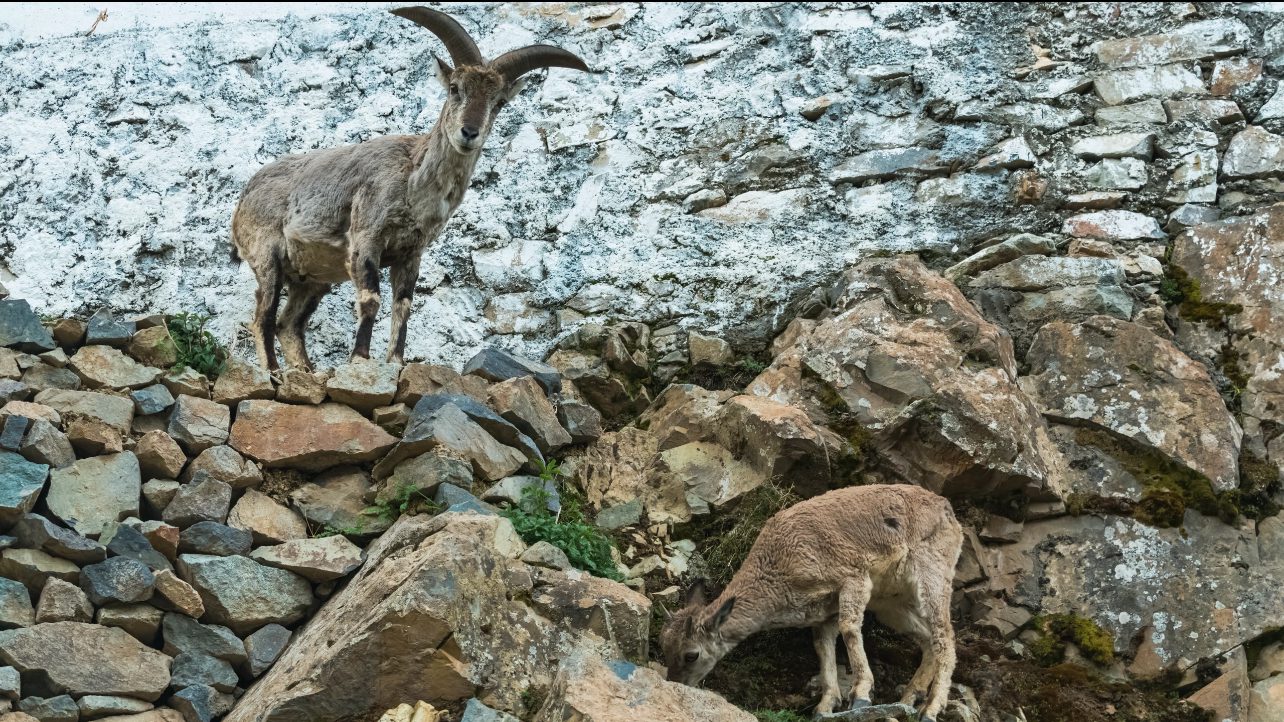
The cold mountain air is still. A branch snaps under an unseen weight, and in that sound, the world stops. You look up, and there it is. The gaze of the deer meets yours across a silent clearing. For a moment, time dissolves. You are not just an observer; you are seen, acknowledged by a consciousness as ancient as the stones and trees around you. This encounter was not a mere coincidence. It was an invitation, a summons from an intuitive part of yourself and the natural world you had perhaps forgotten was there. The hope that this moment held profound significance, that it was a spiritual sign meant for you, is not a fantasy. It is the awakening of a lineage connection, a sacred thread of meaning that has been woven through human history for millennia. What you seek is not simply information, but the transmission of wisdom. This is our Samaya—our sacred commitment—to preserve and share it.
Insights You Will Gain
- An understanding of the deer’s consistent presence as a sacred symbol across disparate world cultures and timelines.
- A deep dive into the iconography of the deer’s form, decoding the spiritual meaning held within its antlers, eyes, and movements.
- The transmission of core myths and sacred narratives where the deer acts as a divine messenger, guide, and protector.
- Respectful, lineage-based practices to integrate the deer’s energy of gentleness, intuition, and grace into your own spiritual life.
- A contextualization of the deer’s vital message for our contemporary world, particularly regarding ecological consciousness and inner strength.
The Origin & Lineage: A Trail Through Time
The authority of a symbol is not invented; it is earned through millennia of consistent human reverence. The deer did not become a sacred figure by chance. Its presence is a golden thread running through the spiritual history of humanity, from the flickering firelight of Paleolithic caves to the serene gardens of Japanese shrines. To understand its power is to trace this unbroken lineage. The fundamental reason for its universal veneration lies in its unique embodiment of a profound paradox: it is at once a creature of extreme sensitivity and vulnerability, yet it moves through the world with unmatched grace, awareness, and quiet strength. It represents life itself—both the prey and the sacred spirit, the sustainer and the divine.
The Prehistoric Gaze: Cave Paintings and Shamanic Roots
Long before written language, our ancestors spoke in symbols painted onto the deep wombs of the earth. In caves from Lascaux to Altamira, the deer is a recurring motif. These were not mere decorations or hunting manuals. These were sacred spaces, portals where the physical and spiritual worlds met. The deer, often depicted with exaggerated antlers and a dynamic sense of motion, was a primary spirit animal. For the shaman, the deer was a psychopomp, a guide capable of traversing the liminal spaces between worlds. Its keen senses represented the heightened awareness needed for spiritual journeys. Its antlers, which are shed and regrown annually, were the original symbol of death and rebirth, a physical manifestation of cyclical time and resurrection that predates agricultural deities. This was the first Dharma art, a direct expression of natural law etched in ochre and charcoal.
The Celtic Hart: Messenger of the Otherworld and Sovereignty
Within the deep green forests of the Celtic world, the white hart was a being of singular power. To see one was to be beckoned on a quest, often leading the hero into the Otherworld, the realm of the fae and the gods. The deer was inextricably linked to sovereignty; in many tales, the pursuit of a sacred deer was a test for a future king, proving his worthiness and connection to the spirit of the land. It represented the untamable, wild soul of nature itself. Cernunnos, the Horned God, often depicted with the antlers of a stag, was the lord of wild things, fertility, and the forest. He was not a god to be worshipped from afar but a primal energy to be encountered. The antlers signified his dominion over the cycles of growth and decay, a direct lineage from the shamanic roots of prehistoric Europe. This was not a symbol to be passively observed; it was a living force that demanded engagement and respect.
Buddha’s First Sermon: The Deer as Listener in the Sarnath Park
The deer holds a place of profound honor within the Buddhist tradition. After his enlightenment, the Buddha sought out his five former ascetic companions to share the Dharma. He found them in a park near Sarnath, a place where deer roamed freely, protected by the king. As the Buddha delivered his first sermon, the Turning of the Wheel of Dharma, the scriptures record that the deer gathered around him, kneeling in reverence to listen. This iconography, often represented by two deer flanking the Dharma wheel, is one of the most pervasive symbols in Buddhist art. The deer represent the ideal disciple: gentle, attentive, and receptive to the truth. They symbolize the peace that arises from hearing the true teachings and embody the Bodhisattva ideal of compassionate listening. Their presence sanctifies the ground of the sermon, signifying that the Buddha’s message of liberation was not just for humans, but for all sentient beings.
Native American Traditions: The Deer as Sustainer and Gentle Guide
Across the vast and varied traditions of Native American peoples, the deer is revered as a being of immense generosity and sacrifice. It is the sustainer, providing food, clothing, and tools, but this relationship is bound by a deep Samaya of respect and gratitude. The deer is seen as a willing participant in the cycle of life, giving its physical form so that the people might live. In return, hunters perform rituals to honor the deer’s spirit, ensuring its soul is sent back to the Creator with thanks. Beyond its role as sustainer, the deer is a teacher of gentleness, grace, and the importance of a light footprint on the earth. Its spirit is a guide that teaches how to navigate life’s challenges with quiet agility and keen intuition rather than brute force. To see a deer is often considered a message to soften one’s heart and to walk a path of compassion.
Reading the Symbolism: The Deer’s Sacred Anatomy
To truly understand Dharma art and the language of sacred symbols, one must learn to see beyond the surface form. Every element of the deer’s physical being is a vessel of meaning, a piece of iconography that communicates a specific spiritual truth. This is not arbitrary symbolism; it is a direct reflection of the creature’s nature and its role within the cosmic order. The study of the deer’s sacred anatomy is an act of meditation, training the eye to perceive the divine blueprint within the natural world. From the cosmic antennas of its antlers to the quiet certainty of its hooves, the deer’s body is a living scripture, offering profound lessons on growth, compassion, and the art of navigating existence with awareness and grace. This deep reading is a core practice for any serious student of spiritual lineage, transforming a simple animal into a complex and potent teacher.

The Antlers: Cycles of Renewal, Growth, and Spiritual Antennas
The antlers are perhaps the deer’s most striking feature, a living crown that connects it to the heavens. Unlike horns, antlers are shed and regrown each year, making them a powerful and direct symbol of cyclical renewal, regeneration, and resurrection. Each spring, they emerge, covered in a soft velvet rich with blood vessels, a testament to vibrant, potent life force. This process teaches the profound spiritual lesson of non-attachment—the necessity of shedding the old, the past, the calcified aspects of the self, to allow for new, more magnificent growth to occur. Metaphysically, the branching antlers are seen as spiritual antennas, attuning the deer to the subtle energies of the forest and the cosmos. They reach upward, drawing down celestial wisdom, while their points branch out, perceiving the manifold energies of the world. In many traditions, the number of points on an antler signifies spiritual attainment or authority. Working with antler imagery in sacred art, often crafted from sacred silver or wood, is a practice of invoking this power of renewal and heightened spiritual perception into one’s own life.
The Gentle Eyes: Unconditional Love, Compassion, and Clairvoyance
To meet the gaze of a deer is a transformative experience. Its large, dark eyes seem to hold an ancient, soul-stirring stillness. They are devoid of judgment, aggression, or guile. Instead, they emanate a profound gentleness, a quiet vulnerability that is itself a form of immense strength. This is the look of unconditional love and pure compassion, the quality of Avalokiteshvara or Kuan Yin. The deer’s physical vulnerability as a prey animal is transmuted, in spiritual iconography, into a radical openness. Its eyes are a symbol of clairvoyance—not the fortune-telling kind, but the ability to ‘see clearly’ into the heart of things, to perceive the truth beneath the surface. In meditation practices, visualizing the deer’s eyes can be a powerful method for cultivating a compassionate heart and dissolving the armor of the ego. In Dharma art, the eyes of the deer may be inlaid with materials like lapis lazuli to signify their connection to a deep, celestial wisdom and clarity of vision.
| Symbol / Element | Associated Quality | Sacred Meaning |
|---|---|---|
| Antlers | Renewal, Growth | The cyclical nature of life, death, and rebirth. The shedding of the past to make way for new spiritual growth. Cosmic connection. |
| Eyes | Gentleness, Clarity | Unconditional love, compassion (Karuna), and the ability to see spiritual truth without judgment. Clairvoyance. |
| Hooves | Agility, Certainty | Finding a sure-footed path through life’s challenges. Graceful movement, balance, and the ability to navigate difficult terrain. |
| Ears | Sensitivity, Awareness | Deep listening, intuition, and attentiveness to subtle spiritual messages and warnings. The quality of the ideal disciple. |
| White Hide (White Hart) | Purity, Otherworldliness | A messenger from the spirit world. The start of a sacred quest. Spiritual illumination and transcendence. |
The Weaving of Mythos: The Deer in Sacred Narratives
Symbols gain their deepest resonance not from abstract definitions but from their enactment in sacred stories. These narratives are not mere fables or entertainment; they are transmissions of perennial wisdom, living teachings that clothe profound spiritual truths in the accessible forms of myth and legend. The deer rarely plays a minor role in these stories. It is often the catalyst, the guide, or the central embodiment of the teaching itself. To engage with these myths is to participate in a form of sacred theater, allowing the deer’s symbolic power to work upon our own consciousness. By examining the deer’s role in the sacred narratives of Cernunnos, the Buddha, Saint Giles, and the Shinto tradition, we can see how different cultures used the same core symbol to illuminate different facets of the spiritual path, from untamed wildness to protected sanctity.
Cernunnos, the Horned God: Lord of Wild Things and the Forest’s Soul
The figure of Cernunnos, often seen on the Gundestrup Cauldron, is one of the most powerful and enigmatic representations of the deer’s lineage. Seated in a meditative, cross-legged posture reminiscent of a yogi, he is crowned with the formidable antlers of a stag. He is the embodiment of the forest’s soul—a liminal being who is both animal and god, wild and serene. He is the master of life and death, holding a torc (a symbol of sovereignty and wealth) in one hand and a serpent (a symbol of regeneration and chthonic energy) in the other. The animals that surround him—including a deer—are not his subjects but aspects of his own being. Cernunnos represents a path of spiritual attainment through direct communion with the wild, untamed forces of nature. The deer, in this context, is not just a symbol of gentleness, but of potent, virile life force and the primal authority that comes from being utterly connected to the earth. He is the master of the hunt and the protector of the hunted, embodying the sacred balance of the entire ecosystem.
The Parable of the Golden Deer: A Lesson in Perception and Truth
In the Jataka tales, which recount the Buddha’s past lives, the story of the Golden Deer offers a profound lesson on greed, perception, and compassion. In one life, the Bodhisattva was born as a magnificent golden deer, the king of his herd. He was captured by a greedy king who was entranced by his radiant hide. Instead of fighting or fleeing, the Golden Deer spoke to the king with wisdom and eloquence, teaching him the folly of grasping and the true nature of value. The king, moved by the deer’s profound Dharma, released him and declared his entire forest a sanctuary. This story serves as a critical teaching on perception. The king initially saw only the material value of the golden hide, a symbol of worldly attachment. The Bodhisattva deer taught him to see the far greater value of its living wisdom and compassion. The deer here is the embodiment of enlightened action—using wisdom and gentleness, not force, to overcome ignorance and transform a situation of danger into one of liberation for all beings.
Saint Giles and the Hind: A Story of Protection and Sacred Refuge
The lineage of the deer as a sacred being was so powerful that it endured into the Christian era, where it was absorbed into the stories of the saints. Saint Giles, a hermit seeking solitude, lived in the deep forest with only a red deer, or hind, for a companion, which nourished him with her milk. One day, the king’s hunters pursued the hind. She fled to Giles’s hermitage for protection, and as the hunter shot an arrow, Giles stepped in front of the deer, taking the arrow in his own hand. The king, full of remorse, was so impressed by Giles’s compassion that he built a monastery on the spot. Here, the deer symbolizes innocent purity and the sacredness of all life, which must be protected. It represents the seeker’s own vulnerable, spiritual nature that requires refuge from the aggressive, worldly forces of the ‘hunt’. The story transforms the deer from a symbol of the wild into a symbol of sacred refuge and the deep bond between a compassionate protector and the innocent life they guard. This narrative ensured the deer’s place as a holy animal continued within the Western spiritual psyche.
Connecting with the Deer Spirit: A Guide for the Modern Seeker
The call of the deer spirit is not a relic of the past; it is a living energy that can be engaged with here and now. Your encounter was the initial invitation, but deepening that connection requires intention, respect, and practice. The goal is not to ‘capture’ or ‘possess’ this energy, but to cultivate its qualities within yourself: gentleness, heightened intuition, grace, and stillness. These practices are not modern inventions but are rooted in the same principles of awareness and reverence that our ancestors employed. They are a way of honoring the lineage and creating a sacred space in your life for this profound wisdom to manifest. This is a path of listening, not of commanding. By approaching this connection with the humility of a student, you can learn to navigate your own inner and outer landscapes with the same sure-footed certainty as the deer itself.
Interpreting a Deer Sighting: Discerning the Message
When a deer crosses your path, the first step is to be still. Resist the urge to immediately reach for a camera or even to analyze. Simply be present with the moment. Observe its actions. Is it calm? Startled? Is it looking directly at you? Is it leading a fawn? The context is the beginning of the message. A direct, calm gaze is often a call to look within your own heart with compassion and gentleness. A fleeting glimpse of a deer disappearing into the woods can be a reminder to trust your intuition and to follow the subtle, less-traveled paths in your life. Seeing a stag with full antlers might be a message about stepping into your spiritual authority and embracing a cycle of new growth. A doe with a fawn is a powerful symbol of nurturing, innocence, and protecting the vulnerable aspects of yourself or your projects. The key is to quiet your analytical mind and listen with your heart. The feeling the encounter evokes in you—peace, urgency, wonder—is an integral part of the transmission.

Meditation on Deer Energy: Cultivating Gentleness and Intuition
A formal practice can create a powerful container for this energy. Find a quiet space. You may wish to have an image or a piece of Dharma art depicting a deer before you. Begin by focusing on your breath, allowing your body to settle. Then, bring the image of a deer to your mind’s eye. Visualize it standing in a quiet, sun-dappled forest. Focus first on its ears, swiveling and alert. Inhale, and imagine you are breathing in that quality of deep, sensitive listening. Feel your own awareness expand beyond the room, attuning to the subtle sounds and energies around you. Next, bring your focus to its large, gentle eyes. As you exhale, let go of any self-judgment or harshness. Cultivate a gaze of unconditional compassion for yourself and others. Finally, visualize its slender legs and hooves, standing with perfect balance and stillness. Feel that sense of being grounded yet ready to move with grace at a moment’s notice. Rest in this visualization, simply embodying the deer’s core qualities. This is not about ‘becoming’ a deer, but about awakening the deer’s sacred medicine that already exists within you.
The Enduring Messenger: Why the Deer Still Calls to Us
In an era defined by noise, acceleration, and a disconnection from the natural world, the appearance of the deer is more potent than ever. It is not a nostalgic symbol of a lost world but a vital messenger carrying an urgent teaching for our time. The initial instinct that brought you here—the feeling that your encounter was significant—is the correct one. It is a call from a deeper, more instinctual part of your own consciousness, and from the Earth itself, to return to a state of balance. The deer emerges from the periphery, from the liminal spaces between the tamed and the wild, to remind us of what we have forgotten. It offers a medicine that is desperately needed: the radical power of gentleness, the quiet authority of intuition, and the profound wisdom of living in harmony with the cycles of nature. To heed its call is to embark on a path of reconnection.
A Symbol for Ecological Consciousness in an Unbalanced World
The deer is a sensitive barometer for the health of an ecosystem. Where deer thrive, the forest is typically in balance. Its presence reminds us of a world that exists beyond our human-centric concerns—a complex web of life to which we belong, not as masters, but as participants. The deer calls us to a higher form of ecological consciousness, one rooted not in data and fear, but in reverence and a felt sense of kinship. It asks us to walk with a lighter footprint, to listen to the needs of the land, and to remember that our survival is inextricably linked to the well-being of all living things. It stands as a silent sentinel, its gaze a question: Will you be a steward or a destroyer? Honoring the deer as a symbol is a Samaya, a sacred pledge to protect the wild spaces it, and we, call home.
Gentleness as a Radical Strength in Modern Society
Our culture often mistakes gentleness for weakness. Aggression, speed, and dominance are valorized, while compassion, stillness, and sensitivity are often dismissed. The deer offers a powerful counter-narrative. Its survival depends not on aggression, but on supreme awareness. Its strength lies in its grace, its ability to listen deeply, and its capacity to move through the world without causing unnecessary disturbance. This is a form of radical strength. The deer teaches that one can be both gentle and powerful, vulnerable and resilient. It is a call to lead from the heart, to replace reactivity with responsiveness, and to understand that the greatest power lies not in force, but in the quiet, unwavering certainty of a compassionate spirit. Embracing the deer’s medicine is an act of defiance against a culture of brute force, and a step toward a more balanced way of being.
The Wisdom FAQ
- What is the significance of seeing a stag (male) versus a doe (female)?
The iconography is distinct. The stag, with his prominent antlers, often represents spiritual authority, sovereignty, renewal, and the connection to the celestial realm. He is the guardian of the forest. The doe, on the other hand, embodies gentleness, intuition, nurturing, and the mysteries of the earth. She is often a guide to hidden paths and a teacher of deep listening and compassion. They are two sides of the same sacred energy, the sky and earth principles in harmony. - If a deer appears in my dreams, how is that different from a physical sighting?
A dream encounter is a message from your own deep subconscious, your inner landscape. While a physical sighting is a call from the outer world to pay attention, a dream deer is an aspect of your own psyche emerging into awareness. It often points to the need to cultivate deer-like qualities within yourself. Its health and actions in the dream are paramount. A wounded deer might signify a wounded part of your gentle nature, while a guiding deer is your own intuition showing you the way forward. - Can the deer symbol be used in a harmful or disrespectful way?
Yes. Trivializing the deer into a mere decorative motif, devoid of its sacred history, strips it of its power. Using it purely for commercial gain without acknowledging the lineage of reverence, or hunting it without the profound gratitude and ritual of indigenous traditions, constitutes a broken Samaya. To engage with this symbol respectfully is to acknowledge the millennia of wisdom it carries and to approach it with the heart of a student, not a consumer. - How does the deer’s symbolism relate to the concept of the ‘Sacred Hunt’?
The ‘Sacred Hunt’ is an ancient mythological theme where a deity or hero pursues a magical animal, often a deer. This is not a literal hunt for food but a spiritual quest. The deer is the quarry but also the guide. The pursuit is the spiritual path itself, a test of will, purity, and perception. To ‘catch’ the deer is to achieve a state of spiritual illumination or union with the divine. The paradox is that the goal is not to kill the sacred, but to be transformed by it. - How do I maintain a respectful connection without falling into appropriation of specific cultural practices?
The key is to focus on the universal qualities of the deer rather than imitating the specific rituals of a culture you are not a part of. You can honor the Celtic lineage without claiming to be a Druid, or appreciate the Buddhist symbolism without performing specific temple rites. The universal path is through personal meditation on the deer’s qualities of gentleness, awareness, and compassion. Create your own simple rituals of gratitude, spend time in nature with a respectful heart, and support conservation efforts. The deer’s spirit is accessible to all who approach with sincerity and humility.
The Guardian’s Reflection
The gaze of the deer does not fade when it slips back into the forest. It remains, imprinted on the soul. To receive this transmission of wisdom is to accept a quiet responsibility. You are now a keeper of this story, a link in the long chain of lineage that has carried this reverence through the ages. This knowledge is not a possession to be hoarded but a seed to be cultivated. Let it inform the way you walk upon the earth—with greater gentleness. Let it attune your senses—to listen more deeply to the world around you and the world within you. To protect this ancient wisdom is to protect the wild places where the deer still roam, and to guard the quiet, intuitive space in the human heart where its spirit finds refuge. You are not just a seeker; you are now a guardian.
References:
Astrology.com (Chinese Zodiac section) https://www.astrology.com
Cafe Astrology (Chinese Zodiac) https://cafeastrology.com
Joey Yap Research https://www.joeyyap.com