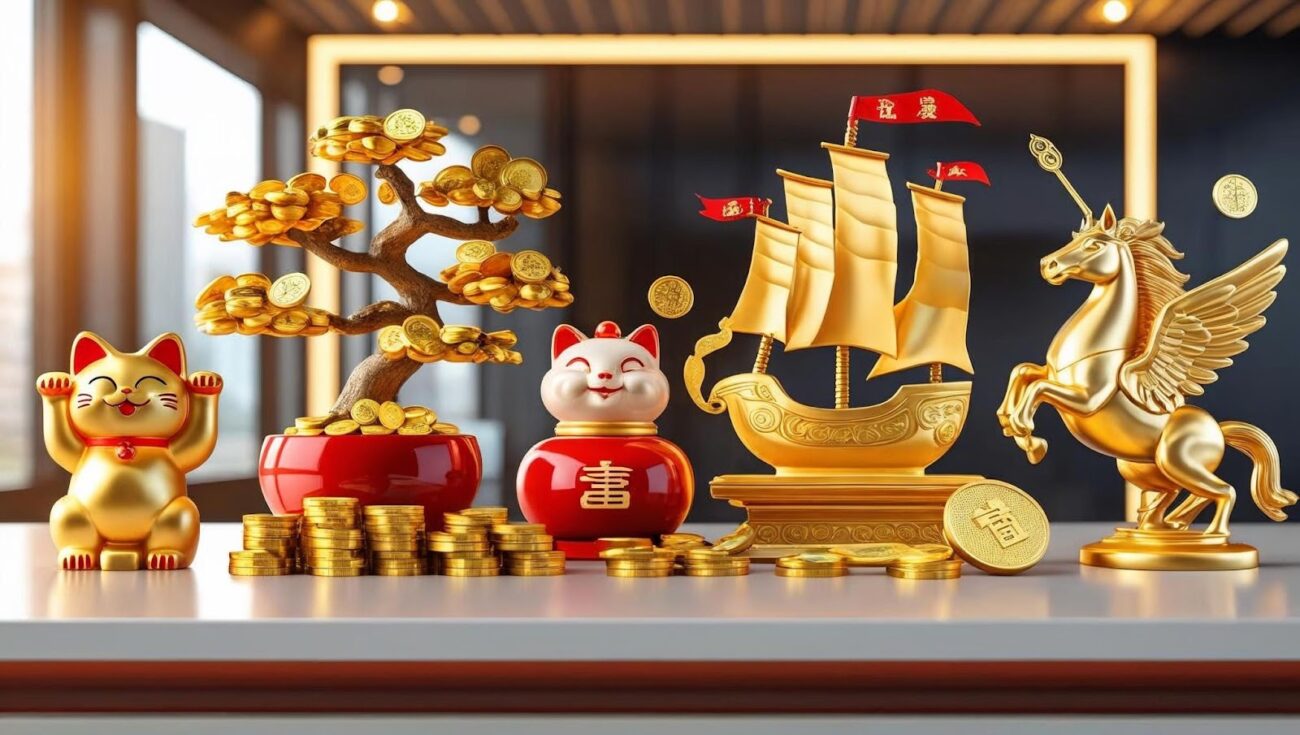

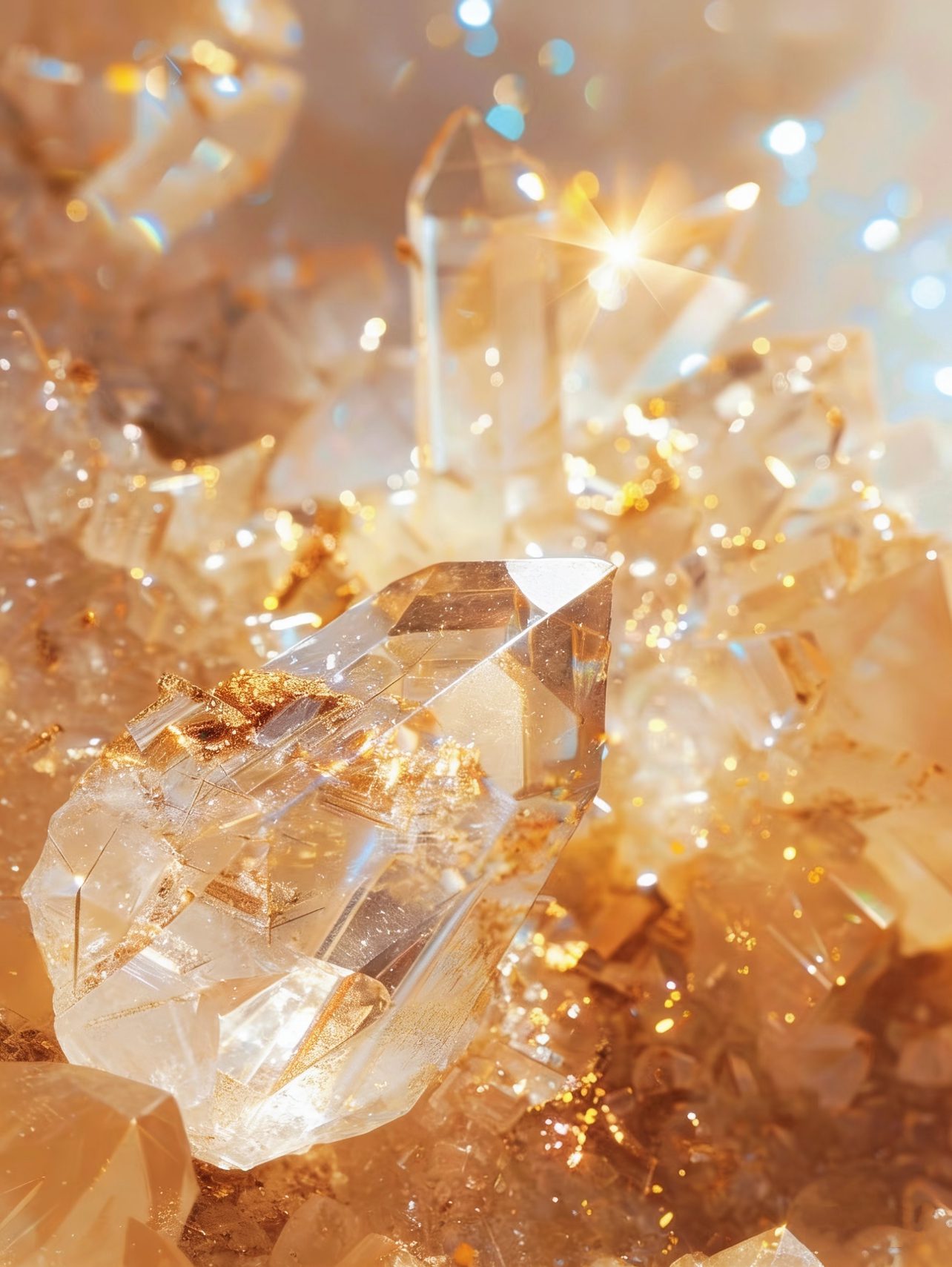
The mountain air is thin, sharp in the lungs. You hold the stone in your palm, its surface cool against your skin, a fragment of captured sunlight. For a moment, it is just a mineral, a thing of the Earth. But as your warmth seeps into its crystalline structure, a deeper connection stirs. This is the sacred hook, the moment a seeker recognizes a tool not just for its physical beauty, but for its energetic potential. You are here because you hold a profound hope: that there exists a tangible link between your inner will and the outer world, a key to unlock a destiny you feel is rightfully yours. You seek a measure of control, a way to sculpt your reality with intention. Yet, a shadow of fear accompanies this hope. It is the fear of misstep, of performing a sacred ritual incorrectly, or worse, of placing your faith in an object that lacks authentic lineage—a beautiful but empty vessel. This compendium is offered to allay that fear and honor that hope. It is not a collection of secrets, but a transmission of knowledge, a continuation of a lineage that has long understood how to partner with the Earth’s gifts to realize the highest aspirations of the human spirit.

Insights You Will Gain: This codex illuminates the sacred history of Citrine as a tool of power, decodes its spiritual iconography, provides the wisdom to discern authentic from altered stones, details a potent ritual for manifestation, and instills the principles of cultural stewardship for this Dharma art practice.
The Solar Lineage: Tracing Citrine’s Path from Sun Gods to Merchant Kings
The story of Citrine is not a recent chapter written by new-age philosophy; it is an ancient epic, etched into the annals of human civilization. Its lineage is one of light and power, tracing back to the very first cultures that looked to the sun as the ultimate source of life and abundance. To hold a piece of Citrine is to hold a direct connection to this unbroken chain of reverence. The Samaya, or sacred commitment, with this stone is an agreement to honor its history while applying its energy toward a noble future. Its journey from the Earth’s core to the altars of seekers is a testament to its enduring significance as a conduit for solar energy and a talisman for earthly success. We must first understand its past to truly harness its power in the present.
Citrine in Antiquity: The Gem of Helios and the Sun’s Kiss
In the Hellenistic Age, from ancient Greece to Egypt, the stone we now call Citrine was often revered as a direct gift from the sun gods. For the Greeks, it was associated with Helios, the titan who drove the chariot of the sun across the sky each day, bathing the world in light, warmth, and life. To possess a golden gem was to carry a fragment of his divine power, a literal sun-kiss. Priests and priestesses would use these stones in solar rituals, believing they could store the sun’s energy and radiate it outward, promoting growth, dispelling darkness, and revealing truth. This Dharma art was not merely decorative; it was functional spirituality. The stone was a tool for protection against venomous creatures and negative thoughts, its light believed to purify the mind and spirit. This lineage of solar worship established Citrine’s primary energetic signature: that of pure, undiluted, life-giving solar force, a power that illuminates the mind and invigorates the will.
The Merchant’s Stone: A Legacy of Commerce and Prosperity in Rome and Greece
As empires grew, so did the reputation of Citrine. Roman merchants, plying the trade routes of a burgeoning empire, quickly adopted it as ‘The Merchant’s Stone.’ It was not merely a symbol of wealth but was believed to be an active agent in its acquisition and preservation. Shopkeepers would place a crystal in their cash boxes or wear it as a ring on their index finger—the finger of authority and direction—believing it attracted customers and prevented theft. This wasn’t superstition; it was a psychological and spiritual practice. The stone’s bright, optimistic energy was thought to foster good negotiations, encourage generosity in patrons, and maintain a positive flow of commerce. Its presence was a constant reminder of the goal: abundance. This historical application cemented Citrine’s role as a primary tool for manifestation, particularly in the realms of finance and business. The wisdom passed down through generations of traders was simple: keep the sun’s energy close to your wealth, and it shall multiply.
Geological Provenance: The Earthly Origins of a Solar Gem
The spiritual lineage of Citrine is mirrored by its profound geological history. This crystal is a variety of quartz, its golden hue the result of iron impurities within the silicon dioxide matrix, colored by geothermal heat deep within the Earth’s crust. It is born in the planet’s crucible, a slow alchemy of pressure, heat, and mineral presence over millennia. Understanding this material origin is crucial. The stone is not just ‘yellow’; it is quartz that has undergone a specific, transformative journey. This process imbues it with an energy of resilience, transformation, and enduring strength. Its formation speaks to the very essence of manifestation: the application of consistent energy (heat) over time to transform a raw element (quartz) into a thing of beauty and power (Citrine). Its major sources in Brazil, Madagascar, and the Ural Mountains of Russia are sacred sites in their own right, pockets of the Earth where this solar alchemy has perfected its art. To connect with Citrine is to connect with this patient, powerful, and transformative force of nature.

Sacred Symbolism: Reading the Language of Light and Abundance
Every sacred object communicates through a symbolic language, an iconography that transcends words. To work with Citrine effectively requires learning to read this language of light. The stone is not a passive charm; it is a complex energetic instrument whose power is encoded in its color, its crystalline structure, and its resonant frequency. This section is dedicated to the Dharma art of interpretation, providing the foundational knowledge of *why* Citrine is such a potent ally for manifestation. The lineage of this wisdom combines ancient metaphysical principles with an understanding of physical properties, seeing no separation between the two. When we comprehend the sacred symbolism of Citrine, we move beyond hope and into a state of active co-creation. We are no longer just asking for assistance; we are speaking the universe’s native tongue of energy, frequency, and vibration. This is the core of the practice, the bridge between the material and the spiritual that makes true manifestation possible.
The Solar Plexus (Manipura) Chakra: Citrine as a Key to Personal Power and Will
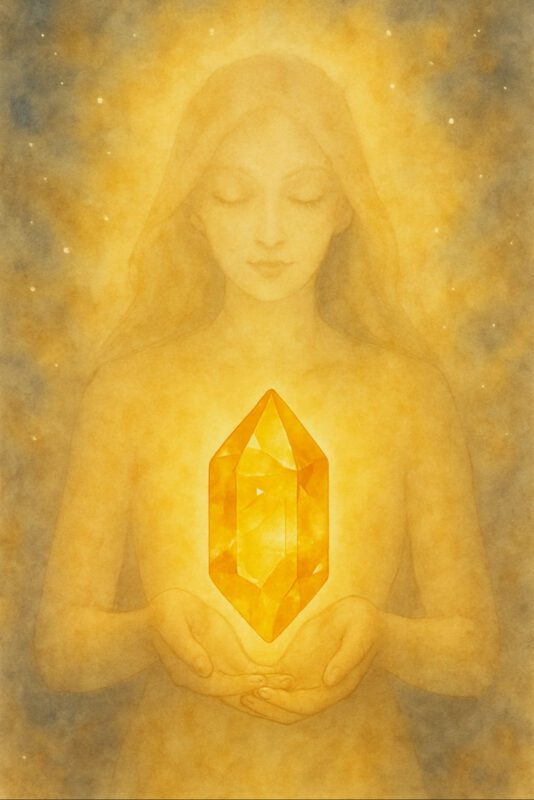
In the yogic and Vedic traditions, the human energetic system is mapped through chakras, or wheels of energy. The third chakra, located at the solar plexus, is known as Manipura, which translates to ‘city of jewels.’ This center is the seat of our personal power, our will, our self-esteem, and our ability to take action and control our own lives. It is the engine of manifestation. Its element is fire, its color is yellow, and its function is transformation. Citrine, with its solar fire and golden-yellow hue, is a perfect resonant key for the Manipura chakra. It does not impose its energy upon us; rather, it vibrates at a frequency that awakens, clears, and balances our own inner fire. When the Manipura is blocked or stagnant, we experience self-doubt, procrastination, and a sense of powerlessness. By placing Citrine on this area during meditation or simply carrying it, we introduce a clarifying and stimulating frequency that helps dissolve these blockages. It acts like a tuning fork for our will, reminding the ‘city of jewels’ of its inherent power and light, empowering us to act with confidence and purpose toward our goals.
The Alchemy of Color: Decoding the Golden-Yellow Ray of Intellect and Optimism
Color is not mere decoration; it is a visible spectrum of light frequency, and each frequency carries specific information and psychological influence. The golden-yellow ray of Citrine is the color of the intellect, of mental clarity, and of joyful optimism. It stimulates the mind, enhances creativity, and encourages a positive outlook. In the practice of manifestation, a clear and focused mind is paramount. Vague wishes produce vague results. The energy of Citrine helps to cut through the fog of confusion and doubt, allowing us to define our intentions with precision. It is the energy of a bright, sunny day after a storm—everything seems clearer, more possible. This optimism is not a form of delusion, but a high-vibrational state that naturally attracts positive outcomes and opportunities. By meditating with Citrine or placing it in one’s workspace, one invites this frequency of clarity and joy into their mental field, making the process of manifestation not a desperate struggle, but an empowered and creative endeavor.

Crystalline Structure: How Hexagonal Geometry Amplifies Intent
The physical form of a crystal is a direct expression of its energetic nature. Citrine, as a member of the quartz family, grows in a hexagonal (trigonal) crystal system. This is not a random occurrence; it is sacred geometry made manifest. This six-sided structure is renowned in both science and metaphysics for its ability to receive, amplify, and transmit energy in a focused beam. Think of a laser, which uses a crystal to focus scattered light into a coherent, powerful ray. In the same way, the hexagonal structure of Citrine takes the raw, unfocused energy of our intention and amplifies it, structuring it into a coherent energetic signal that is broadcast into the universe. When you hold a Citrine point and focus your will upon a specific goal, the crystal’s lattice acts as a geometric amplifier. It organizes the energy of your thought, transforming a gentle wish into a potent, directed command. This is why the quality of the crystal matters. A clear, well-formed point will transmit this energy with greater precision. This is the physics of prayer, the sacred geometry of manifestation at work.
| Symbol / Attribute | Sacred Meaning | Primary Association |
|---|---|---|
| Golden-Yellow Color | Clarity of mind, joy, optimism, solar energy, intellectual power. | The Sun, Helios, Ra |
| Hexagonal Crystal System | Amplification, focused intention, structuring energy, bridging realms. | Sacred Geometry, The Flower of Life |
| Transparency / Clarity | Purity of intent, truth, dispelling illusion, mental focus. | Manipura (Solar Plexus) Chakra |
| Iron (Fe3+) Impurity | The agent of transformation, grounding, strength, physical manifestation. | The Earth Element, Alchemy |
| ‘The Merchant’s Stone’ | Acquisition and maintenance of wealth, prosperous exchange, flow of abundance. | Commerce, Entrepreneurship, Jupiter |
The Alchemy of Creation: Discerning True Citrine in a World of Illusions
In any sacred tradition, the authenticity of the tools is of paramount importance. The commitment, or Samaya, between a practitioner and their ritual object is based on a foundation of integrity. This brings us to a critical junction in your journey with Citrine: the ability to discern a stone with a natural lineage from one that has been artificially created. This knowledge directly addresses the seeker’s fear of being misguided, transforming you from a passive consumer into a knowledgeable custodian. The marketplace is flooded with heat-treated Amethyst that is sold as Citrine. While beautiful, its energetic history is vastly different. This is not a judgment of one stone being ‘bad’ and the other ‘good,’ but an acknowledgment of different paths and different energies. To choose consciously, one must first see clearly. This education is an act of empowerment, ensuring the energetic signature of your chosen talisman is perfectly aligned with the deep, patient, and potent power of authentic manifestation that you seek.
The Earth’s Crucible: The Slow Formation of Natural Citrine
True, natural Citrine is a relatively rare variety of quartz. Its characteristic pale yellow to smoky golden-brown hue is created over eons through a gentle, natural heating process deep within the Earth. The trace amounts of iron within the quartz crystal are slowly transformed by this geothermal heat, resulting in its sun-kissed coloration. The color is typically uniform throughout the crystal, and it often has a subtle, almost ethereal quality. It can range from a light champagne yellow to a deep honey or smoky cognac color. Finding it in large, perfectly clear clusters is uncommon, making such specimens highly prized. This slow, natural alchemy is the source of its unique energetic signature. It carries the vibration of patience, of gradual and sustainable growth, and of authentic power that has been built over time. Its energy is stable, warming, and deeply connected to the Earth’s creative force. It is the embodiment of a manifestation that is built on a solid, natural foundation.
A Question of Integrity: Identifying Heat-Treated Amethyst
The vast majority of ‘Citrine’ available today is actually Amethyst that has been subjected to intense heat (around 470°C to 560°C) in a lab or oven. This process rapidly changes the iron impurities in the purple Amethyst to the characteristic color of Citrine. While chemically still quartz, its energetic story is one of sudden, forceful transformation rather than slow, natural evolution. There are key visual cues to identify it. Heat-treated Amethyst often has a much deeper, more intense orange or reddish-brown color, sometimes almost burnt in appearance. Crucially, the color is often concentrated at the tips of the crystals, while the base remains clear or milky white. This is because it is typically sold in geode or cluster form, the same way Amethyst grows. Natural Citrine rarely grows in the dense, clustered geode formation of Amethyst; it more commonly forms as single points or smaller clusters. Recognizing these differences—the intense, uneven color and the geode formation—is the primary method for discerning an altered stone.
Energetic Signatures: Why Authenticity Matters for Spiritual Practice
For a spiritual practitioner, the distinction between natural Citrine and heat-treated Amethyst is significant. The energy of an object is inextricably linked to its history—its lineage. Natural Citrine holds the wisdom of millennia, a deep, grounding, and patient solar power. It teaches us to manifest with integrity and to build our aspirations on a solid foundation. Its energy is like the steady, life-giving warmth of the sun. Heat-treated Amethyst, on the other hand, carries the energetic imprint of rapid, man-made change. Its energy can be more intense, fiery, and quick to act. Some find this useful for blasting through immediate blockages or for a quick jolt of creative energy. However, for the deep, soul-aligned work of long-term manifestation, the stable and authentic vibration of natural Citrine is often preferred. The choice is a personal one, but it must be an informed one. Choosing a natural stone is a declaration of your commitment to an authentic path, honoring the Earth’s slow and deliberate magic over the allure of a quick fix. This conscious choice deepens your Samaya with the mineral kingdom and aligns your practice with the unadulterated forces of nature.
Spiritual Application: A Practical Rite for Manifestation
Knowledge of a tool’s history and iconography is the foundation, but its true power is unlocked through application. This section provides a practical, respectful framework for engaging with your Citrine talisman in a rite of manifestation. This is more than a set of instructions; it is a sacred technology, a lineage practice designed to align your inner will with the amplifying power of the crystal and the benevolent forces of the universe. The secret hope for a tangible method to influence your destiny is honored here, not with simplistic platitudes, but with a structured ritual that requires clarity, focus, and reverence. Each step is a vital part of the alchemical process, transforming a simple wish into a focused intention, and a focused intention into a tangible reality. Approach this practice not as a command, but as a collaboration between you, the stone, and the creative intelligence of the cosmos.
Step 1: Cleansing and Consecration of Your Citrine Talisman
Before any sacred work, your tool must be energetically cleansed and consecrated for its purpose. Citrine is one of the few stones said to not accumulate negative energy, but it is still wise to clear it of any ambient energies from its journey to you. Avoid harsh methods. The most respectful ways involve sound or smoke. Ring a bell or a singing bowl over the crystal, allowing the pure sonic vibrations to dislodge any stagnant energy. Alternatively, pass the stone through the smoke of sacred herbs like sage, palo santo, or copal, with the intention of purification. Once cleansed, consecrate it. Hold the Citrine in both hands at your heart center. State your purpose aloud: ‘I consecrate this stone of the sun as my sacred ally in the manifestation of [state your general intention, e.g., ‘abundance and prosperity,’ ‘creative success,’ ‘personal sovereignty’].’ This act establishes the Samaya, the sacred bond, and dedicates the crystal’s energy exclusively to your purpose.
Step 2: The Art of Focused Intention – Clarity Before Action
The universe responds to clarity, not ambiguity. The most critical step in manifestation is defining precisely what you wish to create. A vague desire for ‘more money’ has little power. A focused intention, such as ‘To receive an additional $2,000 this month through ethical and joyful means for the purpose of [state the purpose, e.g., ‘investing in my education’]’ is a potent, directed command. Take time to write your intention down on a piece of paper. Use positive, present-tense language as if it has already occurred. For example, ‘I am grateful for the successful launch of my business, which now serves many and provides for me abundantly.’ Read your intention aloud while holding your Citrine. Feel the emotional reality of its fulfillment. The crystal will absorb and attune to the specific frequency of this focused thought, transforming it from a mere idea into an energetic blueprint.
Step 3: The Solar Infusion Meditation – A Guided Practice
This meditation directly charges the stone and your own energy center. Find a quiet space where you can be undisturbed, preferably where you can feel the sun on your skin, even through a window. Hold your cleansed Citrine in your receptive (non-dominant) hand. Close your eyes and take several deep breaths. Visualize a brilliant, golden cord of light extending from the heart of the sun directly down into the crown of your head, filling your entire body with radiant, golden light. Now, visualize that light concentrating and flowing down your arm into the Citrine crystal, causing it to glow with blinding intensity. See the stone as a battery, soaking up this pure solar power. After a few minutes, transfer the now-glowing stone to your dominant hand (the hand of action) and place it directly over your solar plexus. Feel its warmth—real or imagined—seep into your body, activating your Manipura chakra. Feel your own center of will, your ‘city of jewels,’ light up with the same solar fire. Affirm: ‘I am a powerful creator. I have the will, the energy, and the clarity to manifest my desires.’ Remain in this state for 5-10 minutes, anchoring the feeling of empowered creation.
Step 4: Creating a Manifestation Grid or Altar with Citrine as the Anchor
To keep the energy of your intention active, create a sacred space for it. An altar is a physical focal point for your spiritual work. Place a cloth of a meaningful color (gold, green, or white) on a small table or shelf. In the center, place your written intention. On top of the paper, place your primary Citrine talisman as the anchor stone. You can amplify its energy by creating a simple grid around it. Place complementary stones at the four cardinal directions: Pyrite (Fool’s Gold) for grounding wealth and attracting business opportunities, Clear Quartz to amplify the overall energy, Green Aventurine for luck and opportunity, and perhaps a piece of Black Tourmaline for protection of your endeavor. You can also add symbolic elements like a bay leaf (for success), cinnamon sticks (to speed manifestation), or a gold-colored candle. Each time you see this altar, it serves as a powerful reminder of your goal, keeping your subconscious mind aligned and your intention broadcasting into the universe. It is your physical commitment to your spiritual goal.

Cultural Preservation: Honoring the Stone and Its Ancient Wisdom
Our journey with Citrine concludes where it began: with reverence. To engage in this Dharma art is to become part of its lineage, and with that honor comes responsibility. The final, and perhaps most crucial, aspect of this practice is to elevate the conversation beyond personal gain and into the realm of cultural and ecological stewardship. The human quest for meaning and empowerment through natural objects is an ancient one, connecting us to our earliest ancestors who saw divinity in the stones, the stars, and the sun. By using Citrine for manifestation, you are participating in this timeless tradition. Your personal journey is a single, beautiful thread in a vast and sacred pattern. How you practice, where you source your tools, and the ultimate purpose of your manifestations will determine the integrity of your contribution to this ongoing story. This final chapter is a call to conscious collection and mindful manifestation, ensuring this sacred wisdom is preserved for generations to come.
From Ancient Talisman to Modern Anchor: The Enduring Human Quest for Meaning
The desire to manifest a better reality is not a modern trend; it is a fundamental human impulse. From the earliest cave paintings depicting a successful hunt to the Roman merchant placing a Citrine in his till, we have always sought to align ourselves with forces greater than ourselves to shape our destiny. In our contemporary context, a Citrine crystal serves as a physical anchor for our focus in a world of digital distraction. It is a tangible reminder of our own inner light, our personal power, and our connection to the creative energies of the sun and Earth. Recognizing this continuity is an act of humility and respect. It prevents the practice from becoming a superficial transaction and transforms it into a profound dialogue with nature and with the collective human spirit. Your personal altar is a modern expression of the same temples and sacred sites our ancestors built to honor the power of the sun.
The Stewardship of Earth’s Treasures: Ethical Sourcing and Conscious Collection
A crystal’s energetic lineage includes not only its geological formation but also its journey from the Earth to your hands. A stone mined with destructive practices, by exploited labor, carries a scar within its energetic field. A core part of this sacred practice, therefore, is a commitment to ethical sourcing. As a conscious custodian, it becomes your responsibility to inquire about the provenance of your crystals. Support suppliers who are transparent about their mining practices, who work with small, family-run mines, and who prioritize ecological sustainability and fair labor. This may mean your collection grows more slowly, and that each piece is more of an investment, but this is as it should be. An ethically sourced Citrine is not just a tool for personal abundance; it is a vote for a world where abundance is shared and the Earth is respected. This is the ultimate act of manifestation: using your purchasing power to create a more just and sustainable reality for all.
Beyond Material Gain: Citrine for Manifesting Clarity, Confidence, and Joy
Finally, we must expand our definition of manifestation. While Citrine is a powerful ally for financial prosperity, its highest purpose is to help us manifest the inner qualities that are the true source of all abundance. Use Citrine to manifest courage in the face of fear. Use it to manifest clarity when you are confused. Use it to manifest unwavering confidence in your own worth and abilities. Use it to manifest joy and optimism as your default state of being. When these inner riches are cultivated, outer abundance flows as a natural consequence. A person filled with clarity, confidence, and joy becomes a magnet for opportunity and success. To focus solely on material gain is to use a master key on a very small lock. The true gift of the Citrine codex is the realization that the ultimate treasure you are seeking to manifest is the radiant, powerful, and sovereign self that already exists within your own solar plexus, your own ‘city of jewels’. The stone is not the source of the light; it is the lens that helps you focus your own.
The Wisdom FAQ
- What if my manifestation doesn’t happen?This is a question of profound importance. The absence of an immediate result is not a failure, but feedback. It may indicate that there are underlying subconscious beliefs blocking your desire. It could also be a matter of divine timing, suggesting that a better opportunity is forthcoming. Use Citrine in meditation not to demand an outcome, but to ask for clarity on what needs to be shifted within you to allow this or something greater to unfold.
- Is it selfish to use a sacred object for personal gain?This depends entirely on the intention. Manifesting abundance to live in security, to provide for loved ones, and to be generous with others is a noble act. The universe is a place of infinite abundance. The ‘sin’ is not in acquiring resources, but in hoarding them from a place of fear or ego. The Samaya with Citrine includes a responsibility to let the abundance flow *through* you, not just *to* you.
- I’ve heard Citrine never needs cleansing. Is this true?Citrine is often called the ‘self-cleansing’ crystal because its vibrant, solar energy tends to transmute and dissipate negativity rather than absorb it. While it is more resilient than many stones, think of it like a window: it doesn’t get ‘full’ of darkness, but it can get dusty. A periodic cleansing with sound or smoke, especially after a particularly intense working, is a sign of respect and helps maintain its optimal clarity and vibrational pitch.
- How much does my personal belief affect the stone’s power?Your belief is the engine; the crystal is the focusing lens. A crystal has its own inherent energetic properties, but your intention and belief are what activate and direct them. The relationship is a partnership. A skeptic holding a crystal may feel little, whereas a practitioner with focused intent can create profound shifts. Your belief doesn’t create the power, but it unlocks the door for that power to flow into your reality.
- What is the difference between manifesting and simply wishing?Wishing is a passive act of desire. Manifestation is an active process of co-creation. It involves four key elements that wishing lacks: 1. Clarity of Intention (knowing exactly what you want). 2. Energetic Alignment (feeling the reality of it now). 3. Focused Action (taking practical steps in the real world toward your goal). 4. Surrender (releasing attachment to the specific outcome and trusting the process). Citrine is a tool primarily for the first two steps, empowering you to take on the third with confidence.
The Guardian’s Reflection
You now hold more than a stone; you hold a key forged in the heart of the Earth and cooled in the light of the sun. You are the current bearer of a golden thread of wisdom, a lineage that stretches back through time. To walk this path is to accept the role of a guardian—a guardian of the stone’s integrity, a guardian of the Earth from which it came, and a guardian of the sacred knowledge of manifestation. Let this codex not be an endpoint, but a beginning. May the solar fire of Citrine illuminate your mind, empower your will, and remind you that the greatest wealth is the courage to create a life of profound purpose and radiant joy. You are the alchemist, and the world awaits your light.” } { “tanfog_compendium_entry”: “
Sacred Canvas: A Guide to the Lineage and Language of Thangka Painting
The first scent is of juniper incense, sharp and clean, cutting through the cold mountain air. You hear the low drone of a long horn echoing from a distant monastery, a sound that seems to vibrate not in your ears, but in your very bones. This is the sensory world from which the thangka emerges. For the Western spiritual seeker or art collector, the journey into the world of Dharma art is often born from a deep, unspoken longing—a hope to connect with something timeless, beautiful, and profoundly meaningful. It is a desire for an anchor in a world of fleeting images. Yet, this hope is shadowed by a legitimate fear: the fear of acquiring a mere replica, a soulless print that misses the sacred essence, and in doing so, unknowingly disrespecting a tradition of immense depth. This compendium is offered not as a simple guide, but as a transmission of understanding, a fulfillment of a cultural Samaya to share this knowledge respectfully. It is designed to transform you from a passive admirer into an informed custodian, capable of recognizing authenticity and appreciating the immense spiritual technology held within each brushstroke.

Insights You Will Gain:
- The historical and spiritual lineage that defines an authentic thangka, tracing its roots from Himalayan cave murals to the masterful scroll paintings of today.
- A comprehensive guide to decoding the intricate iconography and symbolic language, transforming the canvas from a beautiful image into a map of enlightenment.
- An appreciation for the alchemical process of creation, understanding how mineral pigments and pure gold are imbued with spiritual intention by a yogi-artist.
- Practical, respectful methods for integrating a thangka into your life as a powerful support for meditation and spiritual practice.
- The knowledge to become a discerning patron and a guardian of this living art form, capable of distinguishing genuine masterpieces from mass-produced imitations.
The Unfolding Scroll: Tracing the Lineage of Thangka Painting
A thangka is not a static object; it is the living presence of a lineage, a scroll that unfolds through centuries of master-to-disciple transmission. To understand a thangka is to understand this unbroken chain of spiritual and artistic heritage. Its value is not merely in its aesthetic appeal, but in the authenticity of its transmission, a quality that cannot be replicated by any machine. This history is the bedrock of its sacred power, a testament to a tradition that has weathered geopolitical upheaval and the relentless march of time by being portable, profound, and potent.
From Cave Murals to Portable Scrolls: The Birth of a Sacred Art
The origins of thangka painting are intrinsically linked to the earliest flowering of Buddhist art in India, finding their way into the Himalayas around the 7th century. The first expressions of this Dharma art were not on cloth, but on the cold stone walls of meditation caves and monastic assembly halls in places like the Dunhuang Grottoes. These murals served as visual Dharma teachings, illustrating the lives of the Buddha, Jataka tales, and cosmic mandalas for a largely illiterate population of monastics and laypeople. However, the nomadic lifestyle of many Tibetan communities and the need for itinerant teachers to carry their teachings with them created a practical demand for a more portable form of sacred art. Thus, the thangka—a painting on treated cotton or silk canvas, designed to be rolled for travel and storage—was born. It was a mobile monastery, a portable portal to the divine that could be unfurled in a tent, a cave, or a humble home, instantly establishing a sacred space.
The Confluence of Traditions: Nepalese Paubha and Tibetan Innovations
The early development of Tibetan painting was profoundly shaped by the masterful artistry of the Newar artists from the Kathmandu Valley in Nepal. Their existing tradition of Paubha painting, characterized by its vibrant color palette, intricate detail, and sensuous depiction of divine forms, was highly sought after in Tibet. For centuries, Newar masters were commissioned to create artworks for Tibetan monasteries, and their style became a foundational influence. Over time, Tibetan artists began to integrate these techniques with their own unique cultural and spiritual sensibilities. This synthesis led to the development of distinct Tibetan painting schools. The Menri school, founded in the 15th century, emphasized serene figures, spacious compositions, and a deep blue background. The Karma Gadri school, emerging in the 16th century, was known for its realistic landscapes, transparent colors, and a focus on the narrative elements of a composition, drawing subtle inspiration from Chinese landscape painting while retaining its core Indo-Nepalese iconography.
Masters of the Lineage: The Unbroken Chain of Guru-Disciple Transmission
The most critical element of the thangka tradition is the concept of lineage. An artist does not simply learn to paint; they are initiated into a lineage through a long and arduous apprenticeship under a master. This training goes far beyond technical skill. The student learns the precise iconographic measurements (thig-tse) for each deity as prescribed by sacred texts, the preparation of the canvas, the grinding of mineral pigments, and the application of gold. More importantly, they absorb the spiritual ethos of the practice. They must cultivate a proper motivation (Bodhicitta), maintain a state of meditative concentration while painting, and recite the mantras associated with the deity being depicted. This ensures that the thangka is not merely a product of human hands but is imbued with the spiritual energy of the lineage. This unbroken chain, from guru to disciple, stretching back centuries, is what guarantees the painting’s spiritual authenticity and efficacy as a tool for practice.
Reading the Divine: Decoding the Sacred Symbolism of a Thangka
To the uninitiated eye, a thangka can appear as a beautiful yet bewilderingly complex array of figures, colors, and symbols. However, it is not a random assortment of decorative elements. Every single detail is part of a precise, sacred language—a visual grammar designed to communicate the most profound concepts of Buddhist philosophy. Learning to read this language transforms the viewing experience from passive observation into an active engagement with the Dharma. A thangka is a map of the awakened mind, and its symbols are the key to navigating its terrain. The iconography serves as a support for visualization, a reminder of the practitioner’s own innate potential for enlightenment, and a direct connection to the archetypal energies of the depicted deities.
The Divine Assembly: Identifying Major Deities
The central figure of a thangka typically represents a specific aspect of the enlightened mind. These can be broadly categorized. Buddhas, such as Shakyamuni or Amitabha, are fully enlightened beings who have transcended samsara and represent the ultimate goal. They are often depicted with specific physical marks (lakshanas), such as the ushnisha (cranial protuberance) and urna (third eye). Bodhisattvas, like Avalokiteshvara (the embodiment of compassion) or Manjushri (the embodiment of wisdom), are enlightened beings who have postponed their own nirvana to help all sentient beings. They are often depicted with princely adornments, signifying their engagement with the world. Wrathful Deities or Protectors (Dharmapalas), such as Mahakala or Vajrapani, may appear fearsome with bared fangs and flaming hair, but their anger is a compassionate, transformative energy that destroys obstacles to enlightenment and protects practitioners from inner and outer harm. Recognizing these figures is the first step in understanding the thangka’s purpose.
The Language of Hands: A Guide to Common Mudras
The hand gestures, or mudras, of the figures are not merely artistic poses; they are a symbolic language conveying specific actions and qualities. The Dharmachakra mudra, with the thumb and index finger of both hands touching to form circles at the heart, symbolizes the turning of the Wheel of Dharma, or teaching. The Abhaya mudra, with the right hand raised, palm outward, is the gesture of fearlessness and divine protection. The Varada mudra, with the left hand extended downward, palm open, signifies generosity, compassion, and the granting of boons. The Dhyana mudra, with both hands resting in the lap, palms up, signifies meditative equipoise. By understanding these mudras, one can immediately grasp the primary function and energy of the deity depicted.
| Color/Symbol | Sacred Meaning |
|---|---|
| White (Silver) | Represents the element of Water, purity, tranquility, and the wisdom that pacifies ignorance. Associated with the Buddha Vairochana. |
| Blue (Lapis Lazuli) | Represents the element of Space/Ether, immutability, and the mirror-like wisdom that reflects all things as they are. Associated with Akshobhya. |
| Yellow (Gold/Orpiment) | Represents the element of Earth, richness, abundance, and the wisdom of equanimity. Associated with Ratnasambhava. |
| Red (Cinnabar) | Represents the element of Fire, passion, life force, and the discriminating wisdom that perceives the nature of all phenomena. Associated with Amitabha. |
| Green (Malachite) | Represents the element of Air/Wind, enlightened activity, and the all-accomplishing wisdom. Associated with Amoghasiddhi. |
| Vajra (Dorje) | Symbolizes the indestructible and diamond-like nature of reality; represents skillful means (upaya). |
| Bell (Gantha) | Symbolizes wisdom (prajna) and emptiness; the feminine principle. Held together with the Vajra, they represent the union of wisdom and means. |
| Lotus Flower | Represents purity, spiritual unfolding, and renunciation. It grows from the mud but blossoms unstained, symbolizing the potential for enlightenment amidst samsara. |
Cosmic Blueprints: Understanding the Sacred Geometry of Mandalas
A mandala thangka is a celestial mansion, a two-dimensional representation of a three-dimensional divine palace. It is a cosmic blueprint of an enlightened state of being. The practitioner uses the mandala as a tool for visualization, mentally entering through its gates, traversing its courtyards, and arriving at the central deity, thereby integrating the qualities of that deity into their own consciousness. The intricate geometry, the perfect symmetry, and the layering of symbolic elements are all designed to lead the mind from the chaotic periphery of ordinary perception to the serene, unified center of awakened awareness. Every line and angle is prescribed by scripture, making the mandala a powerful piece of spiritual technology for inner transformation.
The Alchemical Art: How a Thangka is Brought to Life
The creation of a genuine thangka is an act of alchemical transformation, where raw earth elements are transmuted into a vessel for the divine. It is a process steeped in ritual, requiring immense patience, unwavering focus, and a profound spiritual intention. This meticulous creation process is the primary differentiator between an authentic piece of Dharma art and a decorative reproduction. The former is a living presence, imbued with the energy of the earth and the artist’s meditative mind; the latter is a silent image. Understanding this process is key to appreciating the profound value of a hand-painted thangka and directly addresses the fear of acquiring an object devoid of spiritual integrity.
Preparing the Sacred Ground: The Creation and Consecration of the Canvas
The process begins not with painting, but with the preparation of the canvas, or ‘sacred ground.’ A piece of cotton fabric is stretched on a wooden frame and coated with multiple layers of a gesso made from chalk or white clay mixed with animal hide glue. Each layer is applied, allowed to dry, and then painstakingly polished with a smooth stone or shell. This can take weeks, resulting in a perfectly smooth, luminous, and durable surface that will last for centuries. This ground is not merely a surface; it is considered a pure field upon which the divine form will manifest. The artist will often perform prayers and purification rituals before the first line is even drawn, consecrating the canvas and setting the spiritual intention for the work that is to follow.
Earth’s Veins: The Metaphysical Properties of Mineral Pigments
Authentic thangkas are distinguished by their use of pigments derived from the earth itself. These are not inert colors from a tube; they are minerals, ground by hand in a mortar and pestle and mixed with hide glue as a binder. This is an arduous, physically demanding task. Lapis Lazuli from the mountains of Afghanistan creates a deep, celestial blue. Cinnabar yields a vibrant vermilion red. Orpiment provides a rich, warm yellow, while Malachite gives a brilliant green. These mineral pigments hold a unique metaphysical significance. They are considered the ‘veins’ and ‘essences’ of the earth, possessing a stability and luminosity that synthetic colors can never replicate. The use of these precious materials is an offering in itself, signifying that nothing is held back in the creation of this sacred object. The deep, resonant colors of a mineral-pigment thangka have a quality of inner light that seems to emanate from the canvas, a vibrancy that deepens with age.
Lines of Gold: The Delicate Art of Gold Application and Its Symbolism
The application of 24-karat gold is one of the most revered and demanding aspects of thangka painting. The gold is not paint but pure metal, painstakingly ground into a fine powder or applied as delicate leaf. It is used for the ornaments of deities, the halos, the rays of light, and the intricate brocade patterns of their robes. The fine lines are painted with a brush made from just a few cat hairs, requiring a surgeon’s steady hand and absolute concentration. Symbolically, gold represents the enlightened nature itself—pure, incorruptible, and luminous. Its radiance signifies the divine light of wisdom and compassion that shines forth from the awakened mind. A thangka with genuine gold work is not merely decorated; it is illuminated from within, a direct visual metaphor for the inner radiance that is the goal of the spiritual path.
Art as Meditation: The Artist’s State of Samadhi and Intention
Throughout the entire process, which can take months or even years for a single piece, the artist is engaged in a profound spiritual practice. The work is a form of meditation. Before painting a deity, the artist will perform the sadhana (spiritual practice) of that deity, reciting their mantra and visualizing them clearly in their mind’s eye. This mental image is then transferred to the canvas. The painting is done in a state of meditative absorption, or samadhi. This deep concentration and pure motivation are considered essential for the thangka to be ‘alive.’ The artist is not expressing their own ego or creativity; they are acting as a clear channel for the divine archetype to manifest. This is why the artist is often referred to as a ‘yogi-artist’—their skill is inseparable from their spiritual realization. It is this intentionality, this infusion of meditative energy into the very fabric of the painting, that makes it a powerful object of veneration and a true support for practice.
Inviting the Sacred: Integrating a Thangka into Your Spiritual Practice
Acquiring a thangka is not the end of a transaction but the beginning of a relationship. It is an invitation for a particular archetypal energy—be it compassion, wisdom, or protection—to become a living presence in your life and in your home. To treat a thangka merely as a piece of exotic wall decor, however beautiful, is to miss its primary purpose. The true function of Dharma art is to serve as a ‘tendrel,’ a support for practice, a constant reminder of the path and the goal. Integrating a thangka into your space and practice should be done with mindfulness, respect, and an understanding of the traditions that have safeguarded its sacred power for centuries. This section provides practical, non-dogmatic guidance for the modern seeker to engage with this art form in a way that honors its lineage and unlocks its transformative potential.
Choosing a Thangka: Aligning with a Deity or Archetypal Energy
The selection of a thangka is a deeply personal process. While aesthetic appeal is a factor, the primary consideration should be your spiritual connection to the deity depicted. Which quality do you most wish to cultivate in your life right now? If you are working on developing unconditional love, a thangka of Avalokiteshvara (Chenrezig) may be appropriate. If you are seeking to overcome obstacles and fear, a depiction of Green Tara or a protector deity might resonate. If your path is focused on cutting through confusion and developing sharp insight, Manjushri would be a powerful ally. It is often said that you do not choose the thangka; the thangka chooses you. Pay attention to which image consistently draws your focus and evokes a sense of inspiration or peace. This is often an indication of a karmic connection and a sign that this particular divine energy is what is needed for your journey.
The Consecration Ceremony: ‘Opening the Eyes’ of the Deity
Traditionally, a thangka is not considered fully ‘alive’ until it has been consecrated. This is a crucial step that is often overlooked in the West. The consecration ceremony, known as ‘rabnay’ in Tibetan, is typically performed by a qualified lama or monk. During the ritual, the syllables OM AH HUM are written or stamped on the back of the thangka, corresponding to the body, speech, and mind of the deity. The lama then invokes the wisdom beings to merge with the painted image, effectively ‘opening the eyes’ of the deity and transforming the painting from a beautiful object into a true vessel of enlightened presence. If you acquire a thangka, seeking out a local Tibetan Buddhist center to have this ceremony performed is a profound act of respect that completes the creation process and fully activates the painting’s spiritual potential.
Creating a Sacred Space: The Proper Placement and Veneration of Your Thangka
In Tibetan culture, sacred images are always treated with the utmost respect. A thangka should be placed in a high, clean, and honored place in your home, typically the highest object in a room. It should never be hung in a mundane area like a bathroom or placed directly on the floor. Ideally, it is placed above a small altar where one can make simple offerings like a bowl of water, incense, or a candle. This is not idol worship; rather, it is an act of acknowledging and honoring the enlightened qualities the thangka represents. The external act of creating a beautiful, clean space for the thangka helps to cultivate an internal space of reverence and mindfulness. When not on display, it should be covered with a silk cloth to protect it and rolled from the bottom up for storage.
Thangka as a Meditative Support (Tendrel): A Practical Guide to Visualization Practice
The thangka’s ultimate function is as a support for meditation. Here is a simple, universal practice. Sit comfortably before your thangka, allowing your body to relax and your mind to settle. Gaze gently at the central figure. Observe the details: the posture, the expression, the mudras, the ornaments. Allow your eyes to be a conduit for the image’s energy. Now, close your eyes and attempt to reconstruct the image in your mind’s eye as clearly as possible. Don’t worry if it’s not perfect. The effort itself is the practice. As you hold the visualization, feel the primary quality of the deity—the compassion of Avalokiteshvara, the fearless energy of Tara—radiating from the image and filling your own heart-space. Recite the deity’s mantra if you know it, or simply rest in the feeling-sense of their presence. This practice of visualization (kyerim) trains the mind in concentration and gradually helps the practitioner to internalize the enlightened qualities depicted on the canvas.
Custodians of a Living Art: The Future of Thangka Painting
Engaging with the world of thangka painting in the 21st century carries with it a unique responsibility. We are at a critical juncture where this profound artistic and spiritual lineage faces both unprecedented global interest and the existential threat of dilution and commercialization. The choices made by collectors, practitioners, and enthusiasts today will directly impact the survival of this tradition in its most authentic form. To purchase a thangka is to do more than acquire art; it is to become a patron, a link in the chain of preservation. This final section aims to empower you to take on this role with wisdom and integrity, transforming you from a consumer into a conscious custodian of a priceless cultural heritage.
Artisans in the Modern World: Challenges and Triumphs
Contemporary thangka artists, many of whom live and work in diaspora communities in Nepal and India, walk a tightrope between tradition and modernity. They face immense economic pressure to produce work quickly, often for a tourist market that cannot distinguish between a hastily made souvenir and a masterpiece that took a year to complete. The painstaking process of grinding minerals and preparing canvas is being replaced by the convenience of acrylic paints and pre-made canvases. Yet, despite these challenges, there are masters who refuse to compromise, who continue to train apprentices in the rigorous, time-honored methods of their forefathers. Their triumph is in every scroll that is created with pure motivation, using traditional materials, upholding the sacred iconographic standards. Supporting these artists is a direct act of cultural preservation.
Authenticity vs. Imitation: How to Identify a Genuine, Hand-Painted Thangka
Empowering yourself with knowledge is the greatest defense against inauthenticity. Here are key markers of a genuine, masterfully crafted thangka. First, examine the line work. A master’s lines, especially those in gold, will be exquisitely fine, fluid, and confident. Machine prints will have a pixelated or dotted quality under magnification. Second, look at the colors. Authentic mineral pigments have a deep, earthy, and slightly matte finish with a unique luminosity, unlike the flat, uniform appearance of acrylics or poster paints. Third, assess the details and proportions. In an authentic thangka, the deity’s face will be serene and perfectly symmetrical, the proportions of the body will follow strict canonical guidelines, and even the smallest details—fingernails, patterns on clothing—will be rendered with precision. In contrast, mass-produced pieces often have distorted facial features, awkward proportions, and sloppy detail work. Finally, turn the canvas over. A hand-painted piece will often show some faint bleed-through of the pigments, whereas a print will be clean on the back.
The Role of the Patron: Supporting Artisans and Preserving Lineage
Your role as a patron is vital. When you choose to invest in a genuine, ethically sourced thangka, you are casting a vote for quality, tradition, and the dignity of the artist. You provide the financial support that allows a master to spend six months on a single piece without compromise. You fund the continuation of the guru-disciple relationship, enabling an artist to take on apprentices and pass down the lineage. A conscious patron asks questions: Who is the artist? What is their lineage? Were mineral pigments and real gold used? By valuing the story, the process, and the artist behind the work, you shift the market dynamic away from cheap imitation and toward the preservation of authentic mastery. You become a partner in ensuring that this sacred art does not become a relic of the past but remains a vibrant, living tradition.
Why This Ancient Art Matters in the 21st Century
In an age of digital impermanence and manufactured images, the thangka stands as a powerful testament to the enduring human capacity for devotion, discipline, and the creation of profound beauty. It reminds us of a different way of seeing and being—one that values depth over speed, intention over imitation, and the sacred over the superficial. Each thangka is a repository of wisdom, a technology for training the mind, and a bridge to a cultural heritage that has enriched humanity for over a thousand years. By engaging with this art form respectfully and consciously, we do more than preserve a craft; we keep alive a conversation about what is truly of value, ensuring that the enlightened vision of the Himalayan masters continues to illuminate the world for generations to come.
The Wisdom FAQ
- Is it considered cultural appropriation for a Westerner to own or practice with a thangka?This is a nuanced question. The key lies in intention and respect. If a thangka is purchased with a genuine desire to learn about and engage with the Buddhist path, and if it is treated with the reverence it is traditionally afforded, it is generally seen as a skillful means of connecting with the Dharma. It becomes problematic when the art is stripped of its sacred context and used merely as exotic decor, or when its symbols are commodified without understanding. The act of seeking knowledge, honoring the lineage, and supporting authentic artists is the antidote to appropriation.
- What is the profound significance of the ‘opening the eyes’ consecration ceremony?The consecration ceremony is a profound ritual that marks the transition of the thangka from a human-made object to a divine residence. On a metaphysical level, it is believed to invite the actual wisdom-being (jnanasattva) to merge with the painted form (samayasattva). For the practitioner, it confirms that the object is no longer just a representation but a direct conduit to the enlightened energies it depicts. It establishes the thangka as a reliable field of merit and an authentic support for visualization and offerings.
- Can a thangka lose its sacredness if it’s damaged or disrespected?From a traditional perspective, the enlightened essence embodied by the thangka is indestructible. However, the vessel itself can be desecrated. If a thangka is treated with disrespect (e.g., placed on the floor, used as a coaster), its function as a sacred support is compromised for the person committing the act. Damaged thangkas are not simply thrown away. There are specific rituals for respectfully disposing of sacred objects, often involving burning them in a clean fire while reciting prayers, returning the elements to their pure state.
- How is the ‘life’ of a thangka measured? Is it just its physical longevity?The life of a thangka is measured in two ways. Physically, a well-made thangka using mineral pigments on properly prepared canvas can last for many centuries. Spiritually, its ‘life’ is continuous as long as the lineage it represents is alive and there are practitioners to engage with it. A thangka in a museum, while preserved, can be seen as dormant. A thangka on an active altar, used daily for practice and veneration, is fully alive in its intended purpose, regardless of its age.
- What is the relationship between a thangka and the practitioner’s Samaya (sacred commitment)?For those who have received empowerments or tantric initiations, the thangka of their yidam (meditational deity) becomes a focal point of their Samaya. The Samaya is a sacred bond and a set of commitments between the disciple, the guru, and the deity. The thangka serves as a constant, physical reminder of this bond. Gazing upon it can reinvigorate one’s practice, clarify visualization, and reaffirm the commitment to the path. It is a visual anchor for the most profound commitments a practitioner can make.
The Guardian’s Reflection
To hold a thangka is to hold more than cloth and color. It is to feel the weight of devotion, the resonance of a thousand-year lineage vibrating in your hands. This is not a product to be consumed, but a sacred trust to be accepted. Each golden line is a master’s prayer; each mineral pigment, a piece of the sacred earth offered up to the sky of enlightenment. In choosing to welcome this art into your life, you cease to be a mere collector. You become a guardian, a custodian of a timeless vision. You ensure that the eyes of the Buddhas, painted with a steady hand in a mountain monastery, will continue to gaze out upon the world, offering their silent, unwavering promise of peace to all who seek it.” }
References:
Oxford Reference https://www.oxfordreference.com
Lion’s Roar https://www.lionsroar.com
Tricycle: The Buddhist Review https://tricycle.org
Dharma Drum Mountain https://www.dharmadrum.org