
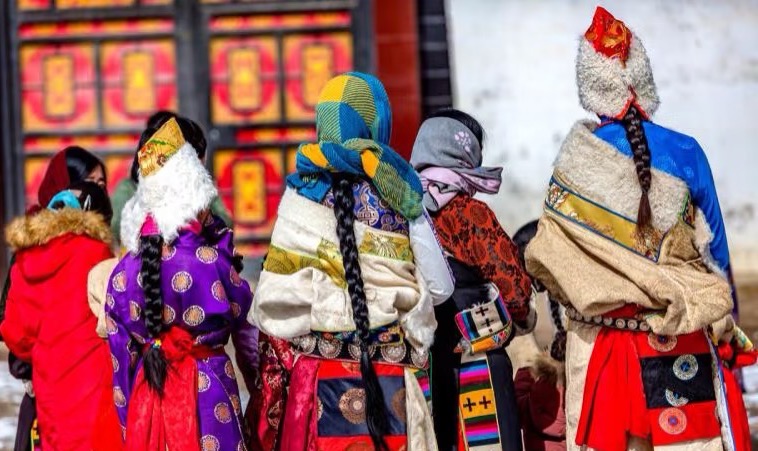
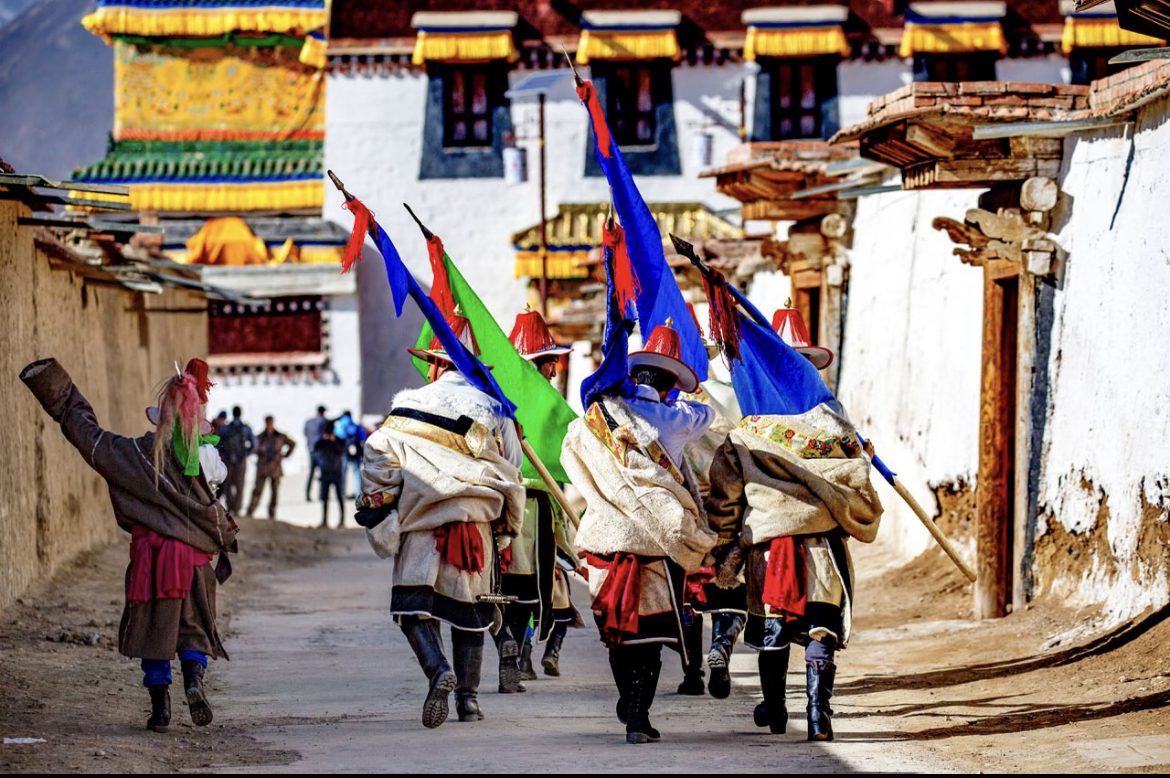
The first breath of Himalayan air is a shock to the system—thin, cold, and carrying the scent of juniper incense from a distant monastery. It is a scent of devotion, a fragrance that has mingled for centuries with the prayers of monks and the mineral dust of sacred pigments. For the Western spiritual seeker, this sensory experience is often the first touchpoint with a profound tradition, a world away from the familiar. You are drawn to the luminous beauty of a Thangka, a scroll painting that seems to hold the silence of these mountains within its intricate lines. Your hope is to connect with this ancient stream of wisdom, to bring a piece of its clarity into your own life. Yet, a quiet fear accompanies this hope: the fear of misunderstanding, of acquiring a mere replica, and in doing so, unknowingly participating in the dilution of a sacred art form. This compendium is offered to allay that fear and honor that hope. It is not a mere explanation, but an invitation into the heart of the Thangka’s journey—a sacred commitment, or *Samaya*, between the artist, the deity, and the practitioner. The knowledge contained herein is a gift from the lineage, intended to empower you to become a worthy guardian of this Dharma art.
Insights You Will Gain:
- An understanding of the Thangka’s unbroken historical lineage, from Indian origins to Tibetan mastery.
- The ability to interpret the foundational iconography, colors, and gestures within a Thangka.
- A deep appreciation for the ritualistic and material process that distinguishes authentic Dharma art from a commercial product.
- Guidance on how to respectfully integrate a Thangka into your personal space and spiritual practice.
- A clear perspective on the vital role of ethical patronage in preserving this living world heritage.
The Divine Blueprint: Tracing the Sacred Lineage of Thangka Painting
A Thangka is not an isolated object of beauty; it is the living embodiment of an unbroken chain of transmission, a *parampara*, that stretches back to the very heart of Buddhist philosophy. To comprehend its significance is to trace a journey of devotion, artistry, and patronage across the roof of the world. This is a story of how visual Dharma, the teachings of enlightenment made manifest, traveled from master to student, generation after generation, preserving its integrity and potency. The commitment to this lineage, the sacred vow or *Samaya*, ensures that every brushstroke is imbued with centuries of accumulated wisdom and spiritual energy. It is this lineage that separates a true Thangka from a simple painting, transforming it from an object to be viewed into a portal to be experienced. It is a visual genealogy of enlightenment, a map passed down from those who have walked the path before.
From the Footsteps of the Buddha: Early Narrative Scrolls and Indian Antecedents
The conceptual origins of the Thangka do not begin in Tibet, but in the hot plains of India. The earliest precursors can be found in the narrative scroll paintings (*pata* in Sanskrit) that itinerant teachers would use to illustrate the Jataka tales—the stories of the Buddha’s previous lives. These portable murals were essential tools for Dharma transmission in a largely oral culture. The magnificent fresco paintings of the Ajanta and Ellora caves, dating back to the 2nd century BCE, established a sophisticated iconographic language and aesthetic foundation that would later migrate north. The artists of the Pala Empire in Eastern India (8th to 12th centuries) further refined this tradition, creating detailed miniatures on palm leaves and cloth scrolls that depicted complex Mahayana and Vajrayana Buddhist deities. It was this rich artistic and philosophical environment, brimming with iconometric precision and spiritual fervor, that provided the fertile ground from which the Thangka tradition would spring. These early works were more than illustrations; they were considered supports for practice, tools for visualization, and carriers of sacred presence.
The Himalayan Renaissance: Nepal’s Newar Artists and Tibetan Patronage
As Buddhism waned in India, its esoteric traditions found a new and fervent home in Tibet. However, the initial artistic transmission was critically facilitated by the master artisans of the Kathmandu Valley in Nepal: the Newars. The Newar artists were, and remain, unparalleled masters of metallurgy, woodcarving, and painting. During the 13th century, a period of intense cultural exchange, Tibetan patrons recognized the sublime skill of the Newar craftsmen. They commissioned them to create statues and paintings for their newly founded monasteries. The Newar style, known for its vibrant color palette, sensual grace, and intricate detail, merged with the spiritual intensity of Tibetan Buddhism. A pivotal figure in this exchange was Arniko, a brilliant Newar artist who, in the 13th century, traveled to the court of Kublai Khan in China, leaving an indelible mark on the artistic traditions of the entire region. This fusion created a new visual language—dynamic, spiritually charged, and uniquely Himalayan. The Tibetan patrons provided the profound philosophical framework and iconographic requirements, while the Newar artists provided the technical genius to bring these visions to life.
Guardians of the Tradition: The Role of Monasteries and Master-Apprentice Lineage
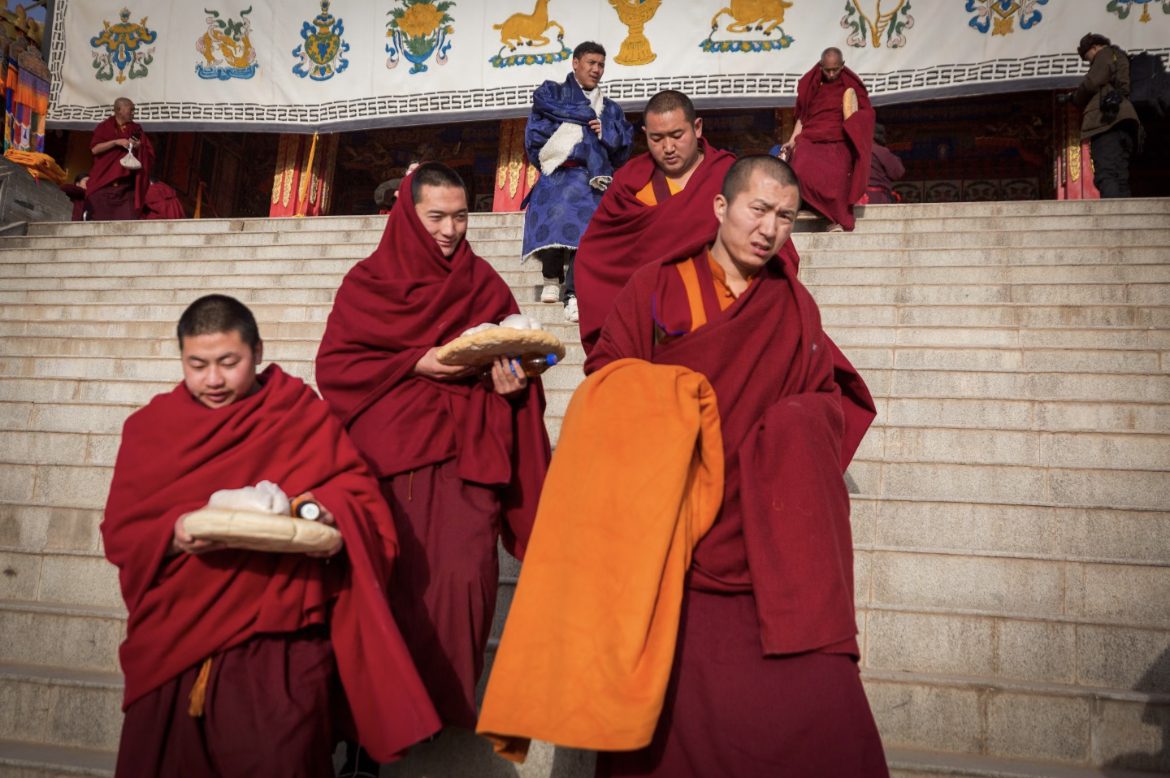
The Thangka tradition was institutionalized and preserved within the great monastic centers of Tibet. These were not simply religious institutions; they were universities of the spirit and repositories of culture. Within their walls, the sacred art of Thangka painting was taught through a rigorous master-apprentice system. A young student would spend years learning the craft, starting with the mundane tasks of preparing canvases and grinding pigments. They would then graduate to drawing landscapes, flowers, and finally, the faces and forms of the deities. This process was governed by strict rules of iconometry—a complex system of grids and proportions that ensures the divine anatomy of each enlightened being is rendered with perfect accuracy. This was not about stifling creativity; it was about ensuring authenticity. The proportions were seen as a reflection of the enlightened state itself. The master did not just teach technique; he transmitted the spiritual empowerment and permission to depict the deities. This deep, personal transmission is the lifeblood of the lineage, ensuring that each Thangka created under this system is a direct link in a golden chain stretching back through centuries of devotion.
Reading the Divine Language: A Guide to Thangka Iconography
To gaze upon a Thangka is to read a text written in a language of symbol, color, and form. Every element is deliberate, codified, and saturated with meaning. It is a visual encyclopedia of the enlightened mind, a cartography of the spiritual path. For the uninitiated, it can appear as a beautiful yet bewildering array of figures and patterns. But for those who learn to read its language, a Thangka reveals itself as a profound teaching, a direct communication from the heart of the Dharma. Understanding this iconography is not merely an academic exercise; it is the first step in engaging with the Thangka as a tool for transformation. It allows the viewer to move beyond passive appreciation and begin an active dialogue with the archetypal energies and wisdom qualities the painting represents. The iconography is a key that unlocks the Thangka’s power as a support for meditation and a mirror reflecting one’s own innate potential for enlightenment. Each deity, each gesture, each color becomes a focal point for contemplation, a reminder of the qualities we seek to cultivate within ourselves.
The Body of the Buddha: The 32 Major and 80 Minor Marks of an Enlightened Being
The depiction of a Buddha or a high-level Bodhisattva is not an imaginative portrait but a precise rendering of the *lakshanas*, the 32 major and 80 minor marks of a fully enlightened being as described in the scriptures. These are not merely physical attributes but the outer manifestations of inner perfections cultivated over countless lifetimes. For example, the *ushnisha*, the protuberance on the crown of the head, symbolizes the attainment of supreme wisdom. The elongated earlobes signify the renunciation of worldly attachments (from wearing heavy royal earrings in a former life as a prince) and the compassionate ability to hear the cries of suffering beings. The wheels of Dharma on the soles of the feet indicate that the enlightened one has set in motion the teachings that lead all beings to liberation. The artists follow strict proportional grids, known as iconometry, to ensure these marks are rendered with canonical accuracy. This precision is a form of devotion, a way of honoring the perfected state of being that the Buddha represents. By meditating on these forms, the practitioner is reminded that this state of perfection is not an abstract concept but a tangible possibility for all.
The Five Colors (Pancha-varna): The Elemental and Psychological Palette
The vibrant palette of a Thangka is not chosen for purely aesthetic reasons. The five primary colors, or *Pancha-varna*, are deeply connected to the five elements and the five Dhyani Buddhas, or Buddhas of Meditation, who represent the transmutation of the five primary poisons of the mind. White represents the element of space and Vairochana Buddha, who transforms the poison of ignorance into the wisdom of reality. Blue corresponds to the element of water and Akshobhya Buddha, transmuting anger into mirror-like wisdom. Yellow is linked to the element of earth and Ratnasambhava Buddha, who changes pride into the wisdom of equanimity. Red is the color of fire and Amitabha Buddha, transforming desire and attachment into the wisdom of discernment. Finally, Green represents the element of air or wind and Amoghasiddhi Buddha, who transmutes jealousy into all-accomplishing wisdom. These colors are not just paint; they are energetic frequencies. When an artist applies the deep blue of ground lapis lazuli, they are invoking the unshakable stability of Akshobhya. When they use the brilliant red of cinnabar, they are calling upon the compassionate energy of Amitabha. The colors themselves are a form of meditation and offering.

Mudras and Asanas: The Sacred Gestures and Postures of Deities
The postures (*asanas*) and hand gestures (*mudras*) of the figures in a Thangka are a silent language that communicates their nature and activity. A seated posture of *vajrasana* (lotus position) indicates deep meditative absorption and indestructible stability. A standing posture often signifies readiness to act for the benefit of beings. The mudras are particularly eloquent. The *Bhumisparsha* mudra, or ‘earth-touching gesture,’ where the right hand reaches down to touch the ground, depicts the moment of the Buddha’s enlightenment, calling the earth to witness his victory over illusion. The *Dhyana* mudra, with hands resting in the lap, symbolizes meditative concentration. The *Abhaya* mudra, with the right hand raised, palm outward, is the gesture of fearlessness and protection. The *Varada* mudra, with the hand lowered and palm open, signifies generosity and the bestowing of blessings. Each gesture is a precise energetic seal, a physical expression of a profound inner state. By understanding these gestures, the practitioner can instantly grasp the specific quality of enlightened energy that the deity embodies, whether it is protection, compassion, teaching, or unwavering concentration.
| Symbol/Color | Sacred Meaning |
|---|---|
| Blue (Lapis Lazuli) | Represents the element of Water, healing, and the unshakable, mirror-like wisdom of Akshobhya Buddha that transmutes anger. |
| White (Conch Shell) | Represents the element of Space, purity, and the all-encompassing wisdom of Vairochana Buddha that transforms ignorance. |
| Red (Cinnabar) | Represents the element of Fire, life force, and the discerning wisdom of Amitabha Buddha that transforms attachment and desire. |
| Green (Malachite) | Represents the element of Air/Wind, enlightened activity, and the all-accomplishing wisdom of Amoghasiddhi Buddha that overcomes jealousy. |
| Yellow (Orpiment) | Represents the element of Earth, abundance, and the wisdom of equanimity of Ratnasambhava Buddha that overcomes pride. |
| Vajra (Dorje) | Symbolizes the indestructible nature of enlightenment, compassion, and skillful means. The ‘thunderbolt of compassion’. |
| Ghanta (Bell) | Represents wisdom, emptiness (shunyata), and the feminine principle. Paired with the Vajra, it symbolizes the union of wisdom and compassion. |
| Lotus Flower | Symbolizes purity, renunciation, and enlightenment. It grows from the mud but blossoms unstained, just as one can attain enlightenment in the midst of worldly existence. |
The Alchemy of Creation: Where Spirit and Matter Converge
The creation of an authentic Thangka is an alchemical process where raw matter is transformed into a vessel for divine presence. It is a practice that stands in stark opposition to the modern world’s obsession with speed and mass production. This is a journey of patience, devotion, and immense skill, where every stage is a ritual and an offering. The artist is not merely a painter but a yogi, a practitioner who must cultivate a specific state of mind and heart to be a worthy channel for the sacred forms they depict. For the discerning seeker, understanding this painstaking process is crucial. It illuminates the profound difference between a soulless print and a living piece of Dharma art. The value of a true Thangka lies not only in its visual beauty but in the embedded intention, the meticulously prepared materials, and the meditative energy infused into it at every step. This sacred alchemy is what addresses the collector’s deepest fear of inauthenticity; the knowledge of this process becomes a shield against the profane and a guide towards the genuine.
Preparing the Canvas (Iha-bri): Creating the Sacred Ground
The journey begins not with a brush, but with the creation of the sacred ground upon which the deity will manifest. The canvas, typically cotton or linen, is stretched tightly on a wooden frame. It is then treated with a mixture of animal hide glue and a fine white clay or chalk gesso. This mixture is applied in thin, even layers, often as many as ten or twelve. After each layer dries, the surface is meticulously burnished with a smooth stone or a conch shell until it achieves a flawless, polished finish, as smooth as a sheet of paper. This process, which can take weeks, is vital. It creates a stable, non-porous surface that will allow for the incredibly fine detail and vibrant color application that characterize master-level Thangkas. This preparation is more than a technical step; it is a meditation on creating a pure and perfect foundation. The artist is metaphorically clearing and preparing the ground of their own mind, making it a suitable and worthy receptacle for the enlightened energies to come.
The Mineral Kingdom’s Offering: Grinding Cinnabar, Lapis Lazuli, and Gold
The radiant, otherworldly colors of a Thangka are not derived from synthetic tubes of paint. They are a gift from the mineral kingdom, painstakingly prepared by hand. These are known as *kyung*, or mineral pigments. The deep, celestial blue is from ground Lapis Lazuli, a stone associated with the Medicine Buddha and healing. The vibrant reds and oranges come from Cinnabar and Vermilion. The brilliant greens are from Malachite, and the warm yellows from Orpiment. Each mineral is ground by hand in a mortar and pestle, a laborious and physically demanding process, then mixed with the hide glue binder. The finest Thangkas are also adorned with pure 24k gold. The gold is either ground into a powder to be used as paint or hammered into infinitesimally thin leaves to be applied to the surface. The use of these precious, natural materials is an act of profound offering. The artist is giving the very best of the earth to honor the divine. This material integrity ensures not only the longevity and vibrancy of the painting for centuries but also infuses it with the natural energetic properties of the minerals themselves.
The Artist’s Mind: Meditation, Mantra, and the Accumulation of Merit
Before the first line is drawn, the artist engages in spiritual preparation. This may involve purification rituals, meditation, and the recitation of the mantra associated with the deity to be painted. The artist is not simply copying a design; they are invoking the presence of the deity. Throughout the painting process, this meditative state is maintained. The work is done in silence or with the soft sound of chanting. This is considered an active form of meditation, a practice of mindfulness and devotion. The act of painting itself is seen as a way to accumulate merit (*punya*), a positive karmic potential that benefits not only the artist but the patron and all who will see the Thangka. This deep integration of spiritual practice and artistic creation is the soul of the Thangka. It is why a machine-made print, no matter how high the resolution, can never replicate the spiritual resonance of a hand-painted scroll. The print contains pixels; the Thangka contains presence. The artist’s focused intention and devotional state are woven into the very fabric of the canvas.
The Consecration (‘Rab-nay’): Awakening the Divine Presence within the Scroll
A Thangka is not considered complete until it has undergone the *rab-nay* or consecration ceremony. This is perhaps the most crucial stage, where the painting is transformed from a beautiful object into a sacred vessel. Typically performed by a high lama or an experienced monk, the ceremony involves rituals, chanting, and visualizations that ‘awaken’ the deity within the painting. During this ritual, the syllables OM, AH, and HUM—representing the enlightened body, speech, and mind—are inscribed on the back of the Thangka, directly behind the forehead, throat, and heart of the central deity. The eyes of the deity are often the very last part to be painted, and this ‘opening of the eyes’ is a central moment in the consecration, symbolizing the infusion of divine consciousness. Once consecrated, the Thangka is no longer treated as a piece of art but as a living presence, a direct representative of the enlightened being it depicts. This is the final alchemical step, the moment the spirit and matter fully converge, making the Thangka a powerful support for spiritual practice.
Inviting the Sacred: Engaging with a Thangka in Your Space
Bringing a Thangka into your home is an act of inviting a profound spiritual presence into your daily life. It is a commitment to creating a space of refuge, contemplation, and inspiration. For the modern seeker, this is where the ancient tradition meets contemporary life. The process should be approached with mindfulness and respect, not as mere interior decoration, but as the curation of a sacred environment. A Thangka is not a passive object; it is an active participant in your spiritual journey, a ‘support’ in the truest sense of the word. It serves as a constant, silent reminder of your highest aspirations and the path you have chosen to walk. The guidance that follows is not a set of rigid rules but a collection of principles rooted in tradition, designed to help you honor the sacred art form and maximize its benefit as a tool for your own inner development. By engaging with it correctly, the Thangka ceases to be a piece of art from a foreign culture and becomes a mirror for your own innate Buddha-nature, a source of clarity and strength in your personal practice.
Choosing a Thangka: The Heart’s Connection and Karmic Link
The selection of a Thangka is a deeply personal process. While one might be drawn to the aesthetic beauty of a piece, the most profound connection is often felt on an intuitive level. It is said in the tradition that the deity chooses the practitioner, not the other way around. You may find yourself inexplicably drawn to a particular figure. Perhaps it is the fierce compassion of a protector deity that resonates with your need for strength, or the gentle serenity of Chenrezig (Avalokiteshvara) that calls to your compassionate heart. This is sometimes referred to as a karmic connection, a pre-existing link to that particular archetypal energy. It is wise to read about the different deities and their symbolism. Are you seeking to cultivate compassion? Chenrezig is the embodiment of this quality. Do you need to overcome obstacles? Green Tara is the swift-acting savior. Do you wish to develop wisdom and clarity? Manjushri is the deity to contemplate. Trust your intuition. The Thangka you are meant to work with will speak to you, and that connection is the foundation for a meaningful relationship with the piece.
Creating a Sacred Space: The Altar and Proper Placement
Once you have chosen your Thangka, its placement is of great importance. Within the tradition, a Thangka is considered a sacred object and should be treated with reverence. It should be hung in a clean, quiet, and respected area of the home, such as a meditation room or a personal study. It is best placed at a high level, above eye level when you are seated, and certainly higher than any mundane objects like televisions or furniture where people place their feet. Ideally, it should be the centerpiece of a small altar. An altar need not be elaborate; a simple, clean surface or a small table is sufficient. On it, you can place traditional offerings, often represented by seven bowls of clean water, but can also include a candle (representing light or wisdom), incense (representing pure ethical conduct), and flowers (representing impermanence and generosity). The act of setting up this space, of cleaning it and maintaining it, becomes a part of your practice. It is an external expression of your internal commitment to the path of self-cultivation.
Thangka as a Meditative Support (Samatha-Vipassana)
At its core, a Thangka is a support for meditation. It can be used in the practice of *Samatha-Vipassana* (calm-abiding and insight meditation) as a powerful focal point. Instead of focusing on the breath, a practitioner can gently rest their gaze upon the image of the deity. The intricacy of the Thangka provides enough detail to hold the mind’s attention, preventing it from wandering, while the serene and stable presence of the central figure instills a sense of calm. You can let your eyes trace the fine lines of the garments, observe the symbolic objects the deity holds, and rest in the central gaze of the figure. Over time, as the mind settles, you can begin to contemplate the qualities the deity represents. This is the *Vipassana* or insight aspect. By gazing at Green Tara, you might contemplate the nature of fearless compassion in your own life. By focusing on the Medicine Buddha, you can meditate on the potential for healing within yourself and others. The Thangka becomes a stable anchor for the mind and a gateway to deeper insight.
The Practice of Visualization (Deity Yoga): Connecting with the Archetype
For more advanced practitioners, particularly within the Vajrayana tradition, the Thangka is an indispensable tool for Deity Yoga (*devata yoga*). This is a profound practice of creative visualization. The practitioner gazes at the Thangka, absorbing every detail of the deity—their color, posture, ornaments, and expression. After memorizing the form, they close their eyes and recreate the image perfectly in their mind’s eye. The ultimate goal is to dissolve the sense of a separate self and merge one’s own consciousness with the enlightened qualities of the deity. One visualizes oneself *as* the deity, embodying their wisdom, compassion, and power. This is not an act of worship to an external god, but a sophisticated psychological method for awakening the same enlightened qualities that lie dormant within one’s own mindstream. The Thangka serves as the perfect, canonical blueprint for this inner construction. It is the guide map for transforming one’s ordinary self-perception into an enlightened one, recognizing that the deity is a manifestation of one’s own purest potential.
Guardians of a Living Tradition: Why Thangkas Matter Today
In an era of digital reproduction and fleeting trends, the Thangka stands as a testament to enduring wisdom and the power of living tradition. Its survival is not guaranteed; it is a flame that must be consciously tended. The value of a Thangka extends far beyond its function as a beautiful object or a spiritual tool. It is a piece of world heritage, a carrier of cultural DNA, and a vital economic lifeline for the communities that create them. Engaging with this art form today means stepping into a role that has existed for centuries: the role of the patron, the supporter, the guardian. Your choices have a direct impact on the future of this sacred lineage. By choosing authenticity, you are not merely buying a painting; you are casting a vote for cultural preservation. You are helping to ensure that the subtle knowledge of grinding minerals, the meditative discipline of the artist, and the profound iconographic language of the Dharma are passed on to the next generation. This is a responsibility and a privilege, a chance to form a bridge between your own spiritual path and the preservation of a global treasure.
Art as Archive: Preserving Dharma in a Digital Age
Each Thangka is a library. It contains a wealth of information about Buddhist philosophy, cosmology, and meditative practice, all encoded in a sophisticated visual language. For centuries, in the absence of printing presses, these scrolls were the primary means of preserving and transmitting the most complex teachings. They are visual canons, ensuring that the specific forms and attributes of deities are passed down with unwavering accuracy. In our digital age, where information is often shallow and ephemeral, the Thangka offers a form of deep, contemplative knowledge. It is a stable archive of wisdom, one that cannot be easily altered or corrupted. The physical, material nature of the Thangka—the weight of the canvas, the luminosity of the ground minerals—serves as an anchor to a tangible reality of practice and devotion. Preserving the art of Thangka painting is synonymous with preserving a unique and invaluable archive of human spiritual genius, ensuring its wisdom remains accessible for generations to come.
Supporting Artisans, Sustaining Lineages
The greatest threat to the Thangka tradition is not the passage of time, but the proliferation of cheap, mass-produced prints and inauthentic paintings created for the tourist market. These items, often produced with synthetic paints and a lack of understanding of the underlying iconography and spiritual discipline, sever the art form from its sacred roots. They also economically undercut the true masters who have dedicated their lives to the arduous training required to become a Thangka painter. When you purchase an authentic Thangka, created by a lineage artist according to traditional methods, you are doing far more than acquiring an object. You are providing a sustainable livelihood for an artisan and their family. You are funding the continuation of the master-apprentice system. You are ensuring that there is a viable path for a young person in a Himalayan community to choose the difficult but rewarding life of a Dharma artist, rather than seeking other work. Ethical patronage is the fuel that keeps the flame of this lineage burning brightly.
The Bridge Between Worlds: Thangka’s Role in Global Spirituality
As the world becomes more interconnected, the Thangka has taken on a new role as an ambassador of Himalayan wisdom. For many spiritual seekers around the globe, a Thangka is their first and most powerful encounter with the profound depth of Tibetan Buddhism. Its universal language of beauty and archetypal symbolism transcends cultural barriers. It offers a point of entry into a sophisticated system of inner development that speaks to a universal human longing for peace, clarity, and compassion. The Thangka serves as a bridge, allowing individuals from vastly different backgrounds to connect with the heart of the Dharma. It demonstrates that the pursuit of enlightenment is not the exclusive domain of any single culture but is a shared human heritage. In a world often fractured by division, the Thangka stands as a symbol of unity, a testament to a wisdom tradition that offers tools for the cultivation of a more compassionate and awake global society.
A Tanfog Commitment: Ethical Sourcing and Cultural Respect
At Tanfog, we understand that we are not merely merchants of art; we are stewards of a sacred trust. Our *Samaya* is to the artists, to the lineage, and to you, the seeker. We are committed to a model of ethical sourcing that ensures every Thangka we offer is authentic in every respect—from the hand-prepared canvas and mineral pigments to the artist’s lineage and devotional practice. We work directly with master artists and their studios, ensuring they are paid fairly and that their work is represented with the deep respect it deserves. We see ourselves as partners in preservation, dedicated to telling the story behind each painting and educating our community on the importance of this living tradition. When you acquire a Thangka from Tanfog, you can be certain that your investment directly supports the artists who are the living guardians of this heritage. You become part of a conscious community dedicated to honoring the past and ensuring the vibrant future of this extraordinary Dharma art.
The Wisdom FAQ
1. What is the spiritual significance of the consecration ceremony?
The consecration, or *rab-nay*, is the pivotal ceremony that transforms the Thangka from a masterfully crafted object into a living spiritual entity. It is believed to invoke and seal the consciousness of the deity within the physical form of the painting. Without consecration, a Thangka is considered a beautiful but empty vessel. The ceremony ‘opens the eyes’ of the deity, allowing the painting to serve as a direct portal for blessings, inspiration, and connection during practice. It is the final and most vital step in the alchemical creation process.
2. Is it a form of disrespect or cultural appropriation for a non-Buddhist to own a Thangka?
This is a question of intention. If a Thangka is acquired with genuine respect, a desire to learn, and an appreciation for its sacred purpose, it is not considered appropriation but rather a form of appreciation and participation. The Dharma is considered a universal teaching, available to all who approach it with a sincere heart. Disrespect would arise from treating the Thangka as mere decoration, placing it in a low or unclean place (like a bathroom), or using its imagery in a profane or commercial way. When a non-Buddhist honors a Thangka as a sacred object and uses it to inspire their own path of wisdom and compassion, it is a beautiful act of cross-cultural connection.
3. How can I differentiate an authentic, hand-painted Thangka from a mass-produced print?
First, examine the surface. A print will be perfectly flat and have a dot-matrix pattern visible under magnification. A painting will have a slight texture from the canvas and visible, though incredibly fine, brushstrokes. Second, look for the use of real gold, which has a unique shimmer that cannot be replicated by yellow ink. Third, check the reverse side. Authentic Thangkas are unpainted on the back, showing the raw canvas, whereas prints are often on uniform paper or synthetic material. Most importantly, trust the source. Purchase from reputable dealers like Tanfog who can verify the artist and the traditional methods used.
4. Why are the proportions and grid systems (iconometry) so strict in Thangka painting?
The strict iconometric grids are not about limiting artistic freedom but about ensuring spiritual potency and authenticity. The proportions of an enlightened being’s form are believed to be a direct physical manifestation of their inner spiritual realization. Each measurement corresponds to a specific aspect of the Dharma or a quality of enlightenment. To deviate from this sacred geometry would be to create a form that is not a true representation of the deity, thus diminishing its power as a support for practice. The discipline of the grid ensures that the artist is transmitting a pure, canonical image, free from the distortions of their own ego or imagination.
5. Does a Thangka lose its sacredness if it is damaged?
A Thangka is a physical object and is subject to the law of impermanence. If a consecrated Thangka becomes damaged, it does not necessarily lose its sacredness, but its capacity as a clear support for practice may be diminished. In the tradition, damaged sacred objects are treated with great respect. They are not simply thrown away. Often, they may be carefully repaired by a master. If a Thangka is beyond repair, it would be ritually burned in a clean fire ceremony, and the ashes would be respectfully placed in a river or on a mountain, returning the blessed elements to the earth. This is a final act of reverence for the sacred presence it once held.
The Guardian’s Reflection
A scroll, once unrolled, is a river of wisdom flowing from a mountain source. The mineral pigments hold the memory of the earth; the golden lines hold the luminescence of the artist’s devoted mind. To welcome a Thangka into your life is to do more than possess a work of art. It is to accept a role, to become a temporary guardian of a timeless current. The scroll does not ask for worship, but for mindfulness. It does not demand belief, but invites contemplation. In its silent, vibrant presence, it offers a map. The journey, however, is yours to take. May you be a worthy guardian, and may its presence illuminate your path.
References:
BuddhaNet https://www.buddhanet.net/
Access to Insight https://www.accesstoinsight.org/
The Buddhist Society (UK) https://www.thebuddhistsociety.org/
Energy Muse https://www.energymuse.com/blogs/blog