
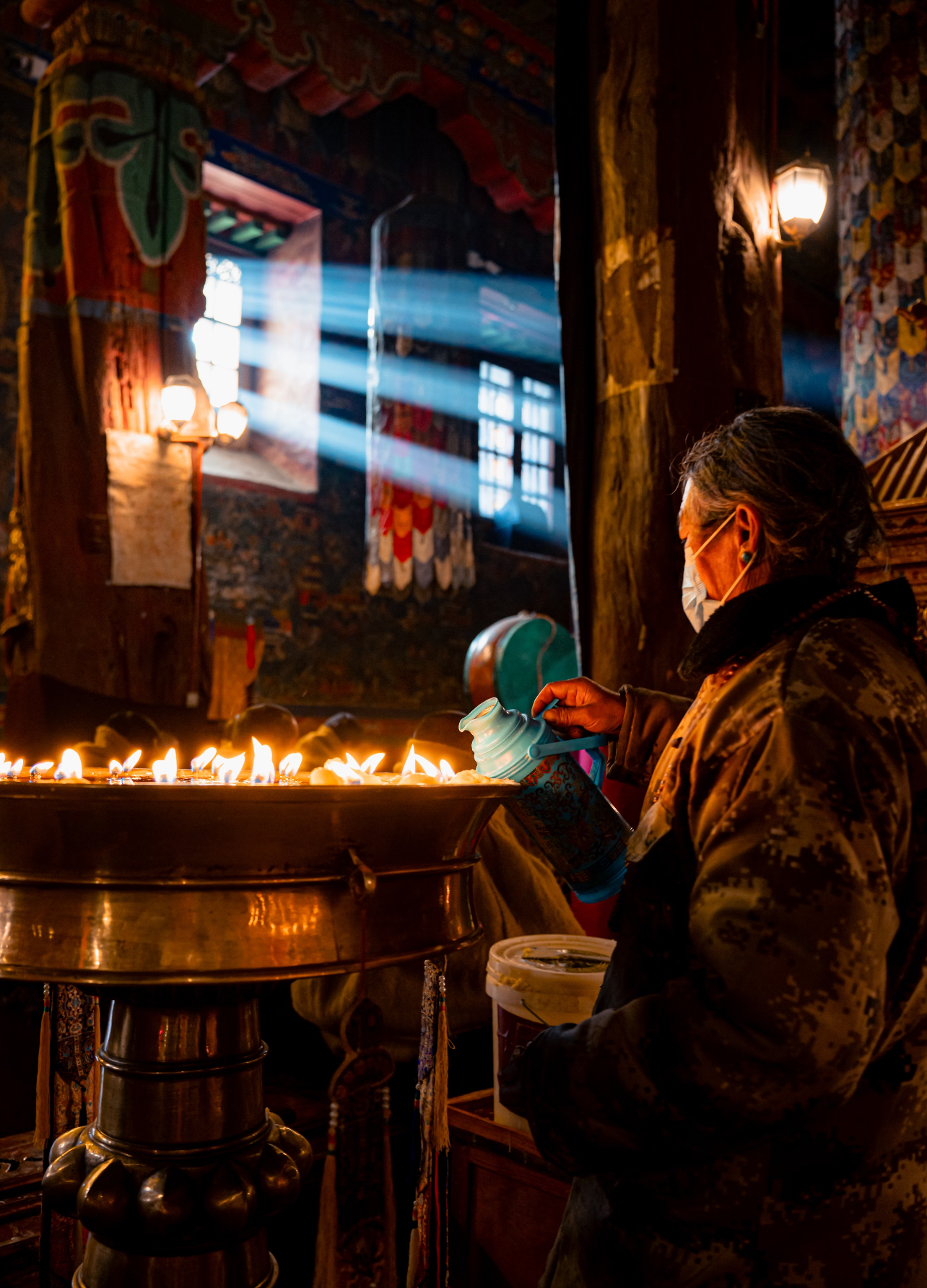
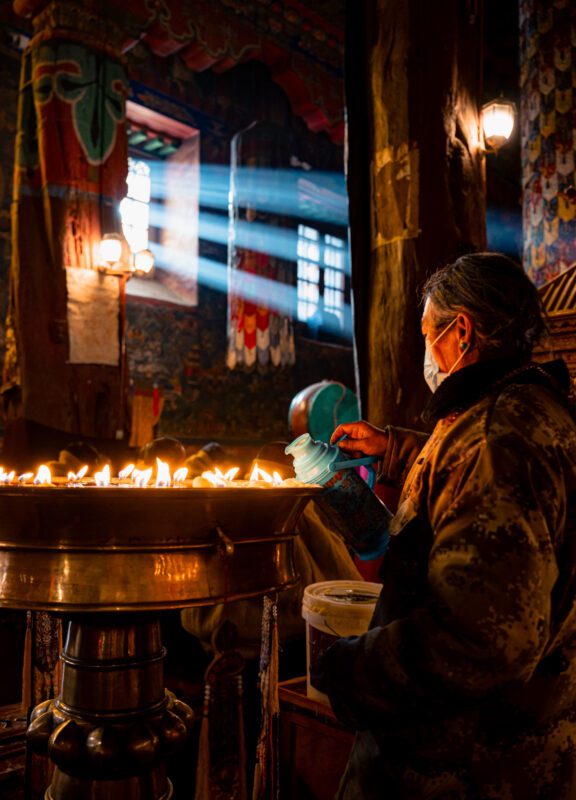
The air is thin, cold, and carries the scent of juniper incense from a distant burner. Within the quiet stone walls of the monastery, the only sound is the rhythmic, almost imperceptible whisper of a single-hair brush against taut cotton canvas. This is not merely the creation of an image; it is an act of devotion, a meditation in form and color, a practice that has been passed down in an unbroken golden chain for over a millennium. For the Western seeker, drawn to the profound wisdom of the Himalayas, a thangka is often the first point of tangible connection. It is a portal, a mirror, and a map of the mind. You are here because some part of you recognizes that this is more than decoration. Your intuition is correct. The hope you feel is a resonance with a lineage of enlightened masters. The fear you carry—of acquiring a soulless commodity rather than a sacred vessel—is a sign of your own integrity. This compendium is offered not as a simple guide, but as a transmission, designed to give you the eyes to see and the heart to understand the profound Dharma art of thangka painting.
Insights You Will Gain:
- An understanding of the historical and spiritual origins of thangka painting as a living lineage art.
- The ability to decode the sacred iconographical language of deities, mudras, colors, and symbols.
- An appreciation for the alchemical and meditative process required to create an authentic thangka.
- Practical guidance on how to integrate a thangka into your spiritual practice as a tool for transformation.
- The knowledge to discern authentic Dharma art from mass-produced replicas, empowering you to become a guardian of this precious tradition.
The Origin & Lineage: Tracing the Sacred Thread of Thangka Art
To comprehend the power of a thangka, one must first understand that it is not a static object but the living embodiment of a lineage. Its authority and spiritual efficacy are derived from an unbroken chain of transmission, a sacred commitment, or Samaya, passed from master to student. This is the source of its lifeblood, a current of wisdom that flows from the heart of the Buddha himself through centuries of dedicated practitioners. The thangka is the visual manifestation of this profound continuity, a sacred thread connecting the present moment to the dawn of enlightenment. Each brushstroke is guided by the hands and minds of countless masters who came before, ensuring that the image is not an artist’s personal fantasy but a precise, consecrated map to awakening.
From Cave Murals to Canvas Scrolls: The Birth of a Sacred Artform
The conceptual roots of thangka painting stretch back to the ancient cave murals of Ajanta and Ellora in India. Early Buddhist practitioners used these large-scale frescoes to depict the life of the Buddha (Jataka tales) and various bodhisattvas, creating immersive environments for teaching and meditation. However, these magnificent murals were immobile. As Buddhism spread along the Silk Road, carried by itinerant monks and yogis, the need for a portable form of sacred art became paramount. The solution was the canvas scroll, which could be rolled up, protected with a silk cover, and transported across treacherous mountain passes. This innovation allowed the Dharma to travel. The painting became a mobile monastery, a portable refuge that could be unfurled in a tent, a cave, or a newly established temple, immediately consecrating the space and providing a focal point for practice and transmission.
The Journey to Tibet: Guru Padmasambhava and the Dawn of Vajrayana Art
While the scroll painting tradition existed in India, it was in the high plateau of Tibet during the 8th century that the thangka truly crystallized into its unique form. The arrival of the great master Guru Padmasambhava (also known as Padmasambhava) to establish Buddhism was the pivotal moment. He brought with him the esoteric teachings of Vajrayana, a path that utilizes powerful imagery, visualization, and ritual to accelerate spiritual development. The complex iconography of wrathful and peaceful deities, mandalas, and tantric symbolism required a precise and potent visual language. The thangka became the primary medium for this expression. It was not simply illustrative; it was functional. Each deity depicted was a key to a specific state of enlightened consciousness, and the thangka was the instrument used to turn that key within the practitioner’s mind.
Schools of Divine Expression: Understanding the Karma Gadri, Menri, and Newar Styles
Over centuries, distinct regional styles or schools of thangka painting emerged, each with its own aesthetic emphasis yet all adhering to the strict iconographical canons. The Newar style, originating from the masterful artisans of Nepal’s Kathmandu Valley, is known for its vibrant, bold colors, particularly its use of deep reds and blues, and intricate, decorative details. Newar artists have been revered for centuries and were often commissioned to create art for Tibetan monasteries. The Menri style, founded in the 15th century, emphasizes a more classically Tibetan aesthetic with spacious compositions, serene facial expressions, and a deep blue background landscape accented with ethereal green hills. The Karma Gadri school, emerging in the 16th century, is known for its delicate realism, spaciousness, and transparency. It incorporates elements of Chinese landscape painting, creating vast, open skies and naturalistic settings, which gives the central deity a feeling of being both immanent and transcendent. Recognizing these styles helps one appreciate the rich diversity within this sacred tradition.
The Golden Chain: The Critical Role of the Master-Apprentice Lineage (Parampara)
The most crucial element of a thangka’s authenticity is its lineage, known in Sanskrit as Parampara. An artist does not simply decide to paint a thangka. They must undergo a rigorous apprenticeship, often lasting more than a decade, under a qualified master. This training involves more than technical skill; it is a spiritual formation. The apprentice memorizes vast iconographical texts, learns the precise grids and proportions for each deity, and is initiated into the spiritual practices associated with the figures they paint. This master-apprentice relationship is a sacred bond, ensuring that every measurement, color, and gesture is executed according to the sacred canon. This is why a genuine thangka is considered a direct transmission. The artist is not expressing themselves; they are acting as a clear channel for the lineage, creating a vessel for divine wisdom that is as accurate and potent today as it was a thousand years ago. It is this living transmission that separates a true piece of Dharma art from a mere picture.
The Sacred Symbolism: How to Read the Divine Language of a Thangka
A thangka is not a painting to be passively observed; it is a text to be actively read. Every element—from the central figure to the smallest flower in the landscape—is imbued with layers of profound meaning. Learning to read this sacred language transforms the viewing experience from simple aesthetic appreciation into a direct engagement with the Dharma. It is a visual philosophy, a complete path to enlightenment encoded in color, gesture, and form. The iconography is not arbitrary or decorative; it is a precise science of inner transformation, where each symbol is designed to awaken a specific quality of enlightened mind within the practitioner. To engage with a thangka is to engage in a dialogue with wisdom itself, to receive a teaching that transcends words and speaks directly to the heart of one’s being.
The Central Figure: Identifying the Yidam (Meditational Deity) and Its Purpose
At the heart of nearly every thangka is the central figure, often a Yidam, or meditational deity. A Yidam is not an external god to be worshipped, but rather a manifestation of one’s own enlightened potential. Each deity embodies a specific aspect of the enlightened mind. For example, Avalokiteshvara (Chenrezig in Tibetan) is the embodiment of universal compassion; Manjushri represents transcendent wisdom; and Green Tara personifies enlightened activity and protection from fear. The practitioner visualizes themselves as the Yidam, thereby activating these latent qualities within their own consciousness. A wrathful deity, like Vajrapani or Mahakala, is not demonic; it represents the fierce, dynamic energy required to cut through ignorance, attachment, and aversion. Identifying the central figure and understanding its purpose is the first and most critical step in decoding the thangka’s message.
The Grammar of Gesture: Decoding Mudras (Hand Seals) and Their Energetic Meaning
The hand gestures of the deities, known as mudras, are a vital part of the thangka’s symbolic grammar. These are not random poses; each mudra is a seal that communicates a specific action or state of being. The Abhaya mudra, with the palm facing outward, signifies fearlessness and divine protection. The Dharmachakra mudra, where the thumb and index finger of both hands touch to form wheels, represents the turning of the Wheel of Dharma, or the act of teaching. The Varada mudra, with the hand extended downwards, palm open, symbolizes generosity, compassion, and the granting of boons. The Bhumisparsha mudra, or ‘earth-touching’ gesture of Shakyamuni Buddha, signifies the moment of his enlightenment, calling the earth to witness his victory over illusion. These mudras are energetic transmissions, conveying the essence of the deity’s function without a single word.
Postures of Power: Understanding Asanas and Their Relation to Serenity or Wrathful Action
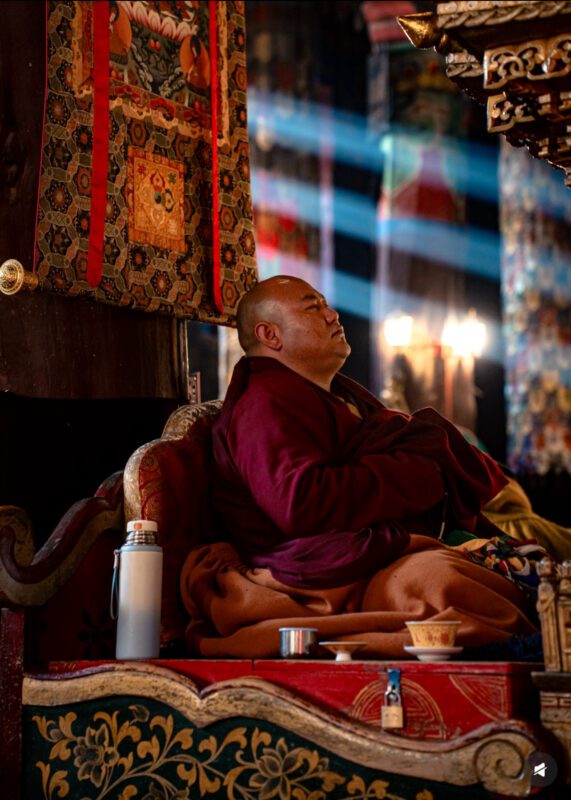
Just as mudras convey meaning through hand gestures, asanas (postures) reveal the nature and activity of the deity. A figure seated in the full lotus position (Vajraparyankasana) represents deep meditative stability and indestructibility. A figure seated with one leg extended (Lalitasana), as is common with Tara, indicates a readiness to spring into action to aid sentient beings. Standing postures often signify active engagement with the world. Wrathful deities are frequently depicted in the dynamic, lunging Alidhasana posture, with one leg bent and the other extended, symbolizing their power to conquer negativity and obstacles. These postures are not merely artistic choices; they are visual representations of the deity’s specific energetic frequency and mode of compassionate activity.
| Symbol / Color | Sacred Meaning |
|---|---|
| White | Represents purity, peace, and the wisdom of Vairocana that overcomes ignorance. The color of pacification. |
| Yellow / Gold | Symbolizes richness, abundance, and the wisdom of Ratnasambhava that transforms pride into equanimity. The color of enrichment. |
| Red | Signifies power, magnetizing energy, and the discriminating wisdom of Amitabha that transforms passion into insight. |
| Blue (Deep Lapis) | Represents the unchanging, mirror-like wisdom of Akshobhya that transforms anger. Symbolizes the ultimate reality (Dharmadhatu). |
| Green | Embodies enlightened activity, compassion in action, and the all-accomplishing wisdom of Amoghasiddhi that transforms jealousy. |
| Vajra (Dorje) | The diamond scepter; symbolizes the indestructible and potent nature of enlightenment, skillfull means. |
| Bell (Ghanta) | Represents wisdom, emptiness (shunyata), and the feminine principle. Used in conjunction with the Vajra. |
| Lotus Flower | Symbolizes purity and enlightenment, which grows undefiled from the mud of worldly existence (samsara). |
The Celestial Court: Interpreting Lineage Holders, Protector Deities, and Symbolic Offerings
A thangka is rarely a solitary portrait. The central figure is typically surrounded by a retinue or celestial court. Above the main deity, one often finds figures of the lineage masters (gurus) associated with that specific practice, reinforcing the thangka’s connection to the unbroken chain of transmission. At the bottom, protector deities (Dharmapalas) may be depicted, their fierce forms serving to guard the teachings and the practitioner from obstacles. The landscape itself is filled with auspicious symbols and offerings—jewels, celestial silks, and ritual instruments—all representing the practitioner’s offering of all that is beautiful and precious to the enlightened ones. By understanding this hierarchy and context, the entire thangka reveals itself not as a single image, but as a complete mandala, a sacred universe with the enlightened deity at its heart.
The Alchemy of Creation: Where Matter Meets Meditative Mind
The creation of a genuine thangka is a form of alchemy, a sacred process where raw elements of the earth are transformed into a vessel for divine presence. It is this painstaking, ritualistic journey from blank canvas to consecrated image that imbues the thangka with its spiritual power. This process stands in stark contrast to the soulless efficiency of mass production and is the ultimate guarantor of authenticity. The artist is not merely a painter but a yogi, a ritualist, and a chemist, whose own state of mind is the most crucial ingredient in the entire undertaking. Each step is a meditation, an offering, and a prayer. Understanding this profound labor of love allows one to see the thangka not as a product, but as the physical residue of a deeply spiritual practice, a testament to the convergence of unwavering discipline and enlightened intention.
Preparing the Ground: The Ritual Stretching and Gessoing of the Canvas
The process begins long before any paint is applied. A piece of cotton or linen canvas is carefully stretched over a wooden frame, stitched tightly with cord. This act of creating tension is itself symbolic, representing the discipline required for spiritual practice. The canvas is then coated with a mixture of chalk or white clay and animal hide glue, known as gesso. Layer upon layer is applied and burnished with a smooth stone or shell until the surface is flawlessly smooth, like a polished mirror. This prepared ground, or metsön, is the pure foundation upon which the divine image will be built. It represents the purification of the mind, creating a clear, unblemished space for enlightenment to dawn. This initial stage can take weeks, and its perfection is considered essential for the longevity and spiritual integrity of the finished work.
Earth’s Sacred Essence: The Use of Mineral Pigments and Pure Gold
Authentic thangkas are painted with colors derived from the earth itself. These are not synthetic tube paints but painstakingly ground mineral pigments. Lapis lazuli is crushed for deep, celestial blues; cinnabar for vibrant reds; malachite and azurite for greens and blues; orpiment for brilliant yellows. These minerals are mixed with a binder of hide glue and water to create the paint. This use of natural pigments connects the thangka to the sacred elements of the world. The most precious of all materials is pure gold, which is ground into a fine powder or applied as leaf. It is used for the ornaments of deities, the rays of light emanating from their bodies, and the delicate brocade of their robes. The gold is not for mere opulence; it symbolizes the purity, incorruptibility, and luminous nature of the enlightened mind. The artist’s ability to create impossibly fine lines of liquid gold is a hallmark of mastery and a profound act of devotion.
The Artist as Yogi: Painting as a State of Deep Samadhi (Meditative Concentration)
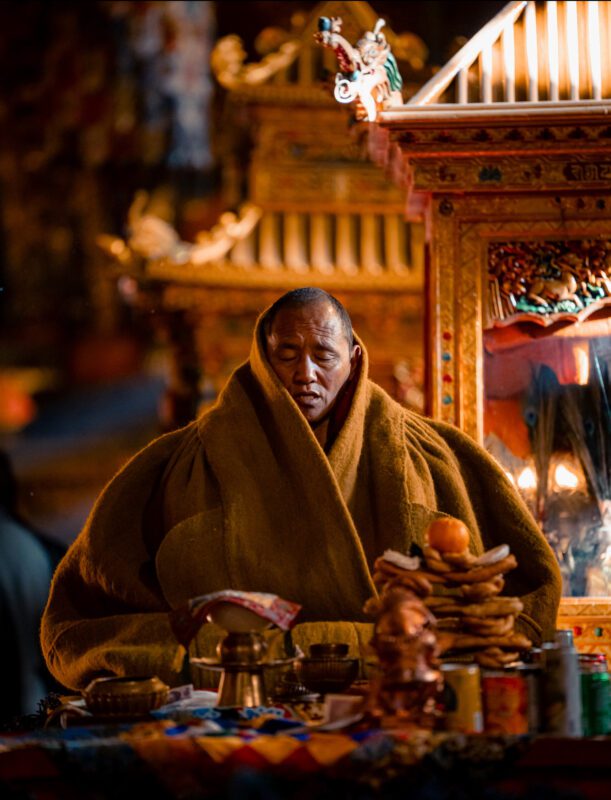
The thangka painter is not an artist in the Western sense of self-expression. They are a spiritual practitioner acting as a conduit. Before beginning to paint, and throughout the process, the artist engages in prayers, mantras, and visualizations related to the deity being depicted. They must maintain a state of clear, focused concentration, known as Samadhi. It is understood that the artist’s state of mind is directly transmitted into the painting. If the mind is agitated, the lines will be flawed. If the mind is pure and focused, the painting will radiate a palpable sense of peace and power. The initial drawing is done according to precise iconometric grids that have been preserved for centuries, ensuring that the proportions of the deity are perfect. These grids are considered sacred geometry, a blueprint of the enlightened form. The artist does not create the deity; they reveal the deity who already exists in potential within the sacred proportions.
The Eye-Opening Ceremony: The Final Consecration that Invites the Deity to Reside
A thangka is not considered complete or spiritually potent until it has been consecrated. The final, and most crucial, act of painting is the ‘opening of the eyes’. The artist paints the eyes of the central deity in a final, meditative flourish. Until this moment, the deity is considered to be asleep or inanimate. The painting of the eyes awakens the image. Following this, the finished thangka is taken to a high lama or qualified master for a formal consecration ceremony (rabné). During this ritual, prayers and mantras are recited, and the syllables OM AH HUM are often inscribed on the back of the thangka behind the deity’s forehead, throat, and heart, respectively. This ritual invites the wisdom being, the actual enlightened consciousness of the deity, to merge with the painted image and reside within it. It is at this moment that the thangka ceases to be a mere object and becomes a living presence, a true support for practice and a source of blessings.
Spiritual Application: Activating Your Thangka as a Portal for Practice
Acquiring a thangka is not the culmination of a journey; it is the beginning. A consecrated thangka is a powerful spiritual tool, a partner in one’s path of inner development. It is far more than a piece of exotic art; it is a ‘support’ (Tibetan: rten) for meditation, a constant reminder of one’s own highest potential, and a focal point for generating devotion and insight. To bring a thangka into one’s home is to create a sacred space, to invite the energy of enlightenment into one’s daily life. Engaging with it correctly and respectfully can profoundly deepen one’s spiritual practice, transforming a mundane room into a place of refuge and transformation. The thangka serves as a bridge between the relative world of our daily experience and the ultimate reality of our true nature.
Choosing with Intention: How a Thangka Connects with Your Personal Path
The choice of a thangka is a deeply personal and intuitive process. Often, a practitioner feels an inexplicable connection to a particular deity. This is not a random attraction. In the Vajrayana tradition, it is understood that we have karmic connections to certain manifestations of enlightenment. One person may be drawn to the fierce wisdom of Manjushri, which cuts through confusion, while another may feel a deep resonance with the unconditional compassion of Avalokiteshvara. It is wise to reflect on your own spiritual needs and aspirations. Are you seeking to develop compassion? Overcome fear? Cultivate wisdom? Let this introspection guide your choice. The deity on your thangka will become your primary spiritual friend and guide, so it is important to choose one whose qualities you most wish to cultivate within yourself. This intentional selection creates the foundation for a meaningful and transformative relationship with the sacred image.
Creating a Sacred Space: The Proper Placement and Veneration of a Thangka
Traditionally, a thangka is treated with the same respect as a scripture or a statue of the Buddha. It should be placed in a high, clean, and respected place in the home, typically on a dedicated altar. It should never be placed on the floor, in a bathroom, or in a location where people’s feet would point toward it. Ideally, it is hung on a wall above eye level when you are seated for meditation. It is common practice to make simple offerings before the thangka, such as a bowl of clean water, a stick of incense, a flower, or a candle. These offerings are not to appease an external god, but are gestures of respect and gratitude that help to purify the mind and accumulate merit. By creating a beautiful and honored space for your thangka, you are communicating to your own subconscious mind that the qualities of enlightenment are precious and worthy of your full attention.

A Practical Guide to Thangka Meditation: Using the Image as a ‘Support’ (Rten) for Visualization
The primary function of a thangka is as a support for deity yoga, a core practice of Vajrayana Buddhism. For a beginner, the practice can be approached in a simple, accessible way. Sit comfortably before the thangka, take a few deep breaths to settle the mind, and generate a feeling of loving-kindness. Then, simply gaze softly at the central deity. Observe all the details: the color of the body, the expression on the face, the objects held in the hands, the posture. After some time, close your eyes and try to recreate the image in your mind’s eye. When the mental image fades, open your eyes and refresh it. This practice develops concentration (shamatha) and clarity (vipashyana). As you hold the image in your mind, contemplate the qualities the deity represents. If it is Green Tara, feel her compassionate energy and fearlessness radiating from the image and dissolving your own fear and anxiety. Allow the sacred image to become a luminous presence within your own mind and heart.
Beyond Decoration: Understanding the Thangka as a Tool for Inner Transformation
Ultimately, the purpose of a thangka is to help you realize that the deity you see before you is not separate from your own true nature. The perfect qualities of the Buddha or Bodhisattva are inherent within your own mindstream. The thangka is the mirror that reflects this hidden potential back to you. Through consistent practice, the boundary between self and deity, observer and observed, begins to dissolve. You are not just looking at compassion; you are awakening the compassion that is your birthright. You are not just seeing wisdom; you are activating the wisdom that is already present within you. In this way, the thangka is the most profound of tools. It is a key that unlocks the door to your own innate divinity, a constant and beautiful guide on the path from confusion to clarity, from suffering to lasting freedom.
Cultural Preservation: Protecting a Living Artform in the 21st Century
The sacred art of thangka painting, a vessel of Himalayan wisdom carried carefully across a thousand years, now faces its most significant challenge: the modern global marketplace. While this new-found worldwide appreciation has brought opportunities, it has also created an environment where the sacred can be easily commodified and its meaning diluted. The very survival of this profound lineage art now depends upon a new kind of practitioner—the ethical patron, the discerning collector, and the respectful seeker. Your choices matter. By understanding the difference between an authentic piece of Dharma art and a mass-produced replica, you shift from being a mere consumer to becoming a vital guardian of a priceless cultural and spiritual heritage. This section is a call to action, an invitation to participate in the preservation of this living tradition for generations yet to come.
Authenticity vs. The Tourist Market: The Threat of Mass Production
The greatest threat to the thangka tradition is the proliferation of inauthentic, mass-produced paintings created for the tourist market. These items are often painted quickly by untrained artists using cheap acrylic paints on poorly prepared canvases. Sometimes, they are even printed outlines that are simply colored in. These replicas may mimic the form of a thangka, but they are devoid of its spirit. They lack the meticulous preparation, the use of sacred mineral pigments, the precise iconography, and most importantly, the meditative state and spiritual transmission from the artist. Buying such a piece not only results in acquiring a spiritually inert object but also directly harms the tradition by devaluing the time, skill, and devotion of genuine lineage artists. It creates an economic pressure that forces masters to compete with factories, endangering their ability to pass on their profound knowledge to the next generation.
The Role of Ethical Patronage: How Your Support Sustains Master Artists and Their Lineages
When you choose to acquire a genuine thangka created by a lineage artist, you are engaging in an act of ethical patronage. This is an ancient and noble tradition. For centuries, monasteries and devout lay practitioners supported thangka painters, enabling them to dedicate their lives to their art and spiritual practice. Today, that role falls to us. Your investment does more than provide you with a beautiful and powerful spiritual object; it provides a livelihood for a master artist, allowing them to continue their work without compromise. It funds the years of rigorous training required for their apprentices. It preserves the knowledge of how to find, grind, and use traditional mineral pigments. In essence, your support becomes a direct cause for the continuation of an entire spiritual ecosystem. It is an act of merit that generates a powerful connection between you, the artist, and the entire lineage of masters stretching back to the Buddha.
A Bridge Between Worlds: The Thangka as a Cultural Ambassador for Himalayan Wisdom
In a world increasingly disconnected from tradition and spiritual depth, the thangka serves as a powerful cultural ambassador. For many in the West, a thangka is their first introduction to the profound philosophical and psychological insights of Tibetan Buddhism. The beauty of the art draws them in, and its intricate symbolism invites them to learn more. A genuine thangka hanging in a home or a public space becomes a silent teacher, radiating an energy of peace and intentionality that can be felt even by those unfamiliar with its meaning. It is a testament to a culture that placed the cultivation of inner wisdom above all else. By honoring and preserving this art form, we help to ensure that this invaluable wisdom continues to be a source of inspiration and guidance for all humanity during these challenging times.
Tanfog’s Commitment: Our Vow to Uphold the Sanctity and Integrity of Sacred Art
At Tanfog, we understand that our role is not merely that of a merchant, but of a steward. Our foundational principle is a deep and abiding respect for the traditions we serve. We have made a solemn vow—our own Samaya—to uphold the sanctity and integrity of this sacred art. We work exclusively with master artists who are recognized holders of their respective lineages. We ensure that every thangka we offer is created according to traditional methods, from the hand-prepared canvas and mineral pigments to the final consecration. We are committed to transparency, sharing the story of the artist and the meaning behind the art. Our purpose is to be a trustworthy bridge, allowing you to connect with these traditions with complete confidence. By choosing to acquire a thangka through Tanfog, you are not just making a purchase; you are joining us in a shared commitment to protect, preserve, and honor a living stream of wisdom.
The Wisdom FAQ
1. What is the fundamental difference between a thangka and a religious icon in Western traditions?
While both are sacred images, their function differs. A Western icon is typically an object of veneration, a window to the divine that is prayed *to*. A thangka, particularly a Yidam image, is a tool for transformation that is worked *with*. The practitioner does not simply worship the deity but visualizes themselves *as* the deity to awaken those same enlightened qualities within their own mind. The thangka is a map of your own potential, not just a portrait of a saint.2. Why are some deities depicted in a wrathful or terrifying form? Are they evil?
Wrathful deities are not evil or demonic; they are powerful manifestations of compassionate energy. Their fierce appearance symbolizes the dynamic, forceful energy needed to cut through the most stubborn obstacles to enlightenment: ignorance, hatred, and greed. Their wrath is directed at the ego and its delusions, not at sentient beings. Think of it as the fierce love of a parent who must act forcefully to protect a child from grave danger. They are protectors of the practitioner and the teachings.3. How long does it take for an artist to become a master thangka painter?
The training is exceptionally rigorous and lengthy. A formal apprenticeship under a master typically lasts from ten to fifteen years. During this time, the student must master not only the technical skills of drawing, painting, and gold application, but also memorize the vast library of iconographic grids and proportions and undergo deep spiritual training in the practices associated with the deities they paint. True mastery is a lifelong commitment.4. Can someone who is not a Buddhist benefit from having a thangka?
Absolutely. The universal qualities embodied by the deities in thangkas—such as compassion (Avalokiteshvara), wisdom (Manjushri), and healing (Medicine Buddha)—are beneficial to all, regardless of faith. A thangka can serve as a powerful object for secular meditation, a source of peace, and a beautiful reminder of humanity’s highest aspirations. Its presence can bring a sense of tranquility and sacredness to any space, acting as a focal point for mindfulness and contemplation for anyone.5. Once a thangka is consecrated, does it require special care?
Yes, it is considered a living spiritual object. Beyond placing it in a respectful location, it should be protected from direct sunlight, moisture, and dust. Traditionally, thangkas have a silk curtain that can be drawn over the image when it is not being used for practice, protecting it physically and energetically. The main principle is to treat it with reverence and care, understanding that it is a vessel of profound blessings and a direct link to a sacred lineage.
The Guardian’s Reflection
In the whisper of a fine brush on cotton, a lineage breathes. In the vibrant hue of ground lapis, a wisdom-mind awakens. A thangka is more than art; it is a vow made visible, a promise of enlightenment passed through the hands of masters and into our care. To hold one is to hold a conversation across centuries. To preserve one is to ensure that this sacred dialogue does not fall silent. May we all become worthy guardians of this light, ensuring its radiance illuminates the path for all beings, now and in generations to com
References:
JCK Online https://www.jckonline.com/
British Vogue / Jewelry Section https://www.vogue.co.uk/fashion/jewellery
Smithsonian Gem Collection https://geogallery.si.edu/collections/gems