

A World Encoded in Color and Line
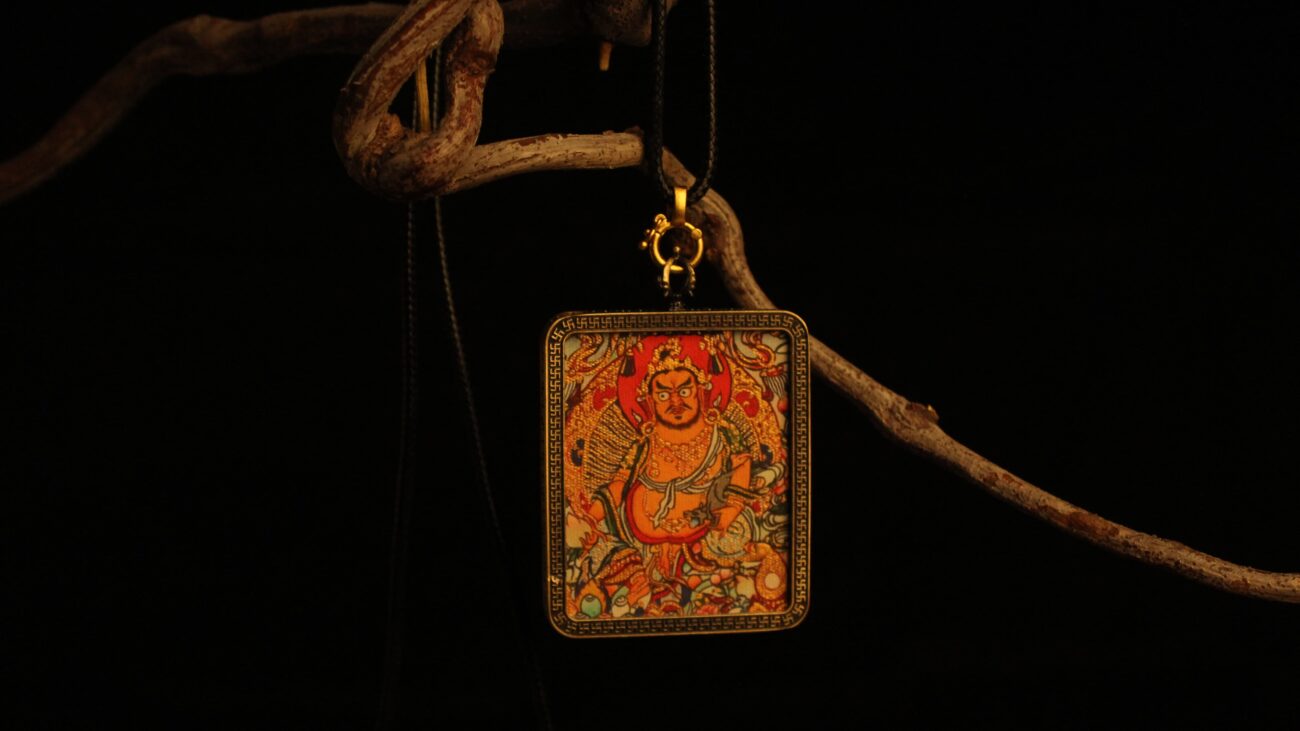
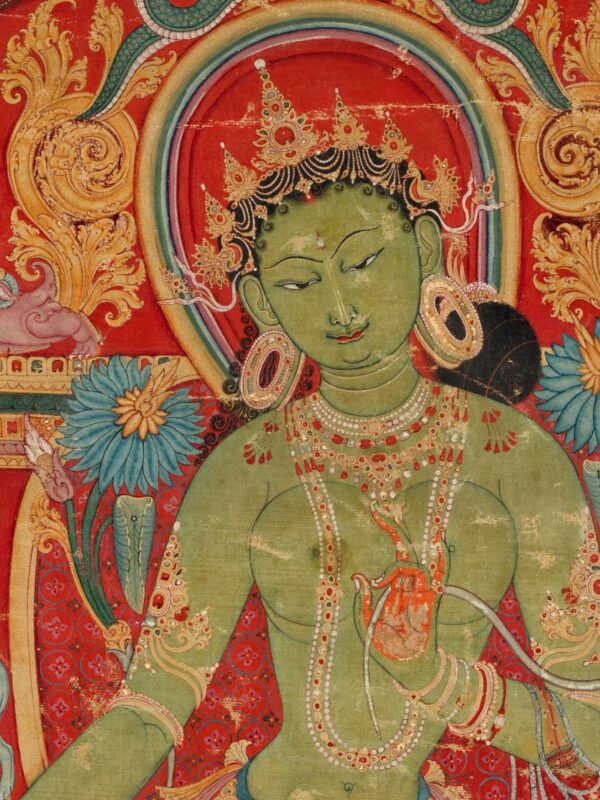
A Thangka is far more than a beautiful painting; it is a complete visual language system. Behind its vibrant pigments lies a precise, thousand-year-old code of sacred geometry and profound Buddhist philosophy. Every line, color, and proportion is a deliberate character in this script, designed not merely to depict but to instruct, transform, and guide the viewer toward enlightenment.
The Sacred Canon: The Codex of Proportions
The creation of a Thangka permits no artistic whimsy. It is governed by a rigorous, ancient set of rules known as “The Treatise on Iconometry” (Srid pa’i mdog). This canonical text functions as a divine blueprint, meticulously prescribing:
- Body Proportions: Every element of a deity’s form, measured in precise units (like the “face-length”), is defined.
- Postures and Gestures (Mudras): Each seated position, stance, and hand symbol conveys specific aspects of the Dharma.
- Attributes and Adornments: Every ritual object, crown, and jewel holds symbolic meaning, representing particular wisdoms or enlightened qualities.
Why such strictness? In the Tibetan Buddhist worldview, outer form and inner essence are inseparable. Perfect proportions are not merely aesthetic; they are essential for the accurate expression of the perfected qualities of an enlightened being. The correct form embodies the correct teaching.
Case Study: Decoding the Symbolism of Manjushri
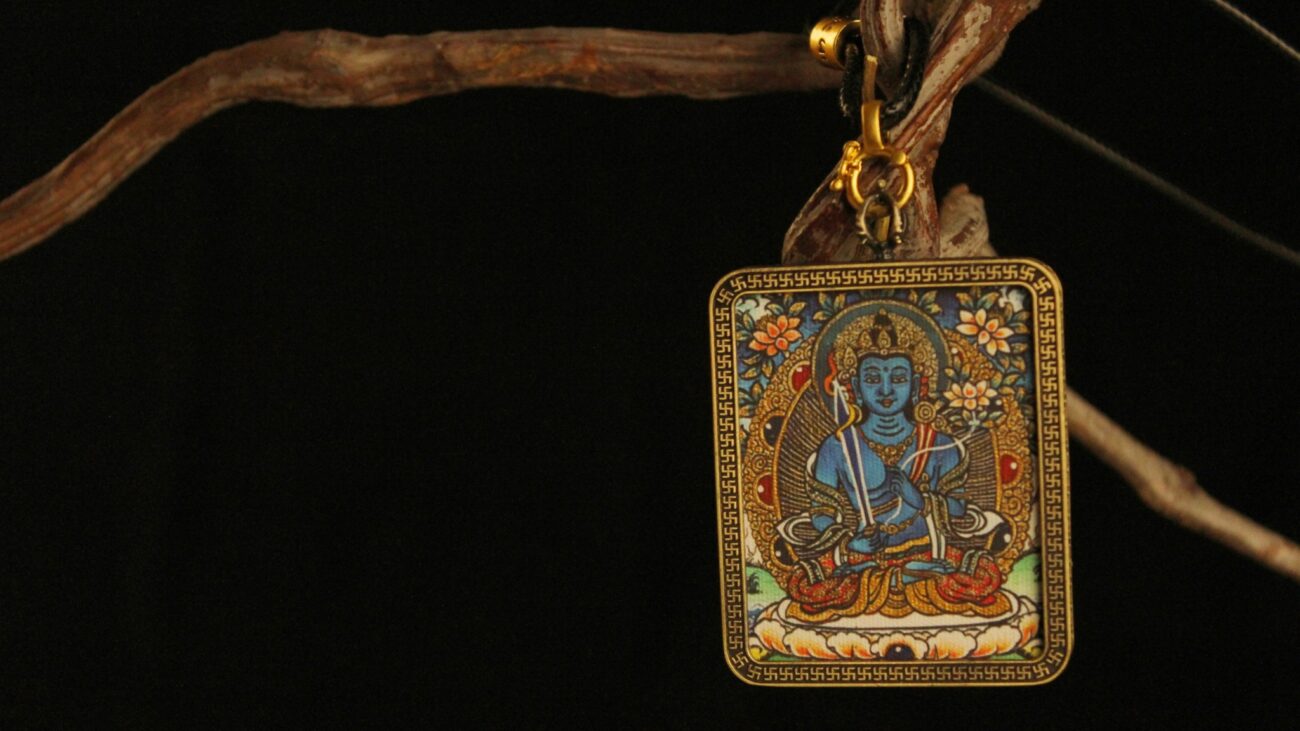
The iconography of Manjushri, the Bodhisattva of Wisdom, presents a perfect example of this visual pedagogy:
- The Upraised Sword in His Right Hand: Represents the sharp wisdom that cuts through all ignorance and delusion.
- The Sacred Text (Prajnaparamita Sutra) Held at His Heart: Symbolizes the ultimate wisdom of emptiness that he embodies.
- The “Royal Ease” Posture: Signifies his complete mastery and subduing of all negative mental states.
- The Radiant Halo of Gold Lines: Each finely drawn ray represents a specific quality of enlightened wisdom emanating outward.
The position, scale, and angle of every element are precisely dictated. A deviation is not an artistic choice but a potential alteration of the symbol’s meaning, requiring the Thangka artist to be both a master craftsman and a devoted student of Buddhist philosophy.
The Architecture of Enlightenment: The “Center-Periphery” Composition
The composition of a Thangka is deeply intentional. The most common structure, the “center-periphery” format, maps a cosmic blueprint:
- The Central Deity: Embodies the ultimate truth or primary teaching.
- The Inner Retinue: Attendant Bodhisattvas or direct disciples, representing the extension of the core doctrine.
- The Outer Circle: Protective deities and lineage teachers, symbolizing the teaching’s guardians and its historical transmission.
- The Borders & Landscape: Depictions of offering deities, donors, or natural scenes, representing the phenomenal world and devotional context.
This structure mirrors the sacred geometry of a mandala—unfolding from the absolute center of truth to the edges of the relative world. For the practitioner, this creates a natural guided visual meditation. The gaze is subtly led from the outer details inward, finally resting on the central figure, mimicking the spiritual journey from distraction to singular, focused awareness.
The Grammar of Color: Symbolism in Pigment
Within this strict formal code, color itself is a vital part of the vocabulary:
- White: Purity, compassion, and spiritual potential.
- Red: The energy of blessing, life force, and sacred power.
- Blue: The vast, boundless dimension of wisdom and space.
- Gold: The immutable, precious, and radiant nature of Buddhahood.
Each hue is applied according to tradition, ensuring that the palette itself becomes a vehicle for the Dharma.
Conclusion: To See, and Then to See Through
The visual language of the Thangka teaches us that to truly “read” one is to move from observing an image to comprehending a teaching, and ultimately, toward internalizing an experience. It is a precise spiritual instrument—a crafted visual field that calibrates the mind and points toward the reality beyond form.
Within its coded geometry and symbolic color lies a profound path: through the most devout adherence to form, one is led to the essence of formlessness; through the most carefully directed gaze, one finds that which transcends sight altogether.