

The Body as a Mandala: A Guide to the Tantric Dharma Art of Human Skin Thangkas
The cold mountain air carries the scent of juniper incense and melting butter lamps. In the quiet darkness of a distant Himalayan shrine room, a profound teaching hangs in silence, a testament to a truth that transcends both life and death. You have likely arrived here through a whisper, a rumor, a fragment of esoteric lore that speaks of sacred paintings rendered not on cotton or silk, but on human skin. Your curiosity is a sign of a deeper searching. You suspect this practice is not a macabre relic but a key to a profound philosophy. Your hope is correct. This is not a sensational tale; it is an echo of the highest teachings on impermanence and the selfless generosity of a fully realized practitioner. This knowledge, part of a sacred lineage, is not easily found because it is not meant for casual consumption. It is a Dharma teaching, and to engage with it is to enter a covenant of respect and deep inquiry.
Insights You Will Gain
- The authentic historical and philosophical origins of this exceedingly rare Vajrayana practice.
- A deep understanding of the iconography of wrathful deities and their role in spiritual transformation.
- Insight into the ritualistic creation process, from the practitioner’s final intent to the artist’s meditative samadhi.
- Methods for engaging with the core teachings of impermanence and non-attachment that these artifacts represent.
- The critical distinction between this historical practice and modern ethical understanding, emphasizing preservation over replication.
Echoes of Impermanence: The True Origin of Human Skin Thangkas
Myth vs. Historical Reality: Separating Fact from Sensationalism
Let us begin by dispelling the shadows of myth. The creation of a human skin thangka was never a punitive act, a form of tribal warfare, or a macabre trophy. Such interpretations are born from a profound misunderstanding of the Vajrayana path. The reality is both more sacred and far rarer than sensational accounts suggest. This practice was the final, consummate act of a highly realized yogi or lama, a practitioner who had spent a lifetime meditating on the illusory nature of the self. Upon their death, their physical form, which they already understood to be an impermanent vessel, was offered as a medium for Dharma art. This was a voluntary bequest, a final testament to their complete mastery over attachment to the body. It was a teaching made manifest—an ultimate expression of generosity intended to shock the complacent mind of the viewer into a direct confrontation with mortality and the potential for enlightenment. The lineage of this understanding is not written in common texts but transmitted through the oral tradition of master to disciple, rooted in the esoteric tantras where the body itself is seen as a mandala of primordial energies.
The Charnel Ground Tradition: Confronting Mortality in Vajrayana Buddhism
To grasp the origin of this practice, one must understand the significance of the charnel ground, or ‘sky burial’ site (Tibetan: དུར་ཁྲོད།, Wylie: dur khrod). In Tibetan Buddhism, these are not places of horror but powerful arenas for spiritual practice. They are open landscapes where corpses are dismembered and offered to vultures, a raw and unsanitized display of the body’s inevitable decay. Advanced practitioners, following the example of the great Mahasiddhas of India, would meditate for extended periods in these environments. The purpose was to directly confront the reality of death, to cut through the root of fear and clinging to the physical form. By remaining in the presence of decomposing bodies, surrounded by the sights, sounds, and smells of dissolution, the yogi internalizes the truth of anicca (impermanence). It is from within this precise context—a space dedicated to the transcendence of bodily attachment—that the concept of using human skin as a sacred canvas emerged. It was not a violation but the ultimate extension of the charnel ground’s purpose: transforming the ultimate symbol of worldly identity into a vehicle for liberation.
Lineage of the Mahasiddhas: Ascetic Practices and the Vow of Non-attachment
The philosophical underpinnings trace back to the 84 Mahasiddhas of ancient India, tantric masters who often lived ascetic lives outside conventional society. Figures like Tilopa, Naropa, and Saraha engaged in practices that radically challenged dualistic thinking. They demonstrated that enlightenment could be found not by rejecting the world, but by understanding its empty nature. Their biographies are filled with accounts of transmuting impure substances into pure ones, symbolizing the alchemical power of enlightened mind. The offering of one’s body for a thangka is the epitome of this Mahasiddha ideal. It is the fulfillment of the Bodhisattva vow in its most potent form. The practitioner, through a lifetime of meditation, has ceased to identify with the flesh. The body is merely a tool. In its final act, this tool becomes a ‘support’ (the literal meaning of ‘thangka’) for the teachings that will benefit countless other beings. This was not a tradition with a codified manual; it was an extremely rare expression of an individual’s supreme realization, sanctioned and guided by their lineage holder to ensure the purity of intent and the integrity of the Samaya (sacred commitment).
Reading the Sacred Canvas: The Iconography of Liberation
The Symbolism of the Medium: Why Was Human Skin Chosen?
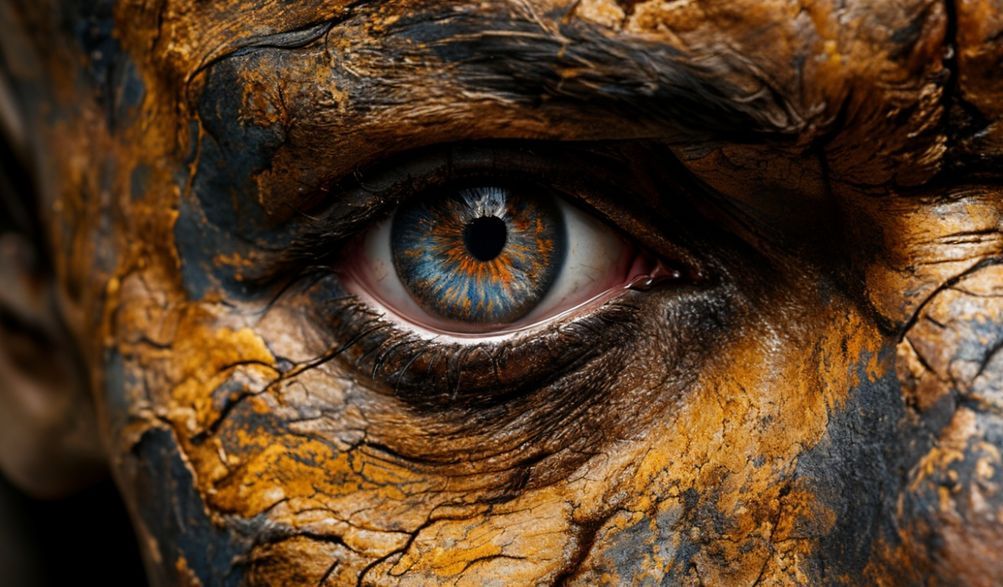
The choice of human skin as a medium is, in itself, the most profound iconographic statement. Unlike silk or cotton, which are neutral canvases, the skin is intrinsically charged with meaning. It is the boundary between the inner self and the outer world, the very container of our egoic identity. To use it as a ground for a thangka is a radical tantric statement on the nature of reality. It declares that the sacred is not separate from the profane, that nirvana is not found outside of samsara. The very substance that is the object of our greatest vanity, fear, and attachment becomes the foundation for depicting ultimate truth. This choice serves as a perpetual reminder of impermanence. Every line of pigment, every crack in the aged surface, speaks to the fragility of life. For the practitioner meditating upon such an object, there is no escape from the visceral reality of their own mortality. This directness is a hallmark of the Vajrayana path—it does not offer gentle consolations but uses powerful, often jarring, methods to shatter delusion. The skin canvas forces the viewer to confront the truth that their own body is no different; it too is a temporary canvas upon which the drama of life is painted, and it too will dissolve.
Iconography of Wrathful Deities: Mahakala, Vajrayogini, and Charnel Ground Protectors
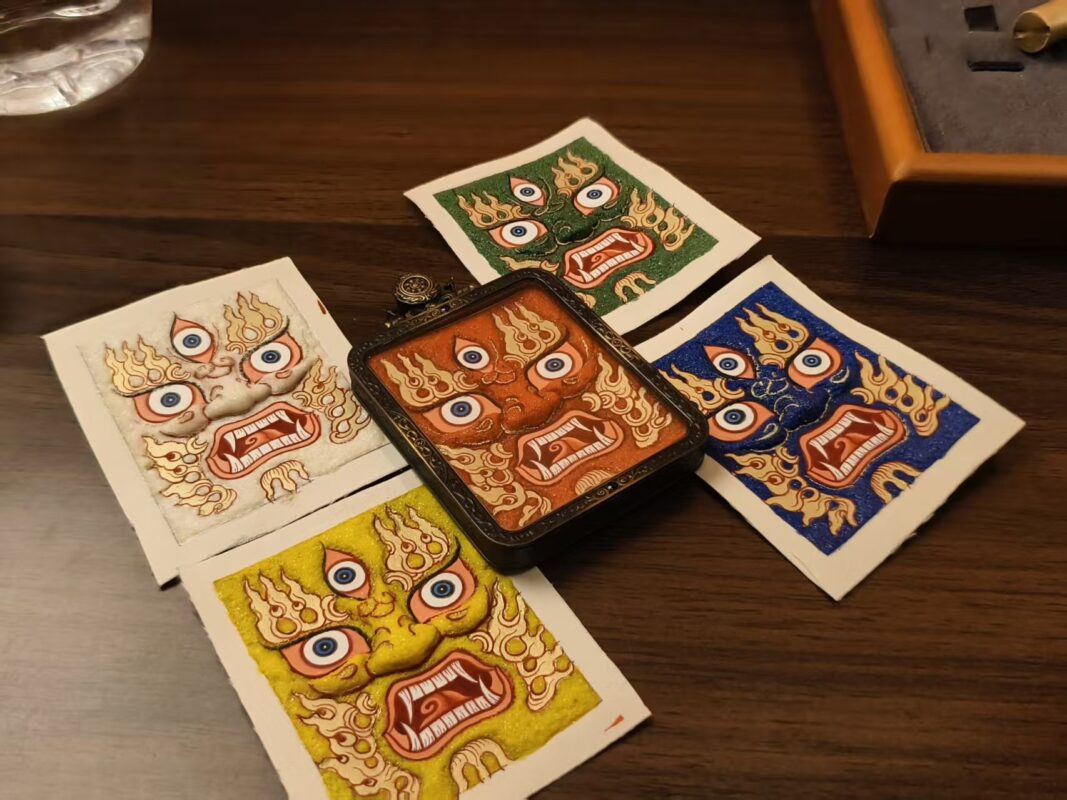
It is no coincidence that the deities depicted on human skin thangkas are almost exclusively wrathful (Tibetan: tro wo). These are not demons, but fierce manifestations of compassionate, enlightened energy. Figures like Mahakala, the Great Black One, or Vajrayogini, the fiery red Dakini, are protectors of the Dharma. Their terrifying appearance—with bared fangs, garlands of skulls, and blazing wisdom fire—is directed not at the practitioner, but at the true enemies: ignorance, hatred, and greed. They represent the dynamic, untamable energy required to cut through ego-clinging. Painting these forms onto human skin creates a powerful synergy. The skin represents the raw, untamed stuff of samsara—our primal fears, desires, and aggression. The wrathful deity depicted upon it symbolizes the enlightened wisdom that can transmute these very poisons into nectar. The deity is shown dancing upon the field of human experience, demonstrating mastery over the forces of life and death. The charnel ground symbols that often adorn these thangkas—skeletons, flayed skins, wild animals—further ground the imagery in the reality of dissolution, reminding the practitioner that liberation is found by fearlessly embracing the totality of existence, not by recoiling from its unsettling aspects.
Color and Form: Cinnabar, Gold, and the Dance of Transmutation
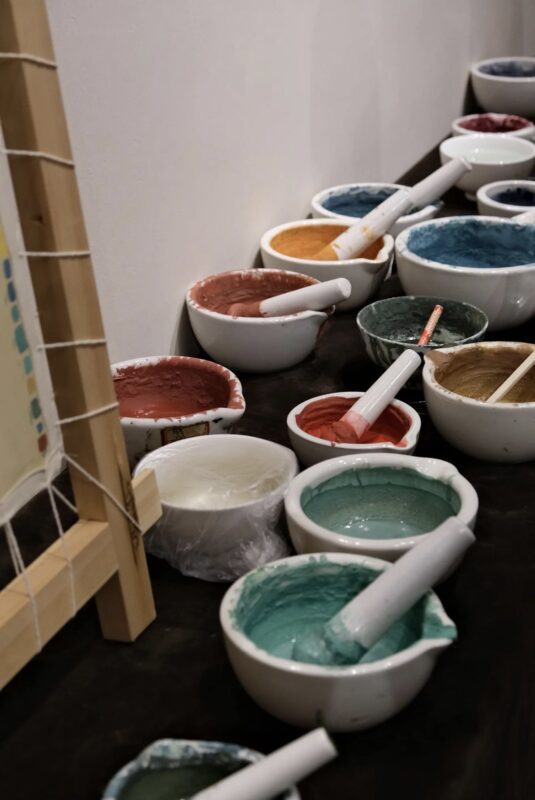
The pigments used in this Dharma art are themselves carriers of profound meaning. The brilliant, blood-red of cinnabar (mercuric sulfide) is not merely decorative; it symbolizes life force, passion, and the subjugating activity of enlightened beings. When used to outline the muscular form of a protector deity, it signifies their power over the realm of desire. Lapis lazuli, ground into a fine powder, creates a deep, celestial blue, representing the boundless, sky-like nature of ultimate reality (Dharmakaya). The application of pure gold leaf is reserved for the most sacred elements—the ornaments of the deity, the flame of a wisdom lamp, or the seed syllable in their heart center. Gold symbolizes the incorruptible, radiant nature of enlightenment itself. When these immortal, mineral pigments are painted onto the mortal canvas of skin, a powerful alchemical statement is made. The transient is infused with the eternal. The perishable body becomes a support for indestructible truth. The artist, through their meditative focus, channels this transmutation, making the thangka a live field of energy where the dance between form and emptiness, life and death, samsara and nirvana, is played out in vibrant color and sacred geometry.
| Symbol or Color | Sacred Meaning in Vajrayana Iconography |
|---|---|
| Human Skin Canvas | The ground of Samsara; impermanence; the container of ego-identity; the ultimate teaching on non-attachment. |
| Cinnabar (Red) | Life force (prana), magnetizing and subjugating enlightened activity, transmutation of passion. |
| Lapis Lazuli (Blue) | The ultimate reality (Dharmakaya), emptiness, celestial space, healing. Often the body color of primordial Buddhas. |
| Gold Leaf | Enlightenment, purity, the radiant and incorruptible nature of mind. Used for ornaments and sacred details. |
| Wrathful Deity Form | Fierce compassion that destroys ignorance and ego. Represents the dynamic energy that overcomes obstacles to enlightenment. |
| Garland of Skulls | Victory over the 5 skandhas (aggregates of personality); mastery over death; the purification of the 5 negative emotions. |
| Wisdom Fire | The fire of primordial awareness that consumes all neurotic thoughts and conceptual obscurations. |
The Alchemy of Creation: A Ritual of Transformation
The Giver’s Intent: The Final Testament of a Yogi or Lama
The entire sacred enterprise of creating a human skin thangka begins and ends with intention. The genesis of such an artifact lies in the mind of the practitioner long before their physical death. It is a conscious, deliberate decision made from a place of profound realization. Having spent a lifetime deconstructing their own ego and recognizing the body’s transient nature, the yogi or lama makes a vow—a final act of dāna (generosity). This is the perfection of giving, where one offers the most intimate and personal possession: the physical form. This intent is communicated to their heart disciple or lineage holder, establishing a sacred commitment, a Samaya, that will guide the process. The offering is not made with sorrow or attachment, but with the joyous aspiration that this final act will serve as a powerful teaching for future generations. It is a declaration that even in death, the practitioner’s body will continue to serve the Dharma. This pure motivation is the spiritual lifeblood of the thangka. Without it, the object would be nothing more than a grotesque artifact. With it, the skin becomes a relic, imbued with the blessing and spiritual power of the realized master who offered it.
Ritual Preparation of the Canvas: Purification, Tanning, and Consecration
Once the practitioner has passed, the process of preparing the canvas is undertaken with the utmost reverence and ritual purity. This is not a task for a common tanner but for a specialist, often a yogi or ritual master themselves, who understands the sacred nature of the work. The skin is not treated as a mere material but as the ‘body mandala’ of the deceased master. The process involves specific purification rites at every stage. Mantras are recited to cleanse any remaining karmic imprints and to bless the material. The tanning methods were unique, using specific salts and herbs known to preserve the skin while maintaining a suitable surface for painting. This was a guarded knowledge, part of the esoteric craft of the lineage. Throughout the slow curing process, the skin would be kept in a consecrated space, away from profane view, often on an altar or in a shrine room. Further ceremonies would be performed to formally offer the prepared canvas to the deity who would eventually be depicted upon it. This multi-step consecration transforms the physical substance. It is an alchemical process that elevates the skin from a remnant of a mortal body to a sanctified field, a ‘buddha-field’ in miniature, ready to receive the image of an enlightened being.
The Artist’s Samadhi: Painting as Meditative Absorption and Transmission
The artist chosen for this sacred task was never merely a skilled artisan; they were a dedicated spiritual practitioner, deeply familiar with the iconography and the meditative practice associated with the chosen deity. Before the first brushstroke, the artist would engage in an extensive retreat, performing sadhanas (spiritual practices) of the deity, reciting their mantra, and dissolving their own ego into the vast expanse of emptiness. They would invoke the deity, not as an external god, but as an inherent aspect of their own enlightened nature. The act of painting was itself a form of deep meditation, a state of Samadhi or one-pointed concentration. Each brushstroke was infused with mantra and mindful presence. The artist was not simply copying a design but transmitting a living presence onto the canvas. They acted as a channel, allowing the wisdom and compassion of the deity to flow through them into the mineral pigments and onto the sacred skin. This is the heart of what makes a thangka, especially one of this nature, a piece of Dharma art rather than a mere painting. It is an object of transmission, carrying the blessings of the giver, the meditative absorption of the artist, and the enlightened energy of the deity. It becomes a support for practice, a portal to a state of consciousness beyond ordinary perception.
Contemplating the Ultimate Truth: How to Connect with this Sacred Teaching
The Thangka as a Mirror: Meditating on Impermanence and Death (Marṇasati)
Given the extreme rarity and sacred status of these thangkas, they are not objects for personal collection but subjects for deep contemplation. One can, however, engage with their profound teaching without possessing the physical artifact. The most direct way is to use the *concept* of the human skin thangka as a focal point for Marṇasati, the meditation on death and impermanence. Find a quiet space. Bring to mind the image of a sacred painting on human skin. Consider the life of the person whose skin it was—a practitioner who dedicated their existence to understanding the nature of reality. Reflect that this skin, which once felt warmth, cold, and the touch of a loved one, is now a canvas for immortal truth. Then, turn this reflection upon yourself. Contemplate your own body. Recognize it not as a solid, permanent ‘self,’ but as a temporary composite of elements, just like the thangka’s canvas. Acknowledge its fragility and the certainty of its eventual dissolution. This is not a morbid exercise. The purpose of Marṇasati is not to induce fear, but to awaken a sense of profound urgency and appreciation for the preciousness of this human life. By meditating in this way, the thangka becomes a mirror, reflecting the ultimate truth of your own existence and inspiring you to use your life meaningfully.
Transforming Fear into Wisdom: The Psychology of Charnel Ground Contemplation
The iconography of the charnel ground and the medium of skin are designed to provoke a response. For the untrained mind, this response is often fear or revulsion. Vajrayana psychology teaches us not to push these feelings away, but to look directly into their nature. When the feeling of fear arises while contemplating such an image, ask yourself: What is it that is afraid? It is the ego, the deeply ingrained belief in a separate, permanent self that is terrified of its own annihilation. Charnel ground contemplation is a therapeutic shock that weakens the ego’s grip. By mindfully staying with the discomfort, you begin to see that the fear itself is an empty projection. You learn to relax with the groundlessness of existence. This is the alchemy of tantra: transforming the lead of raw fear into the gold of fearless wisdom. The wrathful deities depicted on the skin are the ultimate role models for this process. They are fearless because they have realized the empty nature of all phenomena. They dance amidst the flames and skulls, not in a nihilistic frenzy, but in a celebration of liberation from the fear of death. Engaging with their imagery is to invite that same fearless, compassionate energy into your own mind.
Visualizing the Deity: An Internal Practice of Deity Yoga (Devata Yoga)
The highest purpose of a thangka is to serve as a support for Devata Yoga, or deity visualization. This is a core practice in Vajrayana where one visualizes themselves as the enlightened deity. This is not an act of fantasy but a profound method for awakening the same enlightened qualities within oneself. You can perform a simplified version of this practice. After contemplating impermanence, bring to mind the image of a protector deity like Mahakala. Visualize him not on an external canvas, but in the space in front of you, made of brilliant, radiant light. See his compassionate, fierce expression that cuts through all confusion. Recite his mantra, OM MAHAKALA HUM PHET, feeling its vibration resonate within you. Then, imagine the deity dissolving into brilliant blue-black light and merging with you. Feel that you have become Mahakala, embodying his fearless compassion and unshakable stability. Rest in that feeling of power and clarity. In this way, you have internalized the thangka. The sacred image is no longer on a piece of skin in a distant museum; it is alive within your own stream of consciousness, actively transforming your mind and dissolving your ego-clinging. This internal practice is the true way to connect with the lineage of this profound Dharma art.
A Vanished Art: Why This Tradition Must Be Understood, Not Replicated
Historical Rarity and Modern Misinterpretation
It is imperative to state unequivocally that the creation of human skin thangkas is a vanished practice. Even in its time, it was an occurrence of almost unbelievable rarity, reserved for the passing of a handful of supreme masters over centuries. The conditions required—a fully realized yogi making the offering, a lineage holder to sanction it, and a qualified artist-practitioner to execute it—made it an exceptional event, not a tradition. In the modern era, any attempt to replicate this practice would be a grotesque perversion of its sacred intent. Divorced from its authentic cultural and spiritual context, it would be an act of desecration, not devotion. The danger of misinterpretation is immense, as the sensational aspects can easily overshadow the profound philosophy. It is for this reason that we, as guardians of these traditions, present this knowledge not as an instruction manual, but as a historical and spiritual exegesis. Understanding this practice requires deep respect for its context and a willingness to look beyond the shocking surface to the liberating truth it contains. It belongs to the sacred history of the Dharma, a powerful echo of a past time, meant to be studied and contemplated, never imitated.
The Role of Museums and Scholars in Preserving a Sacred Narrative
Today, the few extant examples of these sacred objects are held in the care of museums and private collections. While some may view this as a displacement from their original ritual context, these institutions now play a crucial role as custodians. They provide a space where these artifacts can be preserved from destruction and studied with the reverence they deserve. The role of the scholar and the curator becomes one of a storyteller, responsible for presenting the sacred narrative with accuracy and integrity. They have a duty to educate the public, to move the conversation from one of morbid curiosity to one of profound philosophical inquiry. By providing proper context—explaining the charnel ground tradition, the concept of non-attachment, and the role of wrathful deities—they honor the original intent of the practitioner who made the offering. They ensure that the lama’s final act of generosity continues to be a source of wisdom, rather than an object of misunderstanding. Tanfog stands with these institutions, offering our expertise to help frame these powerful artifacts in the light of authentic Dharma, ensuring their story is told with the respect and depth it commands.
The Enduring Lesson: The Body as a Vehicle for Enlightenment, Not an Object
Ultimately, the enduring lesson of the human skin thangka is a radical re-evaluation of our relationship with our own bodies. In a world that alternately objectifies and obsesses over the physical form, this practice offers a liberating alternative. It teaches that the body is not a static object to be perfected or preserved for its own sake, but a precious, dynamic vehicle for achieving enlightenment. It is a tool for practice, a mandala of energies, and, in its final moments, a potential offering for the benefit of all beings. The teaching is not to devalue the body, but to see it in its proper perspective: temporary, interdependent, and full of potential. The practitioner who offered their skin did so from a place of supreme love for their physical form, recognizing its ultimate capacity to serve the Dharma even after breath had ceased. This is the final, soul-stirring message. Cherish this body. Use it for the practice of wisdom and compassion. And understand that its true value is not in its appearance or longevity, but in its potential to serve as a launching point for a journey to a state of being that is deathless, boundless, and utterly free.
The Wisdom FAQ
- Was this practice a form of punishment or the result of warfare?Absolutely not. This is the most common misconception. The practice was an entirely voluntary, post-mortem offering made by a highly advanced spiritual master. It was considered a final, powerful act of selfless generosity and a testament to their complete transcendence of attachment to the body. It was a sacred bequest, not a punitive measure or a trophy.
- How does this differ from ancestor worship or the creation of holy relics?While it shares the element of reverence for a deceased master, its purpose is different. Ancestor worship often focuses on venerating the identity and spirit of the deceased. A human skin thangka intentionally uses the master’s body to dissolve identity. The focus is not on the person who died, but on the universal Dharma teaching of impermanence and the enlightened deity depicted. The skin is a vehicle for a teaching, with the master’s realization acting as a blessing that empowers that teaching.
- What is the key difference between a wrathful deity and a demon?This is a critical distinction in Vajrayana. A demon or malevolent spirit acts out of hatred, greed, and confusion, seeking to cause harm and perpetuate suffering. A wrathful deity, by contrast, is a manifestation of a Buddha’s enlightened compassion. Their fierce energy and appearance are a skillful means to pacify violence, destroy ignorance, and protect practitioners from inner and outer obstacles. They are motivated entirely by the wish to liberate all beings.
- Is the spiritual power in the object itself or in the mind of the viewer?The tantric view is that power arises from the interplay of both. The object is considered a ‘support’ (Tib. tendrel) which is imbued with blessings (Tib. jinlab) through the intent of the giver, the meditative power of the artist, and consecration rituals. However, this power remains latent until it is activated by the faith, devotion, and correct understanding of the practitioner who contemplates it. The thangka is a key, but the mind of the viewer is the door it is designed to open.
- What is the ultimate lesson for a modern person from this vanished tradition?The ultimate lesson is to honestly and fearlessly examine our own relationship with mortality and attachment. The practice challenges us to question: What do I cling to? Am I using this precious human life to its fullest potential? Can I learn to see my body not as ‘me’ or ‘mine,’ but as a precious, temporary vehicle for waking up? It is a radical invitation to live with greater courage, purpose, and a profound sense of gratitude for the fleeting nature of existence.
The Guardian’s Reflection
The threads of this ancient narrative are fragile, easily frayed by casual handling. To hold this knowledge is to accept a Samaya, a sacred trust. It is to become a guardian of a truth that stands in stark opposition to a world obsessed with permanence. This is not a story to be sensationalized or a commodity to be possessed. It is a mirror held up to the face of our own impermanence. The skin, the pigments, the fierce gaze of the deity—they all speak a single, silent word: awaken. May we honor the lineage of the Mahasiddhas, not by replicating their forms, but by daring to embody their fearless spirit. May we become custodians of this profound view, protecting it from misunderstanding, and allowing its echo to clarify our own path toward liberation.