

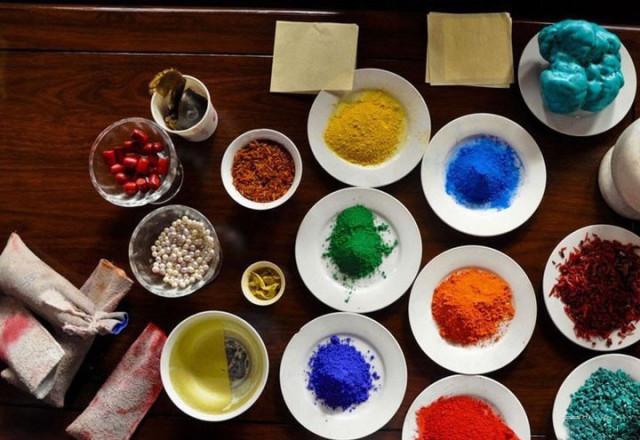
The air in a true Kathmandu atelier carries a distinct weight—a compound of raw earth, of ground lapis and malachite, of aged cotton canvas stretched taut. It is a scent of devotion, a physical manifestation of a spiritual practice that transcends mere artistry. This is the sensory threshold you seek to cross. You are not searching for a souvenir; you are pursuing a connection, a direct line to a lineage of wisdom captured in mineral and gold. Your aspiration is to become a custodian of a piece of sacred energy, a visual dharma that can transform the space it inhabits.
Yet, a quiet apprehension walks with you. The vibrant streets of tourist hubs, while alluring, are lined with countless reproductions. These are images without soul, digitally printed canvases that mimic the form but possess none of the sacred life force, or ‘prana,’ of a master-painted work. The greatest fear for a discerning collector like yourself is not the financial loss of acquiring a facsimile, but the spiritual dissonance of mistaking a hollow echo for the profound resonance of the genuine article. It is an act that inadvertently dishonors the very tradition you seek to revere.
This guide is your definitive resource. We will illuminate the path to connoisseurship, providing you with the precise knowledge to distinguish a spiritual masterpiece from a commercial replica. We will move beyond surface aesthetics and into the very heart of what makes a thangka a powerful object of meditation and a priceless cultural heirloom. Consider this your initiation into the world of authentic thangka painting from Nepal, guided by the lineage keepers at Tanfog.
What You Will Learn
- How to instantly differentiate between hand-ground mineral pigments and flat, lifeless inkjet prints.
- The five critical pillars of authentication, from the deity’s gaze to the precision of 24k goldwork.
- An exclusive look into the ritualistic, meditative process of creating a lineage-based Tanfog thangka.
- Expert guidance on integrating this sacred art into your modern home to enhance its spiritual and aesthetic energy.
- Why acquiring an authentic thangka is a profound investment in a diminishing cultural heritage.
The Great Divide: Distinguishing Tourist Prints from True Thangka Artistry
Your instincts are correct. That feeling of unease when viewing a stack of identical, shrink-wrapped ‘thangkas’ in a bustling market stall is a valid spiritual and aesthetic signal. The difference between a machine-made print and a hand-painted thangka is not merely one of quality; it is a chasm that separates a decorative object from a sacred vessel. One is a static image, the other is a dynamic field of consecrated energy. Understanding this distinction is the first and most crucial step for any serious collector.
The Vibrancy of Mineral Gouache vs. The Flatness of Inkjet
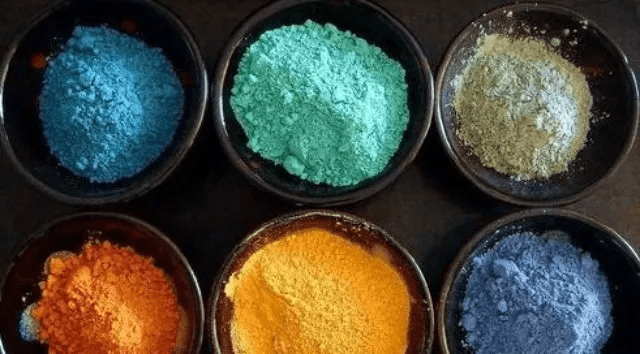
True thangkas are painted with mineral gouache—pigments painstakingly ground from stones like azurite, cinnabar, and orpiment, then mixed with a hide glue binder. This medium possesses a unique, granular texture and a profound depth of color that interacts with light in a living way. The lapis lazuli blues seem to hold the sky, the malachite greens breathe with the vitality of the earth. When you view a genuine thangka, the colors have a luminosity and a subtle, tangible texture. An inkjet print, by contrast, is fundamentally flat. It is composed of tiny, uniform dots of ink (cyan, magenta, yellow, black) sprayed onto a surface. Up close, this pixelation becomes apparent. The colors lack depth, absorb light dully, and present a uniform, lifeless sheen that is unmistakable once you learn to see it.
Decoding the ‘Spiritual Signature’: Why Hand-Painted Aura is Undeniable
A thangka is not simply painted; it is brought into being. Each brushstroke is a meditation, often accompanied by the recitation of mantras. The artist must be in a state of calm, focused concentration, holding the visualization of the deity in their mind’s eye. This sustained intention, this state of deep meditative absorption, is imbued directly into the canvas. This is the ‘spiritual signature’—an energetic resonance that a machine can never replicate. A hand-painted thangka feels alive because it is the culmination of hundreds of hours of human consciousness focused on a divine ideal. A print is the product of a few minutes of mechanical reproduction. The former calms and elevates the spirit of the viewer; the latter is energetically inert.
The Economics of Authenticity in Kathmandu’s Art Market
In the art markets of Kathmandu, the law of ‘you get what you pay for’ holds absolute power. A printed thangka can be produced for a few dollars, allowing it to be sold cheaply to unsuspecting tourists. A genuine, master-painted thangka requires months of dedicated labor from a highly skilled artist who has undergone years, if not decades, of rigorous training. The cost of the raw materials alone—24k gold, pure mineral pigments, high-quality cotton canvas, and silk brocade—is significant. When you invest in an authentic piece, you are not just buying a painting; you are providing sustenance to a master artist, supporting the continuation of their lineage, and patronizing a sacred tradition. The lower price of a print comes at the highest cost: the erosion of this precious cultural ecosystem.
| Feature | Tanfog Masterwork | Commercial Imitation |
|---|---|---|
| Pigments | Hand-ground minerals (lapis, malachite, cinnabar). Rich, textured, and luminous. | Synthetic acrylics or inkjet printer ink. Flat, uniform, and lacking depth. |
| Lineage | Created by a lineage artist with 10+ years of training in sacred iconometry. | Produced by anonymous workers or machines with no connection to the tradition. |
| Gold Application | Genuine 24k gold, meticulously applied and burnished to a deep, warm glow. | Metallic gold paint or foil, which is flat, brassy, and tarnishes over time. |
| Spiritual Resonance | Imbued with the artist’s meditative intention; serves as a powerful support for practice. | Energetically inert; a decorative object with no spiritual function. |
A Collector’s Authentication Checklist: 5 Pillars of Masterful Thangka
Armed with the foundational knowledge of authenticity, you can now approach a thangka with a collector’s eye. These five pillars are the technical and spiritual benchmarks used by experts to assess the quality and legitimacy of a piece. They move beyond the general feel and into the specific, verifiable details that signify a master’s hand. Train your eye to see these elements, and you will never be fooled by an imitation.
Facial Serenity & Compassion: Inspecting the ‘Three-Quarter’ Gaze
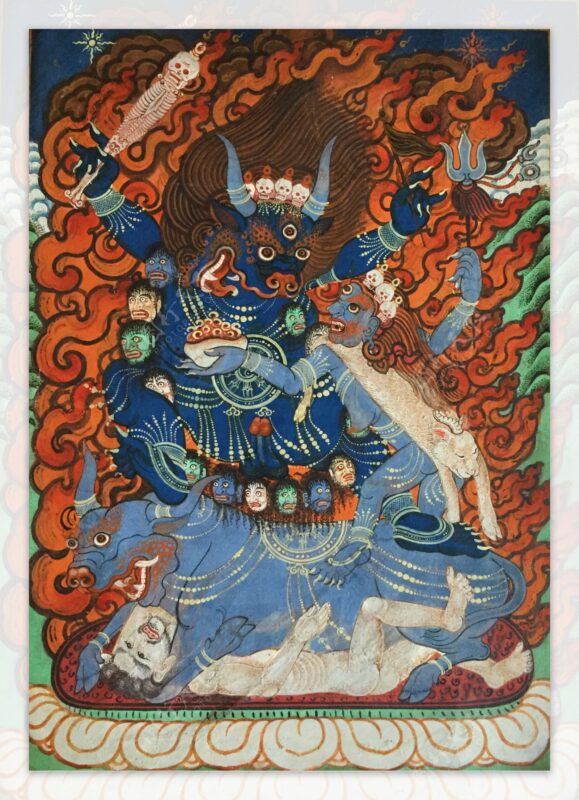
The face, and specifically the eyes, are the focal point of a thangka’s spiritual power. A master artist spends an immense amount of time rendering the deity’s expression. Look for a face that conveys deep, abiding peace and compassion. The eyes should not be flat dots; they must be rendered with subtlety and life, often with a ‘three-quarter’ gaze that seems to be both looking at you and beyond you into a state of profound meditation. The lines of the mouth should suggest a gentle, knowing smile. In wrathful deities, the expression should be one of dynamic, powerful energy, not a grotesque caricature. A poorly painted face is the most immediate sign of an amateur or inauthentic work.
Iconometric Proportions: The Sacred Geometry of the Deity’s Form
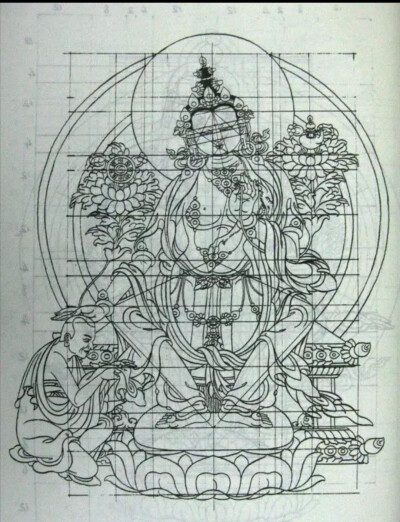
Vajrayana Buddhist art is not a realm for artistic license. Every deity has a precise set of iconometric proportions—a grid of sacred geometry that dictates the length of the limbs, the size of the head, and the position of every feature. This is not an arbitrary rule; these proportions are believed to be the mathematical expression of the enlightened state of that particular Buddha or Bodhisattva. A master painter has internalized these complex grids and can sketch them flawlessly from memory. An authentic thangka will have a palpable sense of balance, harmony, and correctness in its form. Imitations often have misshapen limbs, oversized heads, or awkward postures, betraying a fundamental lack of training in this sacred science.
Pigment Depth & Luminescence: The Signature of Ground Minerals
Go beyond simply identifying the colors. Look at how the colors exist on the canvas. As mentioned, mineral pigments have a material presence. Hold the thangka at an angle to the light. Do the colors shift and reveal subtle texture? Does the blue of the background have a deep, velvety quality that seems to recede into space? Does the red of a robe have a fiery, Cinnabar-derived intensity? Synthetic paints, like acrylics, create a plastic-like film on the canvas. They are uniform and opaque. Mineral pigments, in contrast, are composed of tiny, crystalline particles that refract light, creating a natural luminescence that no synthetic can match.
Goldwork Precision: Differentiating True 24k Gold Detailing from Gold Paint
Gold in a thangka represents the light of enlightenment itself. Master artists use genuine 24k gold, ground into a powder and mixed with a binder, applied with an impossibly fine brush. The lines should be crisp, fluid, and perfectly controlled. After application, the gold is often burnished with a special stone, giving it a deep, warm, three-dimensional glow. Gold paint, on the other hand, is flat and brassy. It often looks dull or has a cheap, glittery quality. Examine the fineness of the lines on the deity’s robes or the rays of light emanating from their body. The precision and radiance of the goldwork is a clear indicator of a master’s skill and commitment to using the finest materials.
Canvas & Provenance: The Story Behind the Cotton and Brocade
The foundation of the thangka is as important as the painting itself. An authentic piece is painted on a specially prepared cotton canvas, treated with a mixture of gesso and glue, and then polished with a stone until it is perfectly smooth. This process can take weeks and ensures the longevity of the artwork. Feel the back of the canvas; it should be smooth and solid. Finally, consider the brocade border. A high-quality thangka is framed in fine silk brocade, which represents the celestial mansion of the deity. The colors of the brocade are chosen to complement the painting. A cheap print will be mounted in low-quality satin or polyester. Ask about the artist, their lineage, and where the materials were sourced. A reputable source like Tanfog will provide a certificate of authenticity detailing this crucial provenance.
Inside the Tanfog Atelier: The Journey of a Lineage-Based Thangka
A Tanfog thangka is not a product; it is the culmination of a sacred process, a journey that transforms raw earth and stone into a conduit for divine energy. We invite you behind the curtain, into the quiet, focused world of our atelier, to witness the alchemy of its creation. Understanding this journey deepens one’s appreciation for the final masterpiece and reveals why this art form is a meditative practice in its own right.
From Canvas Curing to Charcoal Sketch: The Foundation of Sacred Art
The process begins not with a brush, but with the canvas. We select high-quality cotton, which is then stretched and treated with a traditional gesso made from chalk, white clay, and animal-hide glue. Multiple layers are applied and sanded, and the final surface is burnished with a conch shell or smooth stone until it achieves a flawless, ivory-like finish. This creates a stable and luminous ground for the pigments. Only then does the master artist begin the initial sketch. Using charcoal, they lay down the iconometric grid with monastic precision, a step that consecrates the canvas and establishes the sacred geometry that will guide the entire work.
Grinding Malachite & Lapis Lazuli: Crafting Our Mineral Palette
Our palette is sourced directly from the earth. We do not use pre-made tubes of paint. Our artists, or their apprentices, spend days grinding raw minerals by hand on a slate slab with a muller. Lapis lazuli from Afghanistan becomes our sky, malachite from the Himalayas becomes the lush landscape, and cinnabar becomes the vibrant robes of a Buddha. Each pigment has its own character and requires a different technique to grind to the perfect consistency. This labor-intensive process is a meditation on color and matter, forging an intimate connection between the artist, their materials, and the natural world from which they are derived. This is why the colors on a Tanfog thangka possess an unparalleled vibrancy and life.
The Ritual of Gold Application: Illuminating the Divine
The application of 24k gold is one of the final and most sacred stages. It requires immense stability of hand and purity of mind. Holding their breath to steady their hand, the artist uses a whisper-thin brush to apply the delicate lines of gold that adorn the deity’s halo, jewelry, and robes. Each stroke is an offering. This is not mere decoration; it is the act of infusing the image with the light of wisdom and enlightenment. The painstaking detail work, often requiring a magnifying glass, is what separates a good thangka from a transcendent masterpiece. It is the final breath of life that illuminates the entire sacred form.
Integrating Sacred Energy: Placing Your Thangka in a Modern Home
Bringing a thangka into your home is an act of creating a sacred space. This is not simply hanging a piece of art; it is inviting the energy and blessings of the deity into your daily life. The placement and care of your thangka can amplify its spiritual benefits and transform your environment into a sanctuary of peace, clarity, and beauty. Here is how to integrate this Himalayan tradition into a modern, elegant Western interior.
Choosing the Right Wall: Light, Respect, and Feng Shui
The first rule is respect. A thangka should always be placed in a high, clean, and honored location. It should never be hung in a bathroom, near the floor, or in a place where people’s feet would point towards it, such as at the foot of a bed. Ideally, choose a wall in your living room, study, or dedicated meditation space. Avoid walls that receive prolonged, direct sunlight, as this can fade the natural mineral pigments over time. In Feng Shui, the east wall is associated with new beginnings and health, making it an auspicious location, but the most important factor is that the location feels special and respectful to you.
Thangkas as a Focal Point for Meditation & Mindfulness Spaces
A thangka is the ultimate focal point for a meditation space. Its traditional function is as a ‘support’ (Tibetan: tendrel) for visualization practices. By placing your thangka at eye level from your meditation cushion, you create a powerful visual anchor. Gazing at the serene face of Chenrezig (Avalokiteshvara) can evoke compassion within your own heart. Meditating on the form of Green Tara can inspire fearless action. The thangka is not an object of worship, but a mirror reflecting your own highest potential. It constantly and quietly reminds you of the qualities of enlightenment you seek to cultivate within yourself.
Pairing Thangka Art with Crystals and Natural Elements
To fully integrate the thangka’s energy, surround it with harmonious natural elements. Place it above a simple wooden altar or console table. A clear quartz crystal placed nearby can help to amplify its purifying energy. A small bowl of water, a candle, or a single flower can serve as simple, elegant offerings that honor the sacred presence. Pairing the thangka with natural textiles like raw silk, linen, or wool in your decor can further enhance the room’s organic, serene aesthetic. The goal is to create an environment where the spiritual art and your living space enter into a graceful, uplifting dialogue.
An Investment in Heritage: Why an Authentic Tanfog Thangka Appreciates
Acquiring a genuine thangka is a decision that resonates on multiple levels. It is, of course, an aesthetic choice that will bring profound beauty to your home. It is a spiritual commitment that can deepen your personal practice. But it is also a wise and meaningful investment in a living cultural legacy. A master-painted thangka is a tangible asset whose value, both financial and spiritual, is destined to grow over time.
Beyond Decoration: Acquiring a Piece of Cultural Legacy
When you purchase a thangka from a source like Tanfog, you are becoming a patron of the arts in the truest sense. You are directly supporting a master artist and their family, enabling them to continue their practice and pass their skills down to the next generation. You are casting a vote for authenticity over mass production. In a world of fleeting trends and disposable goods, you are acquiring a piece of timeless heritage, an object created with a level of care and intention that is increasingly rare. This act of patronage connects you to a lineage of artists, scholars, and practitioners stretching back centuries.
The Diminishing Number of Master Painters in Nepal
The hard reality is that the number of true thangka masters is dwindling. The years of arduous training, the intense focus required, and the economic pressure from cheap reproductions mean that fewer young people are dedicating their lives to this sacred art. The masters who possess the complete knowledge of mineral pigments, iconometry, and gold application are becoming cultural treasures. As this number declines, the work they have already created becomes exponentially more valuable and sought-after by discerning collectors and museums. An authentic thangka is not just a painting; it is a finite and precious resource.
Your Tanfog Certificate: A Guarantee of Provenance and Craftsmanship
We understand that this is a significant acquisition. That is why every thangka from Tanfog is accompanied by a detailed Certificate of Authenticity. This document is your guarantee of provenance. It provides information about the master artist and their lineage, details the specific materials used (including verification of 24k gold and mineral pigments), and certifies the adherence to sacred iconometric standards. This certificate solidifies the thangka’s value as a collector’s item and future heirloom, ensuring its legacy and worth can be verified for generations to come. It is our promise that you are acquiring not just an object of beauty, but a work of undeniable spiritual and artistic integrity.
Frequently Asked Questions for the Discerning Collector
1. How can I verify that the 24k gold is real and not just paint?
There are several indicators. Real 24k gold, when applied and burnished by a master, has a deep, warm, three-dimensional luster that paint cannot replicate. Hold the piece at an angle to a light source; genuine gold will radiate a soft, consistent glow, while metallic paint often has a flat, brassy, or slightly glittery look. Furthermore, feel the texture. Raised gold lines, a technique called ‘sungti’, are tangible evidence of skill. A reputable dealer like Tanfog will also explicitly state the use of 24k gold on their certificate and can often provide details about the artist’s specific technique for preparing and applying it.
2. What is the ideal placement for a thangka I intend to use for meditation?
For meditative purposes, placement is key to function. The thangka should be hung directly in front of your meditation seat, at a height where the central deity is at your eye level when you are seated. This facilitates a direct and stable gaze, which is crucial for visualization practices. The space should be clean, quiet, and dedicated, if possible, to your practice. It acts as the centerpiece of your personal sanctuary, so placing it away from high-traffic areas, televisions, or cluttered desks will help maintain the sanctity of the space and the focus of your mind.
3. Does the direction a thangka faces in my home truly matter?
While traditional Tibetan homes and monasteries have complex rules for placement, the primary principle for a modern home is respect. Traditionally, facing east to catch the morning sun is considered auspicious. However, it is more important to place the thangka in a position of honor. This means it should be high on the wall, in a prominent and clean room like a living room or study. The absolute rule is to avoid placing it where it would be disrespected—so, never in a bathroom, laundry room, or on a wall where a bed’s headboard rests on the other side. Prioritize a location that feels right and elevates the energy of your home.
4. How do I properly care for and clean my thangka painting?
A thangka is a delicate work of art. The cardinal rule is to keep it dry. The mineral pigments are bound with hide glue, which is water-soluble, so never attempt to clean it with a damp cloth. Dust should be removed only occasionally and very gently with a soft, clean, dry paintbrush or a feather duster. The most significant threat is direct sunlight, which will cause the natural pigments to fade over time. For storage or transport, a thangka should always be rolled—never folded—with the painted side facing outwards, preferably protected by a layer of silk or acid-free paper.
5. What is the spiritual and symbolic significance of the silk brocade border?
The brocade border, or ‘gö chen’, is not merely a decorative frame. It is considered an integral part of the thangka, symbolizing the celestial mansion or palace in which the deity resides. It creates a sacred boundary, separating the divine realm of the painting from the mundane world. Often, a strip of yellow or golden silk is sewn directly around the painting, representing the light emanating from the deity. The main brocade colors are also symbolic, chosen to complement the central figure and the overall iconography. The traditional red ribbon or ‘thangka veil’ that sometimes hangs over the top is used to protect the image when not in use and is drawn back during practice or viewing.
Conclusion: Becoming a Guardian of Sacred Art
To choose an authentic thangka is to engage in an act of profound discernment. It is to look past the superficial and connect with the essential. You are not merely acquiring an object; you are becoming a link in a chain of preservation, a guardian of a sacred visual language that has the power to awaken the highest qualities of the human mind. A master-painted thangka is a testament to what is possible when human hands, guided by deep devotion and discipline, transform the humble elements of the earth into a window to the divine.
This art form is more than an aesthetic; it is a practice, a path, and a promise. It is a promise of the peace, clarity, and compassion that lies dormant within us all, waiting to be seen. We at Tanfog are not simply sellers of art; we are custodians and advocates for the lineage-keepers who create these masterpieces. We invite you to explore our curated collection, not as a customer, but as a fellow connoisseur and guardian of this precious heritage. Let us help you find the sacred work that is meant to accompany you on your journey.