


The scent of aged cedarwood and a faint whisper of sandalwood incense fills the air. A single, low hum from a temple bell seems to quiet the mind. It is in this stillness, far from the frantic pace of commerce, that the true principles of energetic alignment were first understood. You are here because a part of you senses a dissonance; a feeling that your tireless efforts are somehow being deflected by an unseen force within your own environment. You harbor a profound hope that an older, deeper wisdom holds the key to unlocking a flow of prosperity that has felt just beyond your grasp. This fear that your surroundings are unknowingly sabotaging your hard work is a valid energetic perception. This is not a search for a quick fix. It is a calling to understand the sacred geometry of energy that governs all things, and to recognize that your workspace is not merely a collection of furniture, but a dynamic vessel for your life’s work and potential. What you seek is a blueprint, a lineage teaching passed down through generations, not of decoration, but of deliberate creation.
Insights You Will Gain:
- A foundational understanding of Feng Shui as a Taoist lineage art for harmonizing with universal life force (Qi).
- A practical guide to applying the Bagua map to identify and activate the key prosperity zones in your office.
- The alchemical principles for selecting objects—plants, crystals, and art—that hold a potent energetic signature.
- A step-by-step ritual for clearing, activating, and maintaining the sacred energy of your professional space.
- The profound responsibility of practicing this art with cultural integrity, becoming a guardian of its wisdom.
The Source of Flow: Unearthing the Lineage of Feng Shui
To engage with Feng Shui is to enter a stream of wisdom that flows from the very heart of Taoist philosophy. Its origins are not in design magazines but in the meticulous, reverent observation of nature by ancient sages. They watched how water, the ultimate symbol of wealth and flow, carved paths through the most unyielding stone. They observed how mountains could shelter a valley from harsh winds, allowing life to flourish. This art, originally called Kan Yu (勘輿), which translates loosely to ‘observing the ways of Heaven and Earth,’ was a profound spiritual science. It was a method for siting homes, temples, and even entire cities in locations where the cosmic and terrestrial energies converged in the most auspicious way. This was not about aesthetics; it was about survival, harmony, and co-creation with the Tao, the fundamental principle that underlies the universe.
Beyond Decoration: The Taoist Roots of Kan Yu (勘輿)
The core tenet of Taoism is living in harmony with the natural order. Kan Yu is the physical application of this principle. The lineage holders of this knowledge were not decorators; they were astronomers, geographers, and spiritual advisors. Their samaya, or sacred commitment, was to interpret the patterns of the cosmos and the land to benefit humanity. They understood that the structure of our environment profoundly influences our inner state. A cramped, dark space constricts our spirit, while a bright, open space allows it to expand. This ancient understanding predates modern environmental psychology by millennia. When you apply these principles to your office, you are not merely arranging furniture; you are participating in a timeless dialogue between humanity and the living energy of the Earth, honoring a lineage dedicated to finding the most harmonious way to live.
Qi (氣): Understanding the Vital Life Force in Your Workspace
At the center of this Dharma art is the concept of Qi (pronounced ‘chee’). Qi is the invisible life force that animates all things—it is the breath in your lungs, the sap in a tree, the current in a river. In your workspace, Qi flows like a gentle stream. If the path is clear, well-lit, and unobstructed, the Qi is vital and nourishing (Sheng Qi), feeding your creativity, focus, and opportunities. If the path is blocked by clutter, sharp corners, or stagnant air, the Qi becomes sluggish or even harmful (Sha Qi), leading to frustration, blocked projects, and financial strain. Your primary role as a practitioner of Feng Shui is to become a tender of this flow. You learn to sense where the energy is blocked and to gently guide it, ensuring your professional life is nurtured by a constant stream of positive, vibrant life force. Every decision, from the placement of your desk to the removal of an old stack of papers, is an act of Qi cultivation.
The Five Elements (Wu Xing): The Foundational Pillars of Energetic Balance
The Taoist sages observed that Qi expresses itself in five primary phases or transformations, known as the Five Elements or Wu Xing (五行): Wood, Fire, Earth, Metal, and Water. These are not just physical substances but archetypal energies with a dynamic relationship of creation and control. Wood fuels Fire; Fire creates ash (Earth); Earth contains Metal; Metal holds Water; and Water nourishes Wood. Understanding this cycle is fundamental to creating balance. If your career feels stagnant (a lack of Wood energy), you can introduce the Water element (which nourishes Wood) through color or a small fountain. If you experience conflict and burnout (an excess of Fire), you can bring in the Earth element to ground and stabilize the energy. This system is a sophisticated iconographic language that allows you to diagnose and remedy energetic imbalances in your space, creating a workspace that is not just productive, but holistically supportive of your entire being.
Mapping Your Prosperity: Reading the Sacred Geometry of the Bagua
The Bagua (八卦), or ‘eight trigrams,’ is the primary iconographic tool in Feng Shui. It is a sacred map of the energetic archetypes that govern all aspects of life, from wealth and fame to family and wisdom. This is not a superstitious diagram but a psycho-spiritual blueprint derived from the I Ching, one of humanity’s oldest texts on cosmic order. By overlaying this energetic map onto the floor plan of your office or desk, you can identify the specific physical locations that correspond to different areas of your professional life. This practice moves beyond guesswork, providing a precise methodology for placing your intention and your cures. The lineage of the Bagua is one of profound insight into the holographic nature of reality: the idea that the part (your office) reflects the whole (your life). By consciously arranging the geometry of your immediate space, you send resonant signals out into the larger universe, calling forth the opportunities and resources you seek.

The Command Position: Establishing Authority and Control from Your Desk
The single most important principle in any office setup is the Command Position. This addresses your core fear of being out of control or vulnerable to unseen influences. To be in command, you must be seated so that you can see the door to the room without being directly in line with it. This means sitting with a solid wall behind you for support and a clear view of who and what is entering your space. Energetically, this is the position of the leader, the general, the master of their domain. The wall behind you acts as a symbolic mountain, offering protection and stability. The open view in front of you represents your clear vision of the future and incoming opportunities. Working with your back to the door creates subconscious anxiety and vulnerability, draining your Qi and leaving you feeling perpetually ‘blindsided.’ Establishing this position is the foundational act of reclaiming your power and authority within your professional sphere. It tells the universe, and your own psyche, that you are in charge of your destiny.
Xun (巽): Locating and Activating Your Wealth & Prosperity Corner
The area of the Bagua map that resonates most directly with wealth, prosperity, and abundance is known as Xun. To locate it, stand at the doorway of your office looking in; the far-left corner is your Wealth corner. This area is associated with the Wood element and the color purple. Allowing this corner to become cluttered or neglected is like building a dam in the river of your income. To activate it, you must first ensure it is clean and clear. Then, introduce potent symbols of growth and wealth. A healthy, vibrant plant with rounded, coin-like leaves, such as a Jade Plant or a Pilea peperomioides, is a classic activator, as its living Wood energy promotes expansion. Placing an object of value here—perhaps a beautiful crystal like citrine, a bowl of coins, or a piece of art that represents abundance to you—further amplifies the intention. The key is to treat this corner as a sacred altar to your prosperity, tending to it with respect and gratitude.
Kan (坎) and Zhen (震): Fueling Career Path and Future Growth
While Xun governs wealth, two other areas are critical for a thriving professional life. Kan, the Career Path area, is located in the center of the wall with the main door. It is associated with the Water element and the color black or dark blue. This area represents your life’s journey and purpose. Keeping this area open and clear ensures an unimpeded flow in your career. A piece of art depicting a flowing river or a serene path can be a powerful symbol here. Zhen, the area for New Beginnings and Family, is located in the middle-left of your space. Associated with the Wood element and shades of green, this is the zone that governs the initiation of new projects and the support of your ‘work family’ or team. Activating this area with a healthy plant or an inspiring image can provide the energetic thrust needed to launch new ventures and foster harmonious relationships with colleagues. By tending to these three areas—Xun for resources, Kan for flow, and Zhen for growth—you create a powerful triad of support for your professional ambitions.
Reading the Signs: The Role of Color, Shape, and Material in Directing Qi
Every object, color, and shape carries a specific energetic frequency that communicates with the Qi in your space. This is the symbolic language of Feng Shui. By learning to speak it, you can direct energy with precision.
| Symbolic Element | Associated Bagua Area | Color | Shape | Sacred Meaning |
|---|---|---|---|---|
| Wood | Xun (Wealth), Zhen (Growth) | Green, Purple | Columnar, Tall | Growth, Expansion, Vitality, New Beginnings |
| Fire | Li (Fame & Reputation) | Red, Orange | Triangular, Pointed | Passion, Recognition, Illumination, Energy |
| Earth | Kun (Relationships), Gen (Knowledge) | Yellow, Brown, Beige | Square, Flat | Stability, Grounding, Nurturing, Support |
| Metal | Dui (Completion), Qian (Benefactors) | White, Gray, Metallics | Circular, Round | Precision, Clarity, Joy, Discipline, Helpful People |
| Water | Kan (Career Path) | Black, Dark Blue | Wavy, Undulating | Flow, Wisdom, Abundance, Connection |
The Alchemical Workspace: Curating Objects of Power and Intention
Your office is not merely a container for work; it is an alchemical vessel where thought is transmuted into reality, and effort into abundance. The objects you choose to place within this vessel are not passive decorations. They are active participants in your energetic field, each holding a specific resonance and intention. The practice of curating your workspace is a form of Dharma art, where the careful selection and placement of objects become a continuous prayer for success and well-being. This requires moving beyond a purely aesthetic consideration to understand the subtle energetic signature of different materials, forms, and life forces. An object’s power comes from its inherent nature, its history, and the intention with which it is placed. This section explores how to choose objects that act as potent allies, amplifying your intentions and harmonizing the Qi of your space to support your highest professional aspirations.

Living Energy: The Role of Specific Plants in Purifying and Uplifting Qi
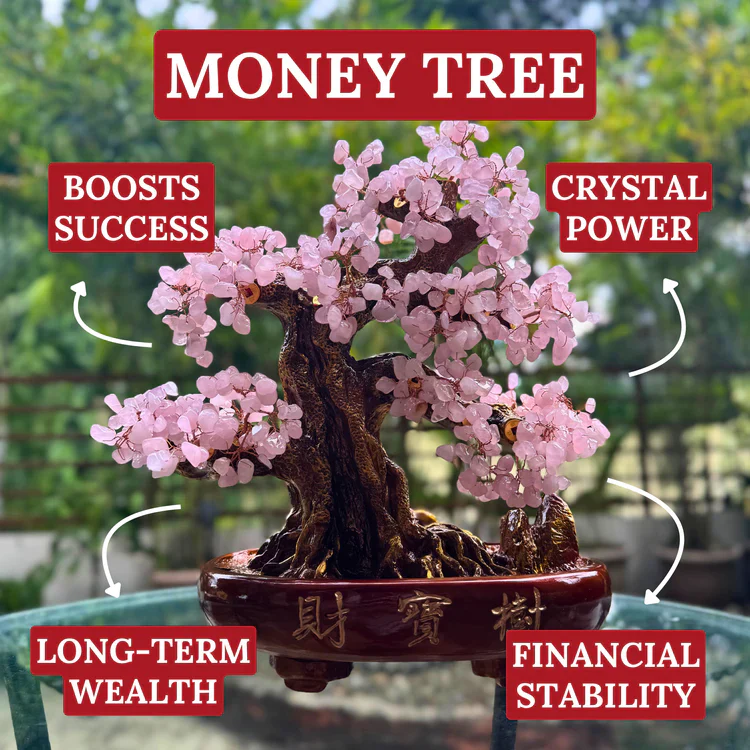
Introducing living plants into your office is one of the most powerful ways to enhance Sheng Qi, or vital life force. Plants are living beings that actively purify the air, but they also cleanse and uplift the energetic atmosphere. For the Xun (Wealth) area, plants with soft, rounded, coin-shaped leaves are most auspicious, as they resonate with the energy of accumulation and gentle growth. The Jade Plant (Crassula ovata) and the Money Tree (Pachira aquatica) are quintessential examples. Their upward growth patterns symbolize rising fortunes. For purifying the environment and cutting through stagnant energy, plants with more pointed leaves, like the Snake Plant (Sansevieria trifasciata), are excellent. They are also remarkably resilient, embodying a strong, protective quality. When selecting a plant, choose one that is healthy and vibrant. Its vitality is a direct reflection of the Qi it will bring into your space. Caring for the plant—watering it, cleaning its leaves—becomes a meditative practice of nurturing your own prosperity.
Crystal Consciousness: Utilizing Citrine, Pyrite, and Black Tourmaline for Abundance and Protection
Crystals are the Earth’s bone-memory, holding stable, geometric structures that vibrate at specific frequencies. They are powerful tools for anchoring intention. For wealth and abundance, Citrine is unparalleled. Known as the ‘merchant’s stone,’ its golden-yellow hue resonates with the energy of the sun, promoting success, manifestation, and generosity. Placing a piece of raw Citrine in your Xun corner or on your desk can help attract financial flow. Pyrite, also called ‘fool’s gold,’ carries a strong, masculine, fiery energy. It helps to overcome mental fatigue, sparks creativity, and builds confidence, assisting you in taking the actions required to build wealth. While attracting abundance, it is equally important to protect your energy. Black Tourmaline is a master protective stone. It transmutes dense, negative energy—such as stress, envy from colleagues, or electromagnetic radiation from devices—into a lighter vibration. A piece placed near your computer or between you and the door acts as an energetic guardian for your workspace.
The Symbolism of Flow: Water Features and Their Energetic Signature
Water is the ultimate symbol of wealth in Feng Shui. Where water flows, Qi gathers. A small, well-maintained indoor fountain can be a potent activator for your career and finances. The gentle sound of flowing water is soothing to the nervous system and creates a constant circulation of positive Qi. The direction of the water’s flow is critical: it should always be directed towards the center of the room or your desk, symbolically bringing wealth and opportunity *to* you. Water flowing away from you or out the door can represent money draining away. The ideal placement for a water feature is often in the Kan (Career), Xun (Wealth), or Zhen (New Beginnings) areas, as Water nourishes the Wood element that governs these zones. It is imperative to keep the water clean and the fountain in good working order. A stagnant, dirty, or broken fountain generates the opposite effect, creating blocked and negative energy.
Artisanal Integrity vs. Mass Production: Why an Object’s Lineage Matters
In this Dharma art, an object is more than its physical form; it is a repository of the energy and intention that went into its creation. A hand-carved wooden statue, a piece of pottery thrown by a skilled artisan, or a painting imbued with the artist’s vision carries a rich, complex, and potent Qi. The focused attention, skill, and human touch embedded within such an object give it a life and power that a mass-produced, machine-made item can never possess. A plastic trinket from a factory may mimic the form of an auspicious symbol, but it lacks the energetic lineage and integrity. When you select an object for your sacred workspace, you are entering into a relationship with it. Choosing an item with artisanal integrity means you are not only supporting an artist’s livelihood but also inviting a higher quality of energy into your life. This commitment to authenticity reflects a deeper respect for your own goals and for the tradition you are practicing. The Qi of a handmade object has a story, a soul, and a power to connect with you on a much more profound level.
Activating Your Space: A Ritual to Connect with Sacred Energy
Knowledge, without application, remains dormant. The true transformation in Feng Shui occurs when you move from intellectual understanding to embodied practice. This is achieved through ritual—a series of intentional acts that signal to the universe, and to your own deeper consciousness, that you are ready to receive a new reality. The activation of your office is a sacred dialogue with your environment. It is a moment of samaya, a commitment to co-create a space that will nurture and amplify your highest potential. This is not about empty gestures; it is about infusing every action with profound intention. By consciously clearing, placing, and attuning to your space, you transform it from a passive backdrop into an active, resonant partner in your journey toward abundance. This process bridges the physical and the metaphysical, making your office a true temple for your work.
Clearing the Vessel: Preparing Your Office with Salt, Sound, or Smoke
Before you can invite new, vibrant energy, you must first clear out the old, stagnant energy that may linger. Your office space holds the energetic residue of past frustrations, anxieties, and failed projects. A space clearing is like hitting an energetic reset button. There are several powerful lineage methods for this. A simple yet effective technique is to walk the perimeter of the room with a bowl of sea salt, a substance known for its purifying properties. Alternatively, the use of sound can break up dense energy; ringing a Tibetan singing bowl or a small bell in each corner of the room can create vibrations that restore harmony. The burning of sacred plants, known as smudging, is another ancient practice. The smoke from white sage, palo santo, or frankincense resin attaches to heavy energy and carries it away as the smoke dissipates. As you perform your chosen clearing method, hold the clear intention: ‘I now release all energy that no longer serves my highest good and create a pure vessel for abundance and success.’ Open a window to allow the old energy to depart.
The Art of Placement: A Step-by-Step Guide to Setting Your Cures with Intention
Once the space is cleared, the placement of your chosen cures—your plants, crystals, and symbols—becomes a meditative act. Do not rush this process. Hold each object in your hands. Take a moment to connect with its energy and to infuse it with your specific intention. For example, as you hold the Citrine crystal for your wealth corner, close your eyes and visualize your financial goals being met with ease and grace. Feel the emotions of gratitude and security. Then, with reverence, place the crystal in its designated spot in the Xun area. When placing a plant, acknowledge it as a living ally in your growth. When positioning a water feature, see it as the source of an ever-flowing stream of opportunities. Each placement is a physical prayer. This deliberate, mindful process is what distinguishes authentic Feng Shui from mere interior decorating. You are not just putting things on shelves; you are anchoring your dreams into the physical world.
Daily Attunement: A 5-Minute Meditation to Align with Your Abundance Goals
Your newly arranged space is a powerful energetic battery, but it requires your conscious connection to function at its peak. Begin each workday with a simple, five-minute attunement meditation. Sit comfortably at your desk, in your Command Position. Close your eyes and take three deep, centering breaths. First, become aware of the solid support of the wall behind you and the chair beneath you, feeling grounded and secure. Then, bring your awareness to your Xun, or Wealth corner. Visualize a beautiful, emerald-green or violet light glowing softly in that corner, pulsing with vitality. Imagine this light expanding to fill the entire room, and then imagine it flowing into you, filling you with the energy of abundance. Hold the feeling of what it is like to be successful, supported, and prosperous. Silently affirm, ‘I am in perfect alignment with the energy of abundance. I am a magnet for success and opportunity.’ This daily practice keeps your intention clear and your connection to your space’s energy strong.

Guardians of Tradition: Practicing Feng Shui with Respect in the 21st Century
To receive the gifts of a wisdom tradition like Feng Shui is to also accept a sacred responsibility. This knowledge is not a commodity to be consumed but a living art to be practiced with integrity and respect. It is a lineage passed down through countless generations, a gift from those who dedicated their lives to understanding the subtle interplay of energy and form. In an era where ancient practices are often diluted and commercialized, your role as a practitioner extends beyond personal gain. It involves becoming a guardian of the tradition’s depth and authenticity. This means approaching the practice with a student’s mind and a reverent heart, seeking to understand the principles behind the prescriptions, and honoring the cultural source from which this profound knowledge flows. By doing so, you ensure that the stream of wisdom remains pure and powerful for generations to come, and your practice becomes an act of cultural preservation.
Honoring the Lineage: Avoiding Commercialization and Superficial Trends
The modern marketplace is flooded with so-called ‘Feng Shui’ products that often miss the essence of the practice. True Feng Shui is not about buying a specific ‘money frog’ or a mass-produced dragon trinket. It is about understanding the principles of Qi, Yin-Yang, the Five Elements, and the Bagua. A practitioner who honors the lineage seeks to grasp these foundational concepts rather than simply following a checklist of cures. Be discerning. Question the source of information. Favor timeless principles over fleeting trends. A deep connection to a single, natural object—a beautiful stone from a river, a healthy plant you have nurtured—imbued with your clear intention will always be more powerful than a cart full of plastic baubles. The samaya of the modern practitioner is to look past the superficial commercial layer and connect with the profound philosophical and energetic heart of the art form.
A Living Art: Adapting Ancient Principles to Modern Spaces (Cubicles, Home Offices)
Feng Shui is a living, breathing art, not a rigid set of historical rules. Its principles are universal and can be adapted to any environment, including the often-challenging spaces of the 21st-century workplace. You do not need a grand corner office to practice effectively. In a cubicle, your ‘door’ is the opening to your workspace. You can still create a ‘Command Position’ by angling your chair to have the widest possible view of this entrance. A solid partition behind you can serve as your mountain of support. You can place a small, healthy plant in the far-left corner of your desk to activate your Xun area. You can use a beautiful image as a screen saver to represent a water feature for your Kan area. The key is to apply the *principle*, not necessarily the literal, ancient form. This adaptability is a testament to the tradition’s enduring wisdom; it demonstrates that the flow of Qi is present everywhere, waiting only for our conscious awareness to guide it.
Your Role as a Practitioner: Cultivating Awareness Beyond Object Placement
Ultimately, the placement of objects is the beginning of the practice, not the end. The highest form of Feng Shui is the cultivation of your own awareness. As you practice, you will begin to develop a felt sense of the energy in different spaces. You will notice how your mood and focus shift when you move a piece of furniture or clear a cluttered surface. This heightened sensitivity is the true gift of the practice. Your environment becomes a mirror, reflecting your inner state, and you, in turn, become the conscious creator of your environment. This awareness extends beyond the office; you begin to see the flow of Qi in your home, in your relationships, and within your own body. The goal is not just to create a wealthy office, but to become a person who embodies the principles of balance, flow, and harmony in all aspects of life. In this way, you are not just *using* Feng Shui; you are *living* it.
The Wisdom FAQ
- Can Feng Shui override a lack of effort or skill in my career?Feng Shui is not a magical substitute for action and competence. It is best understood as clearing the path for your efforts to be maximally effective. It creates an environment that supports focus, creativity, and opportunity. It removes energetic obstacles, so your hard work is not met with unseen resistance. A well-aligned space acts like a favorable wind in your sails, but you must still actively sail the ship.
- What if my office layout makes it impossible to achieve the ideal ‘Command Position’?In situations where you cannot avoid having your back to the door, a simple and effective cure is to place a small mirror on your desk or monitor. The mirror should be positioned so that you can see the reflection of the doorway in it without having to turn around. This symbolically ‘corrects’ the issue, allowing you to be aware of who is approaching and mitigating the subconscious vulnerability.
- How do I differentiate between authentic lineage teachings and modern commercialized trends?Authentic teachings always emphasize the foundational principles: Qi, Yin-Yang, the Five Elements, and the Bagua. They focus on balance and harmony rather than on acquiring a specific list of products. Authentic sources will speak of the ‘why’ behind a recommendation, connecting it back to these core concepts. Be wary of any source that promises instant results or claims a single object is a ‘magic bullet’ for all your problems.
- Is the effect of Feng Shui purely psychological, or is there a verifiable energetic mechanism at play?This is a question that bridges science and metaphysics. From a psychological perspective, creating an organized, supportive, and intentional environment undeniably reduces stress and improves focus, which leads to better outcomes. From the lineage perspective of this Dharma art, the effects are also genuinely energetic. The principles of Qi are considered a fundamental force of nature, akin to gravity or electromagnetism, albeit one that modern science is not yet equipped to measure. The practice holds that both the psychological and the energetic effects are real and work in concert.
- My work is digital and ‘placeless.’ How do these principles of physical space apply to me?Even if your work is in the digital realm, you perform it in a physical body in a physical space. The energy of your immediate surroundings directly impacts your focus, creativity, and stamina. Your primary workspace—be it a home office or a specific chair—is the epicenter of your professional energy. Furthermore, you can apply Feng Shui principles to your digital ‘space.’ A cluttered desktop with disorganized files creates digital Sha Qi. Organizing your files, choosing an inspiring background, and curating your digital information flow are modern applications of these ancient principles of order and clarity.
The Guardian’s Reflection
Your workspace, when consciously aligned, ceases to be a mere room. It becomes a sanctuary, a silent collaborator that holds your intentions and nurtures your potential long after you have gone home. The light that falls across your desk, the living energy of a plant in the corner, the quiet hum of a well-placed fountain—these are not small things. They are the subtle harmonics of an environment tuned to the frequency of abundance. In tending to the flow of Qi around you, you are tending to the flow of life within you. This is a profound act of self-respect. Carry this knowledge not as a set of rules, but as a lens of awareness. See the energy in all things. Honor its flow. In doing so, you become more than a practitioner seeking success; you become a guardian of this wisdom, ensuring that the sacred art of living in harmony continues to illuminate the world.”
References:
China Knowledge (Depts. of Sinology) http://www.chinaknowledge.de
The Chinese Zodiac https://www.chinesezodiac.com
8Your Chinese Astrology https://www.yourchineseastrology.com