


The first breath of dawn in the high mountains carries the scent of juniper incense and the resonant hum of a distant temple bell. It is a sensory transmission of profound stillness, a state of being where the inner and outer worlds are in perfect, undisturbed harmony. This is the essence of Feng Shui. You may have sought this knowledge because you sense a dissonance in your most private space, a subtle friction that manifests as restless nights or a heart that feels perpetually out of reach. There is a deep, instinctual hope within you that by shifting the physical world, you can recalibrate the spiritual; a quiet fear that your own sanctuary may be an unknowing architect of your solitude or anxiety. Let this fear subside. The wisdom you seek is not a collection of rules, but a lineage gift—a sacred technology for aligning your personal environment with the benevolent patterns of the cosmos, passed down through generations of Taoist masters who studied the very breath of the Earth.

Insights You Will Gain:
- An understanding of Feng Shui’s authentic roots in Taoist cosmology, far beyond simple interior design.
- The ability to read and map your bedroom’s energetic blueprint using the sacred Bagua map.
- Actionable principles for arranging your space to specifically enhance romantic partnership and deep, restorative sleep.
- Knowledge of how color, material, and light function as vibrational tools for energetic alchemy.
- A framework for transforming Feng Shui from a set of instructions into a living practice of mindful awareness.
The Ancient Heart of Feng Shui: Beyond Decluttering
Kan Yu: Unearthing the Roots of Taoist Geomancy
Before the term Feng Shui, meaning “Wind and Water,” entered the popular lexicon, the practice was known by a more profound name: Kan Yu. This translates to “observing the patterns of Heaven and Earth.” This is the authentic core of the tradition, a deep ecological and spiritual science born from Taoist sages spending lifetimes in meditation, observing the flow of energy in landscapes. They watched how mountains (the Earth’s bones) directed the wind (the breath of Heaven) and how rivers and streams (the Earth’s lifeblood) gathered and distributed Qi, the vital life force energy that animates all existence. This was not about aesthetics; it was about survival, prosperity, and spiritual alignment. The placement of a village, a temple, or a tomb was a matter of cosmic significance, determining the fate of generations. This lineage knowledge was guarded jealousy, passed from master to student through oral transmission and cryptic texts, a Samaya—a sacred commitment—to uphold its integrity.
From Imperial Palaces to the Modern Bedroom: A Brief History
For centuries, the application of Kan Yu was the exclusive domain of the Chinese Emperor and the royal court. Feng Shui masters were esteemed imperial advisors, using their knowledge to design the Forbidden City in Beijing as a precise microcosm of the cosmos, ensuring the stability and power of the dynasty. Every gate, courtyard, and hall was oriented to harmonize with celestial and terrestrial forces. The principles that governed the flow of power through an empire are the very same principles that govern the flow of peace and love through your bedroom. The migration of this knowledge from the palatial to the personal is a relatively recent phenomenon. As Chinese culture spread, these once-secret formulas were simplified and adapted for common homes. While this democratization is valuable, it has also led to a superficial understanding. Our purpose here is to reconnect with the imperial standard of this Dharma art, applying its profound wisdom, not just its decorative elements, to your most sacred space.
The Core Tenets: Understanding Qi (Life Force), Yin & Yang, and the Five Elements (Wu Xing)
To practice authentic Feng Shui is to learn the language of energy. The foundational vocabulary consists of three concepts. First is Qi (pronounced “chee”), the unseen life force that flows through everything. Healthy, vibrant Qi (Sheng Qi) brings good fortune, health, and happiness. Stagnant or harmful Qi (Sha Qi) creates obstacles and disharmony. Your bedroom should be a vessel for collecting and cultivating Sheng Qi. Second is the principle of Yin and Yang, the cosmic duality of existence. Yang is active, bright, and masculine energy (the sun, day, activity). Yin is passive, dark, and feminine energy (the moon, night, rest). A bedroom requires a delicate balance; it must have enough Yang energy to support passion and intimacy, but be predominantly Yin to facilitate deep, restorative sleep. Finally, there is Wu Xing, the Five Elements or Five Phases: Wood, Fire, Earth, Metal, and Water. These are not static substances but dynamic, interacting energies. Wood feeds Fire; Fire creates Earth (ash); Earth produces Metal; Metal carries Water; Water nourishes Wood. Understanding their relationships allows you to diagnose and harmonize the energy of your room, using specific materials, colors, and shapes to strengthen or soothe the elemental balance for your desired outcome.
Reading Your Bedroom’s Energy: The Bagua Map & Command Position
Decoding the Bagua: Mapping the Nine Life Aspirations onto Your Space
The Bagua is one of the most essential tools in the Feng Shui lineage. It is a sacred energetic mandala, an octagon divided into nine areas, or “guas,” each corresponding to a fundamental aspect of life. This is not mere superstition; it is a piece of spiritual technology that maps the archetypal energies of human experience onto a physical space. To use the Bagua, you align the bottom edge of the map (containing the Career, Knowledge, and Travel guas) with the wall containing the main door to your bedroom. The room is then visually divided into a three-by-three grid, revealing which physical area corresponds to which life aspiration. For our purposes, the two most critical areas are the Kun area, governing Love and Relationships, located in the far-right corner from the door, and the Gen area, governing Knowledge and Self-Cultivation (which directly impacts rest and peace of mind), located in the near-left corner. By understanding this iconography, you can intentionally place objects and enhancements in these areas to activate and nourish the corresponding Qi. The Bagua is a mirror; it reveals the energetic story your room is already telling and gives you the language to rewrite it with intention.

| Symbolic Language | Governing Area & Element | Sacred Meaning & Application for Love/Sleep |
|---|---|---|
| Colors: Earth Tones (terracotta, beige), Pinks, Soft Reds | Kun (Relationships) / Earth Element | These colors ground, nurture, and stabilize. Pink is the universal vibration of heart-centered love. They foster stability and warmth in a partnership. Use in bedding, rugs, or art in the Kun area. |
| Colors: Deep Blues, Black, Charcoal Grays | Gen (Knowledge/Rest) / Earth & Kan (Career) / Water | These are deep Yin colors, promoting stillness, introspection, and deep rest. They connect to the Water element’s quality of quiet wisdom. Ideal for a feature wall behind the bed to enhance sleep quality. |
| Symmetry: Paired Objects (lamps, nightstands, pillows) | Kun (Relationships) / Earth Element | Symmetry creates the energetic signature of a balanced partnership. Paired items declare to the universe that space is being held for another, promoting equality and mutual respect. |
| Materials: Wood (headboard, furniture) | Zhen (Family) / Wood Element | Wood provides stability, growth, and support. A solid wood headboard symbolizes a strong foundation and protects your energy while you sleep. It connects you to the grounding energy of nature. |
The Command Position (Jia Yi): The Archetype of Security and Control
The single most important principle in Feng Shui bedroom layout is the Command Position. This dictates that your bed should be placed so that you can see the door to the room without being directly in line with it. Typically, this means placing the bed diagonally opposite the door. This principle is not arbitrary; it is rooted in our deepest primal instincts for safety and security. When you are in the Command Position, your subconscious mind can relax. You are in control of your environment, aware of who or what is entering your space. This frees up an immense amount of psychic energy that would otherwise be spent on hyper-vigilance, allowing you to descend into deeper, more restorative sleep. Energetically, sleeping directly in line with the door creates a rush of Qi that is too active and unsettling for rest. Being in command allows you to receive the nourishing flow of Sheng Qi from the doorway at a gentle, manageable pace. This sense of security is also fundamental for intimacy. True vulnerability and connection can only flourish in an environment of absolute safety, which the Command Position provides archetypally.
Symbolism in Pairs: The Energetics of Symmetry for Partnership
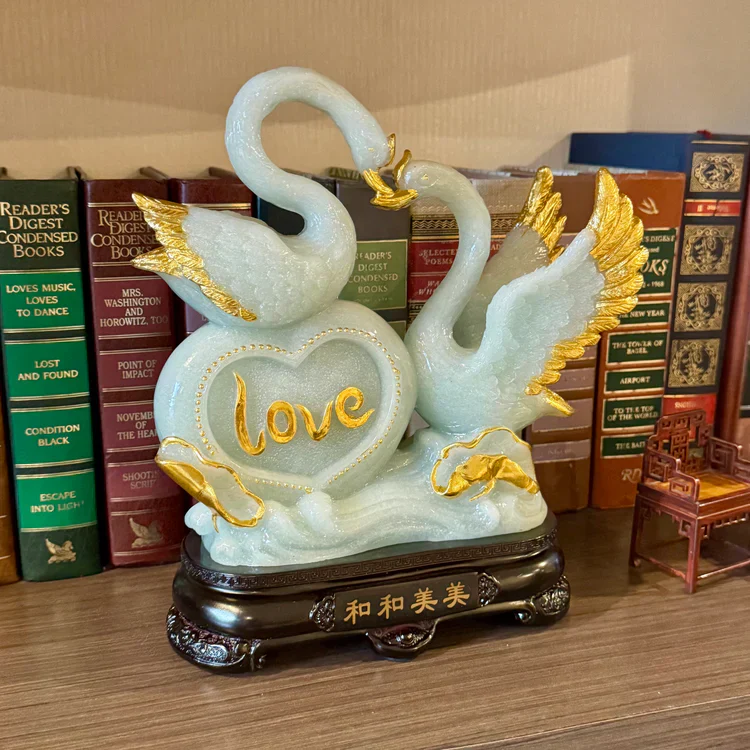
The universe operates on a principle of resonance. The energy you project into your environment is mirrored back to you. In the context of attracting or strengthening a partnership, the symbolism of pairs is paramount. A bedroom arranged for a single person—with one nightstand, one lamp, or artwork depicting a solitary figure—constantly emits the energetic signature of singularity. It subconsciously tells both you and the universe that there is no room for another. To cultivate the energy of partnership, one must create intentional symmetry. This means having two matching nightstands, two lamps providing equal light, and ample space to walk on both sides of the bed. This is not merely about balanced aesthetics; it is a powerful act of energetic invitation. You are physically and symbolically creating space for a partner. Even the choice of art in the Kun (Relationship) area should reflect this: images of pairs of birds, two intertwined trees, or abstract art with two dominant forms are far more potent than a picture of a single, isolated figure. This Dharma art teaches that you must first build the vessel before it can be filled.
The Alchemy of Space: Harmonizing Elements for Love and Sleep
Color as Vibration: Pigments for Passion (Earth Tones, Pinks) and Peace (Deep Blues, Soft Neutrals)
Color is not merely a decorative choice; it is a form of light, and light is a carrier of energetic information. Every pigment has a distinct frequency that interacts with your own auric field and influences your state of being. To create a sanctuary for both love and sleep, a sophisticated palette is required. For nurturing partnership and romance, focus on the Earth element colors. These include rich terracotta, soft beiges, and warm creams, which provide a sense of stability, nourishment, and grounding—the very foundation of a healthy relationship. Infusing these with soft pinks or muted reds can activate the Heart chakra and the Fire element, gently stoking passion without creating agitation. For sleep, the objective is to calm the spirit (Shen) and encourage a deep dive into Yin energy. Here, the colors of the Water element are powerful allies. Deep indigo blue, charcoal gray, and even black, when used judiciously on a wall behind the bed, can create a womb-like environment that absorbs light and chaotic energy, promoting profound stillness. The key is balance. The overall room should feel like a warm, earthy embrace (Yin dominant), with touches of Fire element color (Yang) to keep the romantic energy alive and prevent stagnation.
Material Integrity: The Role of Natural Textures (Wood, Cotton, Silk, Linen)
The materials you choose for your bedroom are just as important as the colors. Every substance holds the Qi of its origin. Synthetic materials like polyester and acrylic, born from chemical processes, carry a chaotic and stagnant energy. They do not ‘breathe’ and can trap Sha Qi, contributing to a feeling of being stuck or unwell. In contrast, natural materials hold the pure, vibrant energy of the earth. A solid wood bed frame and nightstands, representing the Wood element, offer stability, support, and the energy of growth. Bedding made from organic cotton, breathable linen, or luxurious silk allows for the free flow of Qi around your body as you sleep. These fibers connect you to the cycles of nature and have a calming effect on the nervous system. The use of a wool rug on the floor further grounds the room’s energy, connecting it to the Earth element. This focus on material integrity is a core tenet of authentic practice. It is an act of respect for the planet and for your own energetic body, recognizing that the objects you surround yourself with become a part of your extended energy field.
Light and Shadow: Crafting Ambiance for Yin (Rest) and Yang (Intimacy)
Light is the ultimate expression of Yang energy. Its quality and control are critical in a bedroom. During the day, ample natural light is beneficial, as it cleanses the space and fills it with Sheng Qi. However, for a bedroom to fulfill its primary Yin function of rest, you must have the ability to create profound darkness. High-quality blackout curtains or blinds are not a luxury; they are a necessity for deep sleep, allowing your body’s natural melatonin production to function optimally. Artificial lighting should be layered and warm. Avoid harsh, overhead lights (which create Sha Qi by pressing down on the occupants) in favor of multiple, softer sources. A dimmer switch is an essential tool, allowing you to transition the room’s energy from a more active Yang state to a restful Yin state as evening approaches. Bedside lamps with warm-toned bulbs create an intimate, calming atmosphere conducive to both connection and winding down. The interplay of light and shadow itself is a dance of Yin and Yang. By consciously controlling the light, you become the alchemist of your space, dialing its energy up for intimacy or down for sacred rest.
The Unseen Energies: Addressing EMFs, Mirrors, and Water Features
In the modern world, our sanctuaries are besieged by unseen forces that ancient masters never had to contend with. Electromagnetic fields (EMFs) from Wi-Fi routers, cell phones, and televisions are a form of contemporary Sha Qi. They emit a highly active, agitating Yang energy that can severely disrupt sleep patterns and create a subtle sense of anxiety. From a Feng Shui perspective, it is imperative to remove all non-essential electronics from the bedroom, or at the very least, turn them completely off at night. Mirrors are another source of energetic disruption. A mirror is an energy accelerator; it bounces Qi around the room. If a mirror reflects the bed, it can disturb your sleep by activating the energy in the room and symbolically inviting a third party into the relationship. If you must have a mirror, ensure it does not reflect the bed and consider covering it at night. Finally, water features, such as fountains or aquariums, are generally ill-advised for the bedroom. While they are excellent activators of wealth Qi in other parts of the home, their constant movement and sound introduce too much Yang energy into a space that is meant to be supremely Yin and still.
Activating Your Sanctuary: A Step-by-Step Layout Guide
The Foundational Layout: Bed Placement, Headboard Principles, and Nightstands
The bed is the heart of the sanctuary, and its placement is the foundational act of this Dharma art. Begin by identifying the Command Position: the spot where you can lie in bed and see the doorway without being directly in its path. This is your anchor. Your bed must have a solid headboard, preferably made of wood. A headboard represents support and stability in your life; without one, you are energetically adrift. It should be placed firmly against a solid wall, avoiding placement under a window, which creates a sense of vulnerability and allows personal Qi to drain away. Once the bed is positioned, introduce the principle of symmetry. Place a nightstand on each side of the bed. They need not be identical, but they should be of similar height and visual weight, creating a sense of balance. On each nightstand, place a lamp to provide equal illumination. This foundational arrangement creates a container of security, stability, and balanced partnership, setting the stage for more specific enhancements.
Blueprint for Love: Creating Symmetrical Space and Removing Symbols of Singularity
To specifically activate the Qi for a loving partnership, you must meticulously audit your room for symbols of solitude. Begin by clearing all clutter from under the bed; this space should be open to allow for the free circulation of Qi. Stored items, especially from past relationships, create profound energetic stagnation. Next, assess your artwork. Remove any images that depict solitary figures or sad, lonely landscapes. Replace them with art that symbolizes partnership—pairs of mandarin ducks (a classical symbol of fidelity), two birds in flight, or abstract pieces that evoke connection. Your closet and drawers should have some empty space, a physical act of making room for another person’s presence. Remove excess pillows from the bed that might act as a barrier. The goal is to create a space that feels like a welcoming embrace for two. Every element, from the pair of nightstands to the two inviting pillows, should send a single, coherent message to the universe: “This is a sanctuary built for a loving, balanced partnership.”
Blueprint for Deep Sleep: Minimizing Disruptions and Promoting Deep Yin Energy
To cultivate the energy for deep, restorative sleep, the primary goal is to maximize Yin energy and minimize all forms of Yang disruption. First, ensure your room can achieve total darkness. Invest in high-quality blackout curtains that block all streetlights and ambient light. Second, remove or power down all electronic devices. The blue light and EMFs they emit are potent sources of Yang energy that interfere with sleep cycles. Avoid any exercise equipment in the bedroom, as its active energy is the antithesis of rest. The room should be cool, quiet, and calming. Consider soft, natural bedding in calming Earth or Water element colors like soft beige, deep blue, or grey. Keep the room tidy and free of clutter, especially work-related materials, which carry the stressful energy of your professional life into your resting space. The bedroom should be used for only two purposes: sleep and intimacy. By maintaining this energetic purity, you signal to your body and spirit that upon crossing the threshold, it is time to release the day and surrender to profound rest.
A Ritual for Setting Intention: Space Clearing and Blessing Your Bedroom
After you have physically arranged your sanctuary, the final step is to cleanse it energetically and seal your intentions. This is a vital part of the process, transforming a mechanical act into a sacred one. A simple, culturally respectful ritual is all that is needed. Begin by opening a window to allow old energy to depart. You can use sound to break up stagnant Qi; ringing a small bell or a singing bowl in each corner of the room is highly effective. Alternatively, you can perform a salt blessing. Mix a small amount of sea salt in a bowl of water. Dip your fingers in the water and lightly flick a few drops into each corner, stating your intention aloud: “I cleanse this space of all stagnant and unhelpful energy. I bless this room to be a sanctuary of deep rest, love, and nourishment.” Stand in the center of the room, close your eyes, and visualize the space being filled with a soft, warm, loving light. Feel the peace and harmony you wish to create. This act of conscious intention is the final alchemical step, charging the space with your personal energy and vision.

Living Wisdom: Feng Shui as a Practice of Mindful Awareness
Beyond the Rules: Cultivating an Intuitive Sense of Your Space’s Energy
It is easy to become entangled in the rules and formulas of Feng Shui, but to do so is to miss the soul of the practice. The ultimate goal of this lineage is not to create a perfectly prescribed room, but to reawaken your own innate, intuitive sensitivity to energy. The principles are a guide, a set of training wheels to help you feel the subtle currents of Qi that flow through your life. As you practice, begin to notice how you *feel* in different parts of your room. Does one corner feel heavy or stagnant? Does the light in the morning feel cleansing and uplifting? Pay attention to these subtle cues. Your body is the most sophisticated Feng Shui instrument you will ever own. The ancient masters developed this science by observing nature, and you are a part of nature. By cultivating this mindful awareness, you transition from merely applying rules to engaging in a living dialogue with your environment. You will learn to sense when the energy needs shifting long before a major issue arises, adjusting the flow with a simple act like opening a window, moving a plant, or lighting a candle.
The Bedroom as a Mirror: How Your Outer World Reflects Your Inner State
The most profound teaching of this Dharma art is this: your environment is never separate from you. It is a perfect, three-dimensional mirror of your inner consciousness. A cluttered bedroom reflects a cluttered mind. A bedroom filled with relics of the past keeps your energy tethered to what was, preventing new beginnings. An imbalanced layout with no space for a partner may reflect a subconscious fear of intimacy. Approaching your sanctuary from this perspective transforms the act of cleaning and arranging from a chore into a profound act of self-reflection and healing. When you clear the clutter from your relationship corner, you are not just tidying up; you are clearing internal blocks to love. When you establish the Command Position, you are not just moving furniture; you are affirming your own sovereignty and sense of safety in the world. This practice invites you to take radical responsibility for your life by first taking radical responsibility for your space. As you bring harmony to your outer world, you will find it inevitably and beautifully mirrored in your inner world.
Preserving Authenticity in a World of Fleeting Trends
In an age of fast-fashion interior design and disposable trends, the wisdom of Feng Shui offers a grounding anchor of authenticity. This practice is not about acquiring the latest trendy object or color palette. It is about creating a timeless sanctuary that is a true reflection of your soul and in harmony with natural law. It encourages the use of high-quality, natural materials that endure, and the arrangement of space based on principles that have been validated for millennia. To practice authentic Feng Shui is to resist the consumerist impulse to constantly change for the sake of novelty. Instead, it fosters a deep and lasting relationship with your home. You learn to choose objects with intention, to value craftsmanship, and to create a space that supports your well-being on the deepest levels. This is a slow, mindful, and sustainable approach to creating a home, one that honors the wisdom of the lineage and the resources of the Earth, creating a personal heritage of peace and stability that transcends fleeting fashion.
Sustaining Harmony: A Seasonal Approach to Refreshing Your Sanctuary
Your sanctuary, like any living thing, requires ongoing care and attention. Harmony is not a static state to be achieved once, but a dynamic balance that must be consciously maintained. A powerful way to practice this is to align the refreshment of your space with the changing of the seasons. In the spring, mirroring nature’s renewal, engage in a deep clean. Wash the curtains, open the windows to let in fresh air and light, and clear out any accumulation from the winter. In the summer, the peak of Yang energy, ensure your space has ways to stay cool and calm—perhaps by using lighter linen bedding. In the autumn, as nature begins to draw inward, make your space cozier. Introduce a warmer throw blanket or deeper-toned pillows, preparing for the introspective energy of winter. In the winter, the peak of Yin, ensure your space is a warm, nurturing haven from the cold. This seasonal rhythm keeps you and your home in sync with the greater cycles of nature, ensuring your sanctuary remains a vibrant and responsive container for your life’s journey, continually adapting to support your evolving needs.
The Wisdom FAQ
1. What if I live in a small apartment and cannot achieve the ‘ideal’ layout?Authentic Feng Shui is about creating the best possible energy flow within the constraints you have. If the Command Position is impossible, the most important ‘cure’ is intention. Strengthen the connection to the door by placing a small, clear crystal between the bed and the door to moderate the Qi flow. Focus on what you *can* control: decluttering, symmetry in smaller objects, color, and material choices. Intention is the most powerful tool in this practice.2. Is Feng Shui a religion or a superstition?Feng Shui is neither. It is best understood as a Taoist metaphysical science—an ancient system of knowledge that studies the way environments and the laws of nature affect human beings. Its principles are based on thousands of years of empirical observation. While it originates from a spiritual tradition (Taoism), its application is practical and its results are observable, much like the practice of acupuncture for the body.3. How quickly can I expect to see results?The effects of Feng Shui manifest as a gradual cultivation, not an instant transformation. Some people feel a shift in the atmosphere of the room immediately—a sense of calm or lightness. Deeper changes, such as improved sleep or a shift in relationship dynamics, unfold over time as the new, harmonious energy patterns take root in your life. The practice is a dialogue with the universe; it requires patience and mindful observation.4. Can I incorporate my personal style, or does my room have to look ‘Asian’?Absolutely. Authentic Feng Shui is aesthetic-agnostic. Its principles—balance, flow, command, and elemental harmony—can be applied to any design style, from minimalist modern to rustic farmhouse. The goal is to create a space that feels authentic *to you* while adhering to the underlying energetic structure. The power is in the principles, not in specific decorative objects like dragons or buddhas unless they hold personal spiritual significance for you.5. What is the most significant mistake people make when applying Feng Shui?The most significant mistake is focusing on symbolic ‘cures’—like adding a specific object to a corner—without first addressing the foundational energy of the space. The most powerful Feng Shui is mastering the basics: eliminating clutter, establishing the Command Position, ensuring the free flow of Qi, and creating a healthy, non-toxic environment. Without these fundamentals in place, symbolic objects are powerless. True harmony comes from the inside out, starting with the very breathability of your space.
The Guardian’s Reflection
Your bedroom is more than a room; it is the soil in which the roots of your life are planted. It is the silent witness to your dreams, your sorrows, your most vulnerable moments of love and solitude. To tend to this space with conscious intention is to tend to the deepest part of your own spirit. The wisdom shared here is not a commodity to be consumed, but a living tradition to be embodied. In applying these principles, you do more than arrange furniture; you become a student of energy, a practitioner of harmony, and a guardian of a sacred lineage. This practice is your Samaya—a commitment to honor the profound connection between your inner world and your outer sanctuary. May you become a steward of this wisdom, preserving its integrity not just in your home, but in your heart, and may your sanctuary become a true vessel for the peace and love you so rightly deserve.”
Reference:
Smithsonian Magazine https://www.smithsonianmag.com/
Scientific American https://www.scientificamerican.com/