

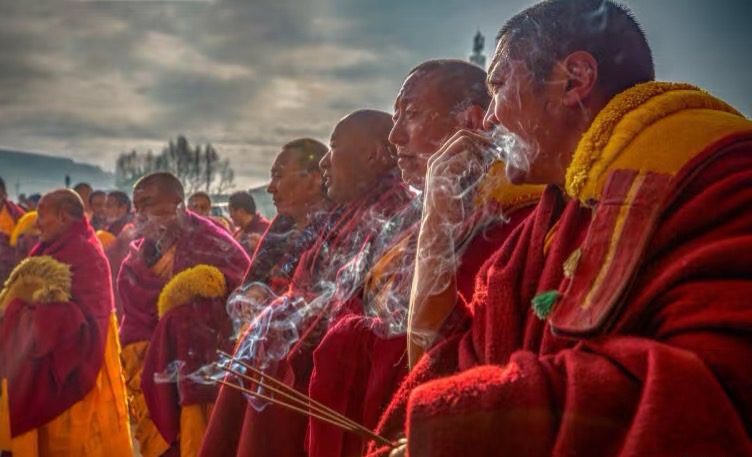
The cold, thin air of the high Himalayas carries the scent of juniper incense and melted yak butter from a thousand lamps. In the deep resonance of a temple bell, a silence settles not just on the ears, but within the mind itself. It is in this profound stillness that one might first encounter the principle of absolute purity. You are likely here not by accident. A persistent feeling—a sense of being spiritually tarnished, emotionally encumbered, or mentally ‘stuck’—has guided your search. You seek a genuine renewal, a way to wash clean the accumulated dust of past actions and experiences. Your hope is for an authentic method to dissolve these obscurations, and your fear is of encountering hollow, commercialized promises that offer no true solace. Let this be an assurance: the path you are about to explore is not a modern invention. It is a sacred lineage, a direct transmission of wisdom concerning the indestructible, stainless nature of your own mind, embodied in the luminous form of Vajrasattva.
Insights You Will Gain:
- The philosophical foundation of Vajrasattva as the primordial purity of consciousness.
- A detailed decoding of the sacred iconography and symbolism within Vajrasattva Dharma art.
- An understanding of the sacred artisanship and consecration required to create a living vessel for this energy.
- A practical, contemplative framework for engaging with purification practice through the Four Powers.
- The profound connection between personal purification and the preservation of this global wisdom tradition.
The Origin & Lineage: Unveiling Vajrasattva, the Primordial Buddha of Purity
Who is Vajrasattva? Beyond a Deity, An Aspect of Primordial Mind
To the uninitiated eye, Vajrasattva appears as a celestial deity, a divine being to be worshipped from afar. This is a preliminary understanding. Within the Vajrayana tradition, Vajrasattva is understood as the Sambhogakāya—the ‘Body of Perfect Enjoyment’—manifestation of the Dharmakāya, the ultimate, formless truth. He is not an external god who grants purity; he *is* the very principle of purity itself, the inherent, stainless, and brilliant nature of consciousness that resides within every sentient being. This adamantine (vajra) nature is our true essence, temporarily obscured by the clouds of karma, negative emotions (kleshas), and conceptual confusion. The practice of Vajrasattva is therefore not a plea to an outside force, but an active method for revealing the diamond-like clarity that has been present from the very beginning. He represents the ultimate potential for awakening, the promise that no matter how dense the obscurations, the fundamental nature of mind remains utterly pure and indestructible. This is a radical and empowering view that shifts the dynamic from one of supplication to one of profound self-realization and transformation.
The Roots of Purification in Vajrayana Buddhism: From Atiśa to the Great Masters
The authenticity of any profound spiritual technology is verified by its lineage—an unbroken chain of transmission from master to student. The Vajrasattva practice holds one of the most revered lineages in Vajrayana Buddhism. Its origins are traced to the primordial Buddha Samantabhadra, passing to Vajrasattva himself, and then to the first human master, Garab Dorje. It was solidified and brought to Tibet by the great Guru Padmasambhava in the 8th century, who concealed these teachings as ‘terma’ (hidden treasures) to be discovered by future masters at auspicious times. Later, the great Indian pandit Atiśa Dipankara (982–1054) was instrumental in revitalizing the practice in Tibet, integrating it as a foundational preliminary practice (ngöndro) for all students of the path. This was not an arbitrary decision. The great masters understood that without first purifying the mindstream of its grossest karmic imprints, any higher meditation or realization would be unstable, like building a palace on a foundation of sand. The lineage ensures that the practice is not diluted or misunderstood; it is a Samaya, a sacred commitment to transmit the method with its full potency and integrity, safeguarding it from corruption and ensuring its efficacy for generations of practitioners seeking freedom from suffering.
Vajrasattva in Sacred Texts: The Guhyagarbha Tantra and the Path of Purification
The Vajrasattva methodology is not folklore; it is deeply rooted in the Tantras, the foundational scriptures of Vajrayana Buddhism. A principal source is the Guhyagarbha Tantra, the ‘Tantra of the Secret Essence,’ which is the primary Mahayoga tantra of the Nyingma school. Within its complex mandalas and esoteric instructions, Vajrasattva is revealed as the sovereign of all Buddha families, the embodiment of their collective enlightened essence. The text elucidates the nature of karmic obscurations not as permanent stains, but as transient, illusory patterns that can be dissolved through skillful means. The Hundred-Syllable Mantra of Vajrasattva, a cornerstone of the practice, is presented in these texts not merely as a collection of sounds, but as a sonic formula—a vibrational architecture that directly interfaces with and purifies the subtle body and mind. It systematically addresses and purifies breaches of Samaya and negative karmic patterns at their root. By grounding the practice in such authoritative textual sources, the tradition ensures that the path to purification is precise, profound, and far removed from vague notions of ‘energy clearing.’ It is a contemplative science of inner transformation, perfected and passed down through an unbroken lineage of realized masters.
Sacred Symbolism: Reading the Iconography of Absolute Purity
The Vajra and Bell: Method and Wisdom in Divine Union
The most prominent symbols held by Vajrasattva are the vajra (Tibetan: Dorje) and the bell (Tibetan: Ghanta). These are not mere ritual implements; they represent the two fundamental principles of the enlightened path. The vajra, held in his right hand at the heart center, symbolizes Method (upāya). This is the active, dynamic, and compassionate aspect of practice—the tireless effort to benefit all beings. Its indestructible, diamond-like nature signifies the unshakable power of enlightened activity that can cut through all delusion. The bell, held in his left hand resting at his hip, symbolizes Wisdom (prajñā). Specifically, this refers to the wisdom realizing emptiness (śūnyatā)—the profound understanding that all phenomena lack inherent, independent existence. The hollow nature of the bell represents this emptiness, while its sound represents the ceaseless expression of wisdom that arises from it. Their union in the iconography of Vajrasattva signifies the non-dual nature of enlightenment itself: the inseparable fusion of compassion and wisdom, form and emptiness, skillful means and ultimate reality. To achieve the purity that Vajrasattva embodies, one must cultivate both. Compassion without wisdom can be misguided, and wisdom without compassion can be sterile. Their perfect integration is the key to liberation.

The White Light of Awareness: Decoding Color, Ornaments, and Asana
Every detail in Dharma art is a teaching. Vajrasattva’s body is depicted as brilliant, luminous white, like a million suns shining on a mountain of snow. This color is not arbitrary; it is the symbolic representation of complete purity. White is the synthesis of all colors, signifying that Vajrasattva’s nature encompasses all enlightened qualities without being stained by any fault. He is adorned with the thirteen Sambhogakāya ornaments—silks and precious jewels including crowns, earrings, necklaces, and bracelets. These are not signs of worldly wealth but are manifestations of his inexhaustible enlightened qualities and his ‘perfect enjoyment’ of the Dharmakāya. The five-jeweled crown, for instance, represents the five Dhyani Buddhas and the transmutation of the five poisons (anger, attachment, ignorance, pride, jealousy) into the five wisdoms. He sits in the full lotus or vajra posture (padmāsana), representing his unshakable stability and meditative absorption, grounded in the ultimate nature of reality. He sits upon a lotus flower, which symbolizes the purity of his being, rising unstained from the mud of cyclic existence (samsara), and a moon disc, which represents the cooling, compassionate quality of bodhicitta—the altruistic wish to attain enlightenment for the benefit of all.
| Symbol / Attribute | Sacred Meaning |
|---|---|
| Brilliant White Body | The inherent, stainless purity of the mind; freedom from all obscurations and faults. |
| Vajra (Dorje) | Method, skillful means, active compassion; the indestructible power that cuts through ignorance. |
| Bell (Ghanta) | Wisdom realizing emptiness; the sound of Dharma that awakens beings from delusion. |
| Sambhogakāya Ornaments | The manifestation of enlightened qualities and the joyful expression of ultimate reality. |
| Lotus and Moon Disc Seat | Purity arising from samsara (lotus) and the compassionate mind of enlightenment, bodhicitta (moon). |
The Hundred-Syllable Mantra: The Sonic Architecture of Purification
The Hundred-Syllable Mantra of Vajrasattva is the very heart of his practice. It is considered the most powerful purification mantra in all of Vajrayana Buddhism. This is not hyperbole; it is a statement about its profound spiritual technology. The mantra is a complex and beautiful arrangement of Sanskrit syllables, each with layers of meaning. It is a direct invocation of Vajrasattva’s enlightened essence and a formal request for purification. Reciting it is not merely a vocal exercise. It is a vibrational alchemy. The sounds are believed to resonate within the subtle energy channels (nadis) of the body, dislodging and purifying karmic imprints stored in the subconscious mind (alaya-vijnana). The mantra encompasses a complete path: it acknowledges our failings, takes refuge in the enlightened state, requests the purifying nectar (amrita), and rejoices in the restoration of our intrinsic purity. When recited with proper motivation and concentration, coupled with visualization, it becomes a powerful current of wisdom energy that systematically washes away lifetimes of negative karma, broken vows, and emotional afflictions. It is the sonic expression of Vajrasattva’s mind, a direct transmission of purity that can be accessed by anyone with sincere intention.
The Alchemy of Creation: Crafting a Vessel for Sacred Energy
The Meditative State of the Artist: Channeling Divine Form Through Samadhi
A genuine piece of Dharma art, whether a statue (murti) or a scroll painting (thangka), is never merely a decorative object. It is a vessel, an antenna for divine consciousness, and its creation is a profound act of meditation. A master artisan does not simply copy a design from a book. Before the first chisel strikes the metal or the first brush touches the canvas, the artist engages in deep spiritual preparation. This involves prayer, mantra recitation, and meditation on the specific form of Vajrasattva. The artist must achieve a state of deep concentration, or Samadhi, where the boundary between self and the visualized deity begins to dissolve. It is from this state of non-dual awareness that the form is rendered. The precise iconographic measurements (thigse) are not just aesthetic guidelines; they are a sacred geometry that creates a resonant field capable of holding the deity’s presence. This meditative process imbues the object with a spiritual charge, a living quality that a machine-made replica can never possess. The artist’s Samaya is to the lineage and to the deity, ensuring that the final work is not just an image of Vajrasattva, but a portal to his purifying energy.
Ground from the Gods: The Metaphysics of Selenite, Pearl, and Lapis Lazuli
The materials used in traditional Dharma art are chosen for their metaphysical properties as much as for their physical beauty. The vibrant colors of a thangka are not synthetic dyes but are painstakingly ground from precious and semi-precious minerals. To create the brilliant white of Vajrasattva’s body, artists traditionally use ground selenite, conch shell, or even pearl dust. These materials are not inert. In many spiritual traditions, selenite is associated with clarity, purification, and connection to higher consciousness. Pearl is a symbol of perfection and incorruptibility. By using these substances, the artist is layering symbolic and energetic meaning, embedding the very essence of purity into the physical form of the art. The deep blue of the hair, often rendered from lapis lazuli, connects to the Dharmakāya and the unchanging nature of ultimate reality. Gold, representing the light of enlightenment, is used for outlines and delicate details. These materials, born from the earth, are seen as offerings in themselves. The act of grinding, mixing, and applying these pigments is a devotional practice that transforms raw elements into a sacred conduit, bridging the gap between the material world and the realm of enlightened wisdom.
Consecration (Rabné): Transforming a Statue from Art into a Living Presence
An unconsecrated statue is a beautiful shell; a consecrated one is a living presence. The final and most crucial step in creating a piece of Dharma art is the ritual of consecration, known in Tibetan as Rabné, meaning ‘abiding place.’ This is an elaborate ceremony performed by a qualified Lama or high spiritual master. During the ritual, the master invites the wisdom-being—the actual consciousness of Vajrasattva—to merge with and inhabit the physical form of the statue or thangka. The process involves chanting sacred scriptures, making extensive offerings, and reciting mantras to purify the object and its surroundings. Often, the hollow interior of a statue is filled with sacred substances: rolled mantras, precious relics, medicinal herbs, and incense. These act as the ‘life-force’ (sok-shing) of the statue. Through the power of the Lama’s meditative realization and the unbroken lineage he represents, the art piece is transformed. It ceases to be an object made of metal or clay and becomes a field of blessing, a direct representation of the Buddha’s body, speech, and mind, capable of inspiring practitioners and radiating purifying energy into its environment. This is the final alchemical step that turns art into a sacred technology for awakening.
Spiritual Application: A Practical Path to Inner Clarity
Setting a Sacred Space: Preparing the Mind and Environment for Practice
To engage with the profound energy of Vajrasattva, one must first prepare a worthy vessel—both externally and internally. The external environment should be clean, quiet, and inspiring. A simple altar can be established with an image or statue of Vajrasattva as the central focus. Offerings of light (a candle or lamp), incense, pure water, and flowers can be arranged, not as a bribe to a deity, but as expressions of gratitude and a way to accumulate merit. These external preparations have a direct effect on the internal state. More important, however, is the preparation of the mind. This begins with generating the proper motivation. The practice should not be undertaken for selfish reasons, but with the expansive wish to purify oneself in order to be of greater benefit to all sentient beings. This altruistic intention, known as bodhicitta, is the fuel that powers the entire practice. Before beginning, one takes refuge in the Three Jewels—the Buddha, the Dharma, and the Sangha—reaffirming one’s commitment to the path of awakening and creating a psychological container of safety and trust for the deep work of purification to unfold.
The Four Powers: A Contemplative Guide to the Vajrasattva Practice
The Vajrasattva practice is structured around a profound psychological framework known as the Four Powers. This is not a passive ritual but an active contemplative process that ensures the purification is deep and lasting. It elevates the practice far beyond simplistic ‘energy clearing.’ 1. **The Power of Regret:** This is the foundation. It is a mature, intelligent recognition of the harm caused by our past negative actions of body, speech, and mind. It is not guilt, which is a self-centered emotion, but a clear-seeing and honest acknowledgment of our mistakes, like recognizing we have accidentally ingested poison. 2. **The Power of Reliance:** Having recognized the poison, we seek the antidote. This power involves taking refuge in Vajrasattva as the embodiment of purity and the perfect guide. We visualize him above our head, trusting completely in his capacity to purify us. 3. **The Power of the Antidote/Remedy:** This is the active application of the practice itself. We recite the Hundred-Syllable Mantra while performing a powerful visualization. 4. **The Power of Resolve:** Having applied the antidote, we make a firm decision not to repeat the negative action. This is a crucial step that prevents the karmic pattern from re-establishing itself. Without this resolve, the purification is temporary. These four powers work together as a complete and sophisticated technology for psychological and spiritual healing.
Connecting with Purity Energy: A Guided Visualization and Mantra Recitation
Sit in a comfortable meditation posture. With sincere motivation, visualize Vajrasattva seated on a lotus and moon disc above the crown of your head. He is luminous white, holding the vajra and bell, smiling with deep compassion. As you begin to recite the Hundred-Syllable Mantra (OM VAJRASATTVA SAMAYA…), visualize a powerful stream of white, blissful nectar (amrita) flowing down from Vajrasattva’s heart. This nectar enters through your crown, filling your entire body. Imagine it as a brilliant, cleansing light that forcefully purges all negativity. See all sickness and disease leaving your body in the form of black liquid and smoke. See all negative karma and emotional obscurations—anger, jealousy, attachment—leaving in the form of scorpions, snakes, and soot. See them all washed away from you, disappearing deep into the earth. Your body becomes completely filled with the luminous nectar of wisdom and bliss, transforming it into a body of pure light. Feel yourself becoming completely purified, your intrinsic nature inseparable from the pure, adamantine essence of Vajrasattva himself. At the end of the session, Vajrasattva dissolves into light and merges with you, sealing the purification. Rest in that state of clarity and peace, dedicating the merit of your practice to all beings.

The Wisdom FAQ
- Is the Vajrasattva practice an admission of being inherently ‘bad’ or ‘sinful’?On the contrary. The practice is founded on the principle that our fundamental nature is perfectly pure and good. The purification is not of our essence, but of the temporary, adventitious ‘stains’ or obscurations that cover that essence, much like cleaning dirt from a diamond. It is an affirmation of our inherent buddha-nature, not a condemnation of it.
- Can this practice purify the karma of others or past generations?The primary focus is on purifying one’s own mindstream. However, by undertaking the practice with the motivation of bodhicitta—the wish to benefit all beings—the merit and positive energy generated can be dedicated to others, including ancestors. A purified mind is better able to help others effectively. In this way, personal purification becomes a powerful cause for collective healing.
- What is the difference between psychological regret and debilitating guilt?Regret, within the context of the Four Powers, is a wise and healthy acknowledgment of a mistake, which fuels the desire for positive change. It is forward-looking. Guilt is a destructive, self-absorbed emotion that fixates on the past, often leading to paralysis and self-loathing. The practice aims to cultivate intelligent regret to catalyze transformation, not to induce guilt.
- How can reciting Sanskrit syllables I don’t understand have a real effect?The power of a mantra operates on multiple levels. While understanding the meaning is beneficial, the primary effect comes from the vibrational quality of the sound itself, which resonates with the subtle energy body. It is a form of ‘sonic technology.’ Furthermore, the power of the mantra is derived from the blessings of the lineage—the countless masters who have recited it and achieved realization through it, infusing it with immense spiritual power.
- Is it necessary to have a statue or thangka to do this practice?While a consecrated image serves as a powerful support for visualization and a source of blessing, it is not an absolute requirement. The ultimate practice occurs within the laboratory of one’s own mind. A clear mental visualization, cultivated with faith and diligence, is the most essential component. The external Dharma art is a tool to help stabilize and enhance that internal process.
The Guardian’s Reflection
In every brushstroke of ground lapis, in every syllable of the ancient mantra, a promise is encoded: the promise of intrinsic purity. Vajrasattva is more than a historical figure or a beautiful piece of art; he is a mirror reflecting our own ultimate potential. The preservation of this knowledge, and the sacred arts that transmit it, is not an act of historical curation. It is an act of safeguarding a living key—a key that unlocks the adamantine heart within us all. To support the master artisans who pour their meditative states into these forms is to protect the very heart of the lineage. To engage with this practice is to become a link in that golden chain of transmission. The search for ‘purity energy’ ends where it began: within the brilliant, deathless, and ever-present nature of your own mind. May you become a guardian of this wisdom, a vessel for its clarity, and a source of its blessing for a world in desperate need of healing.
References:
Geographic https://www.nationalgeographic.com